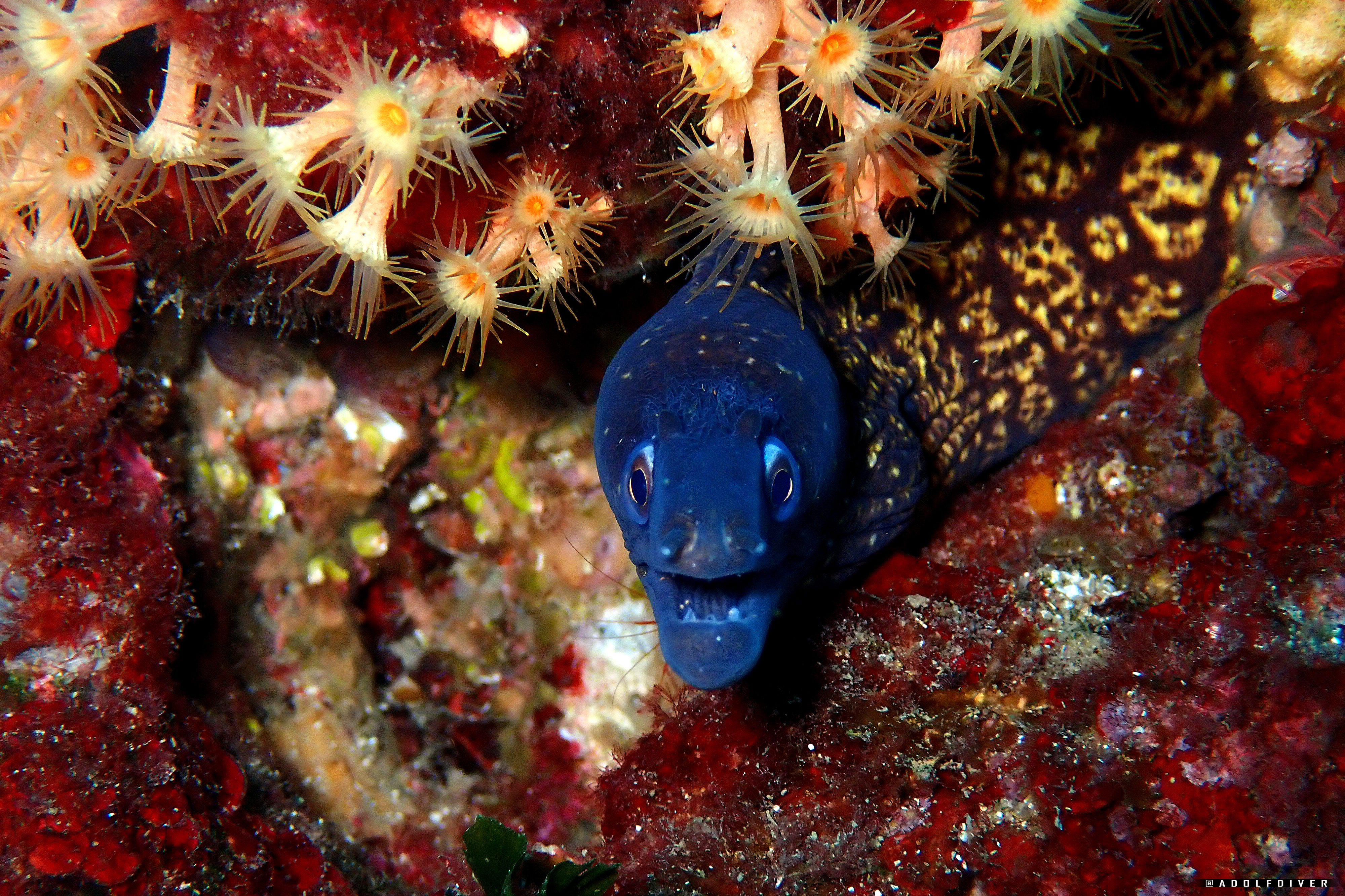
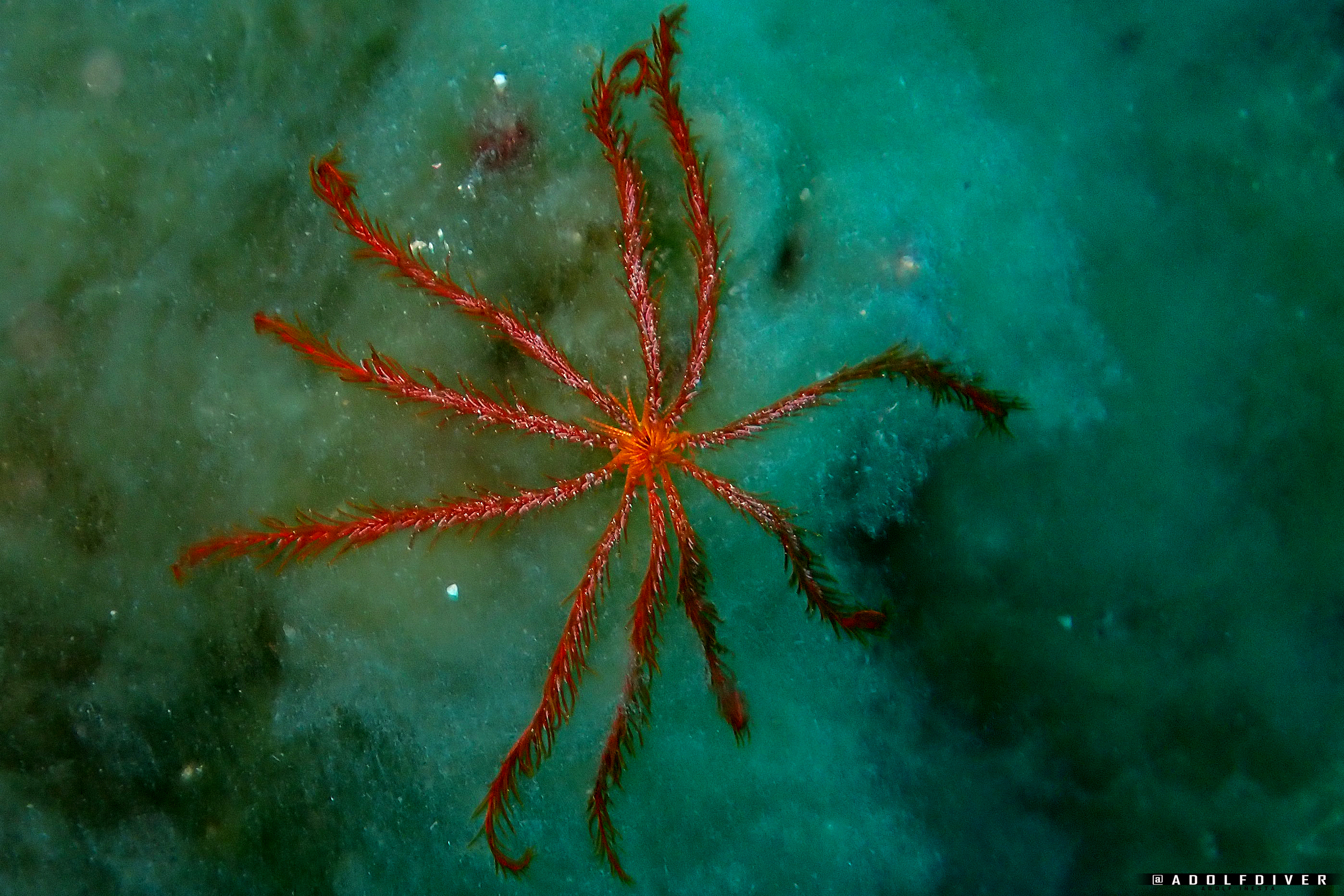
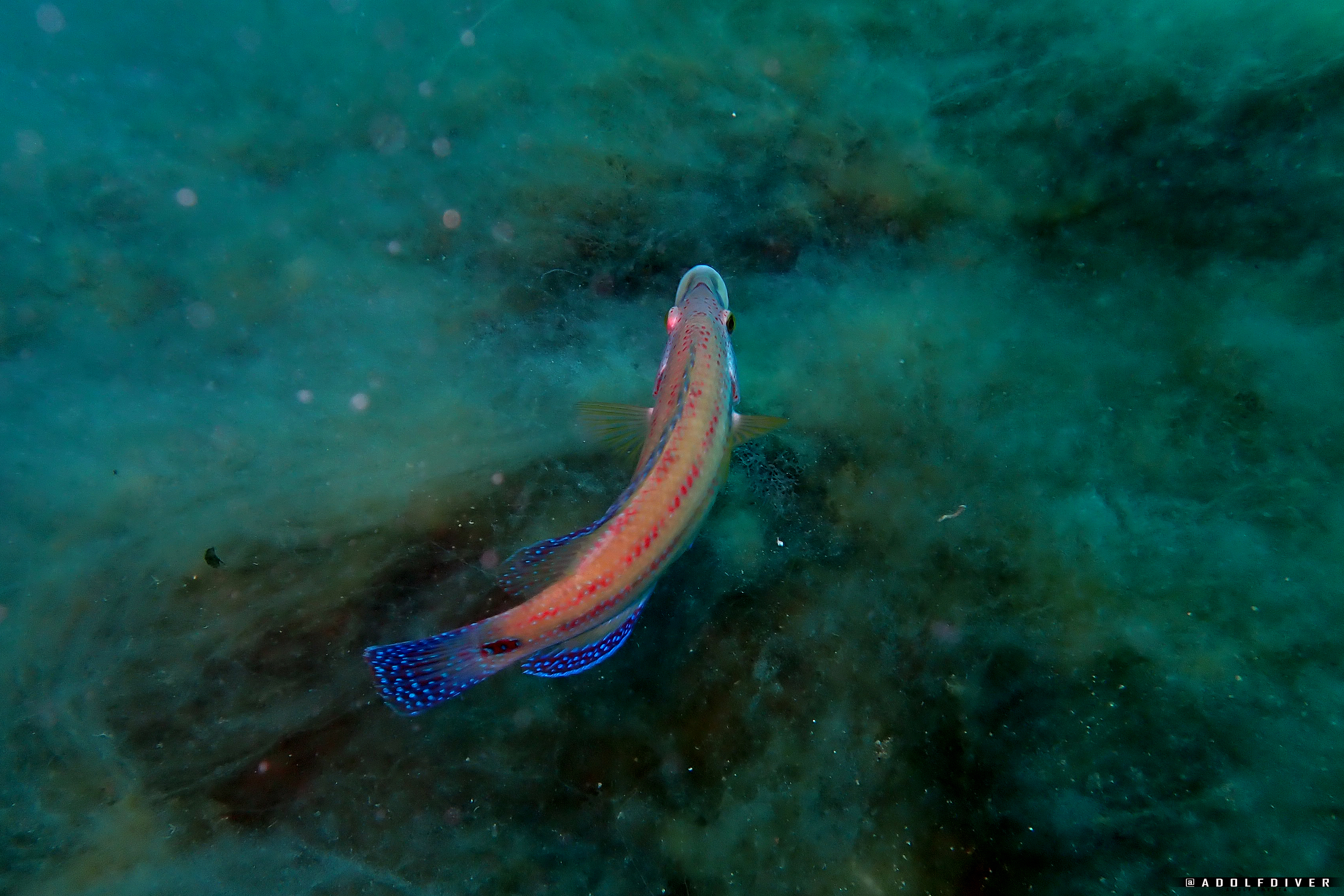
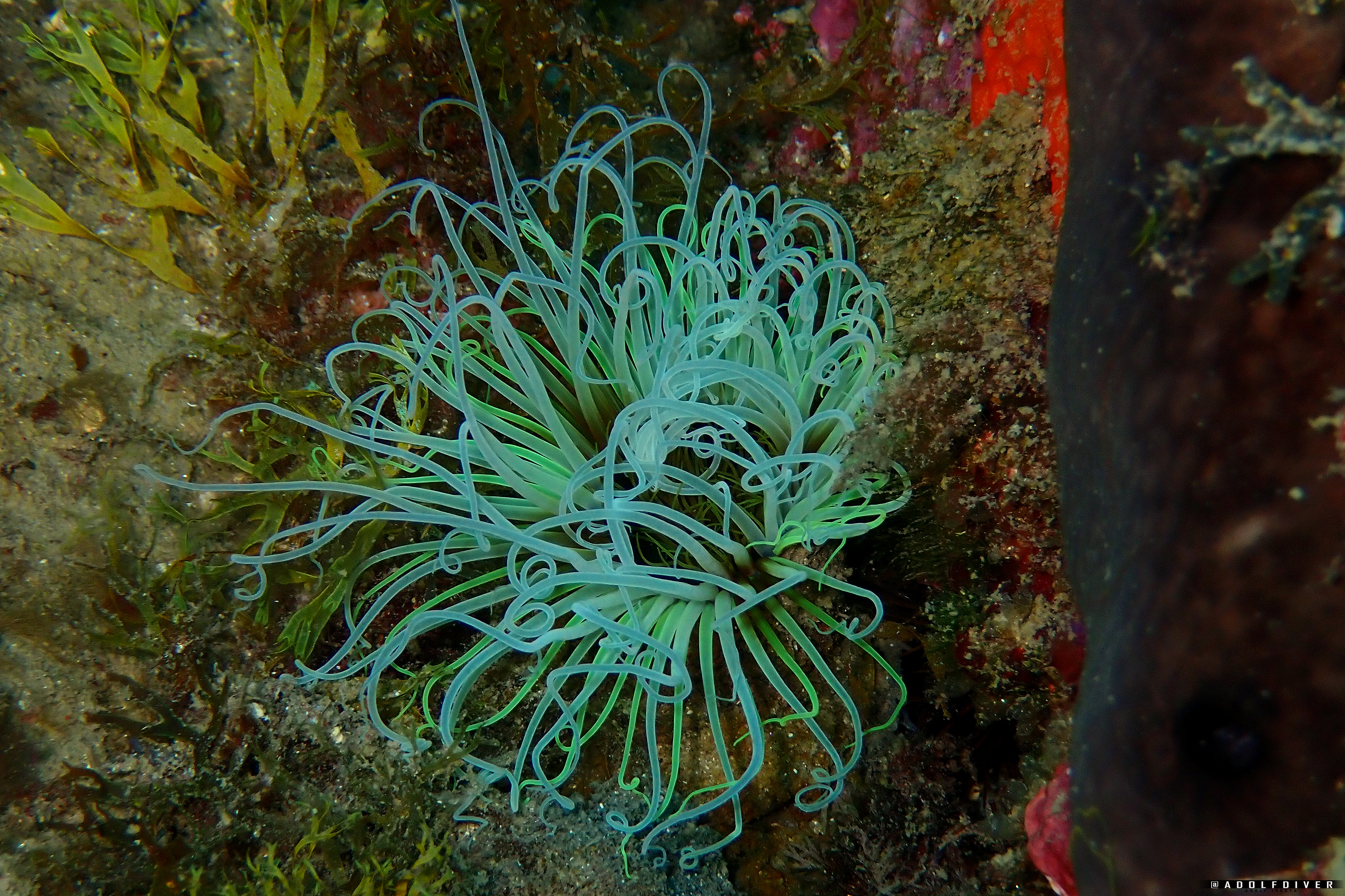
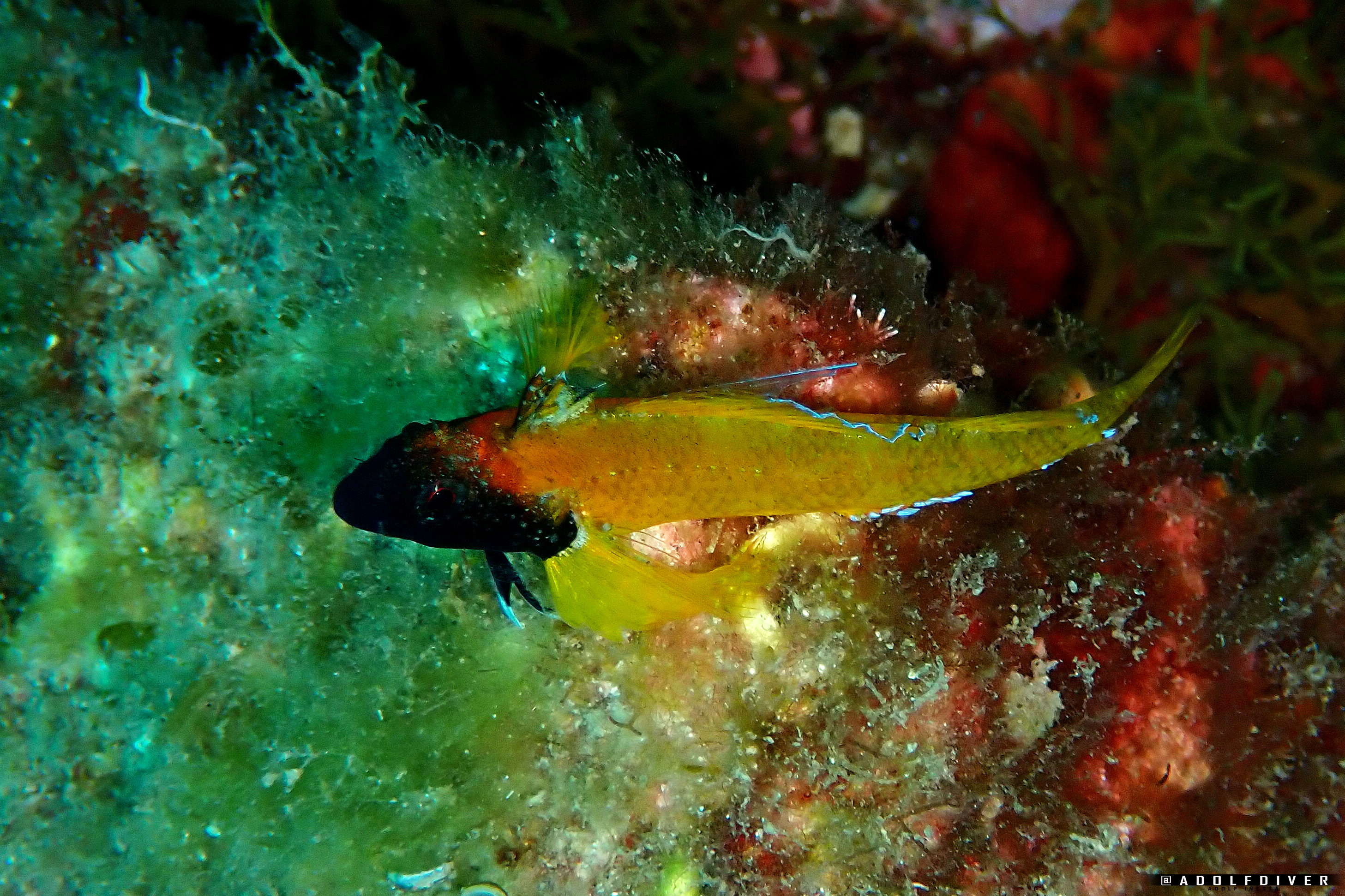
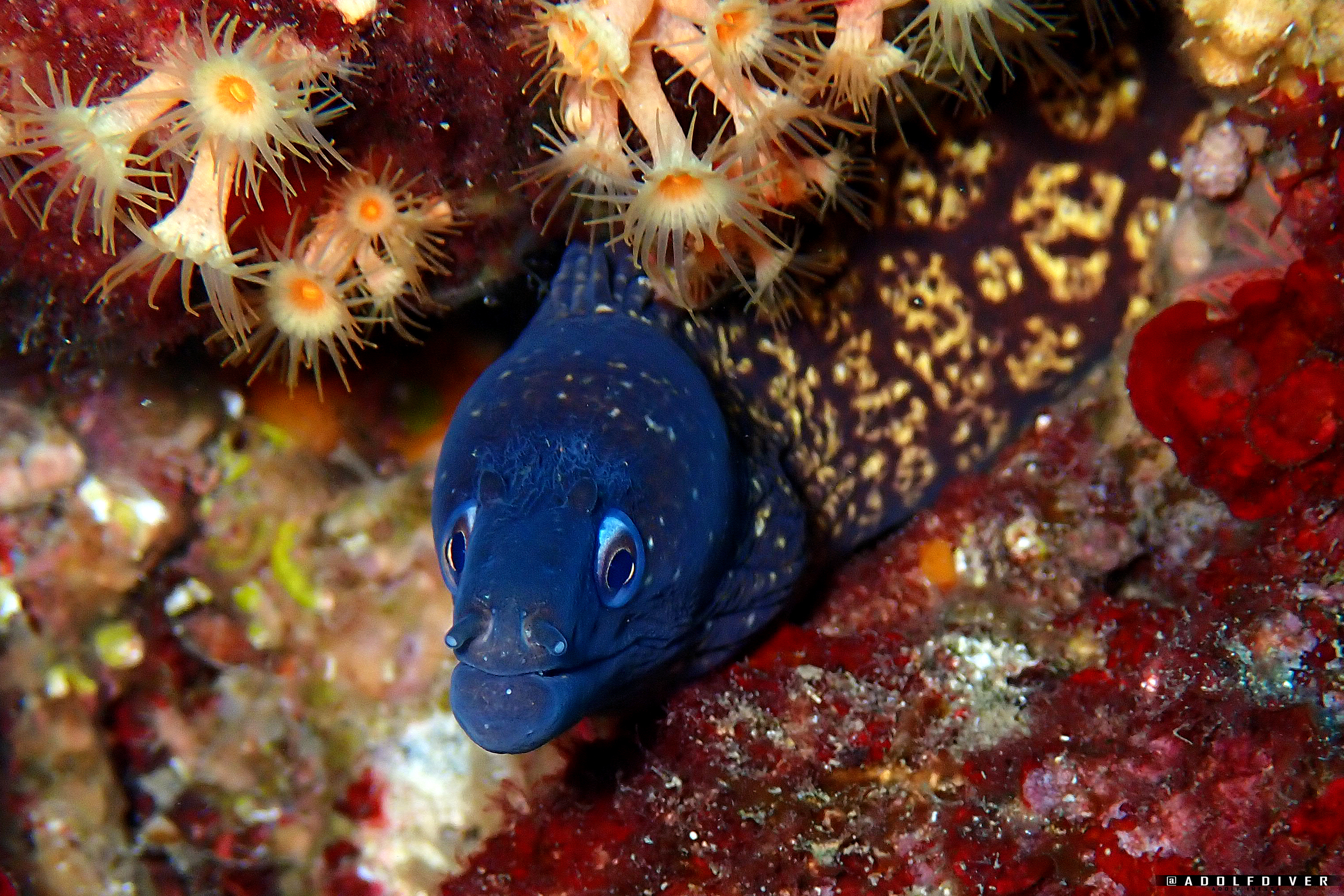
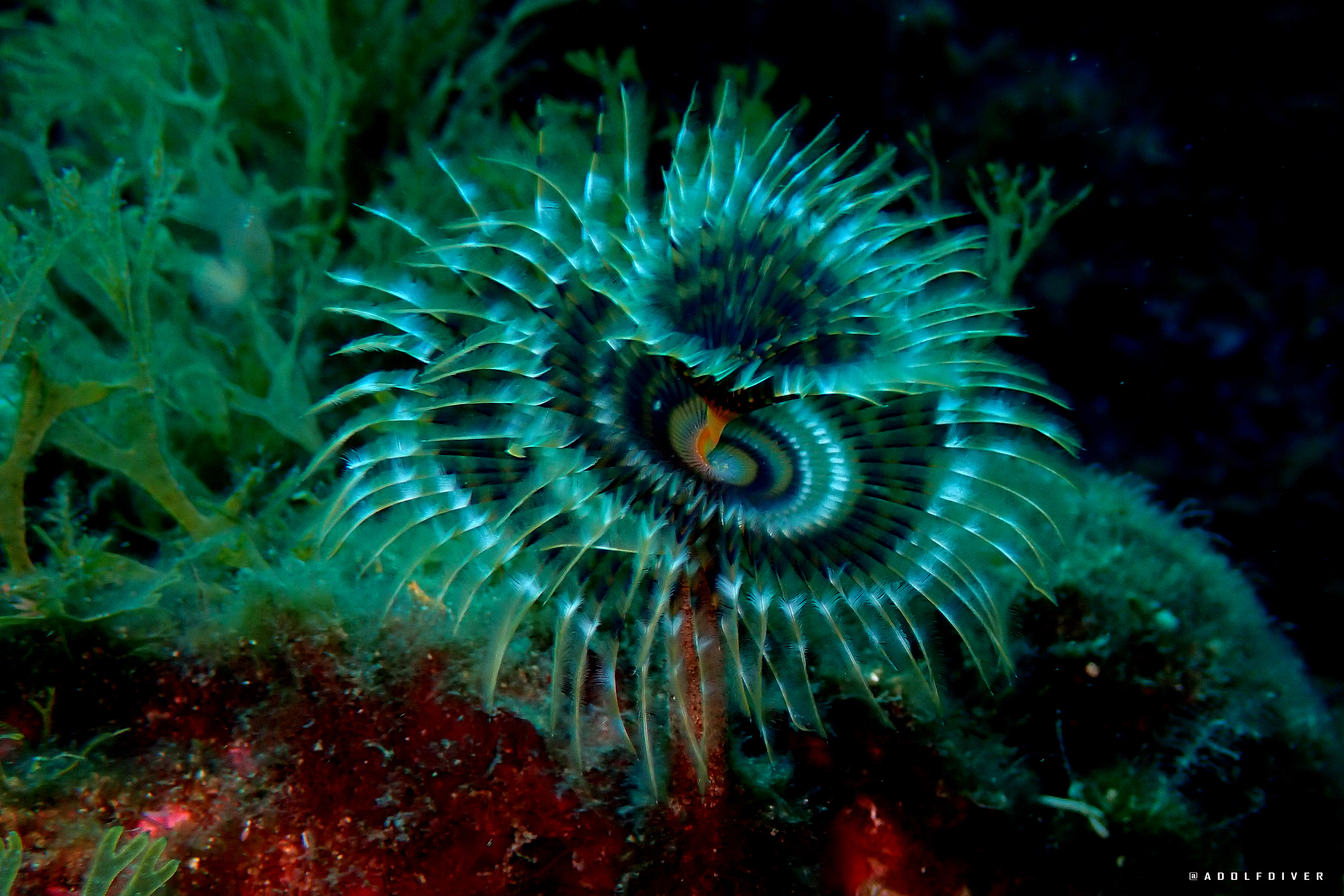
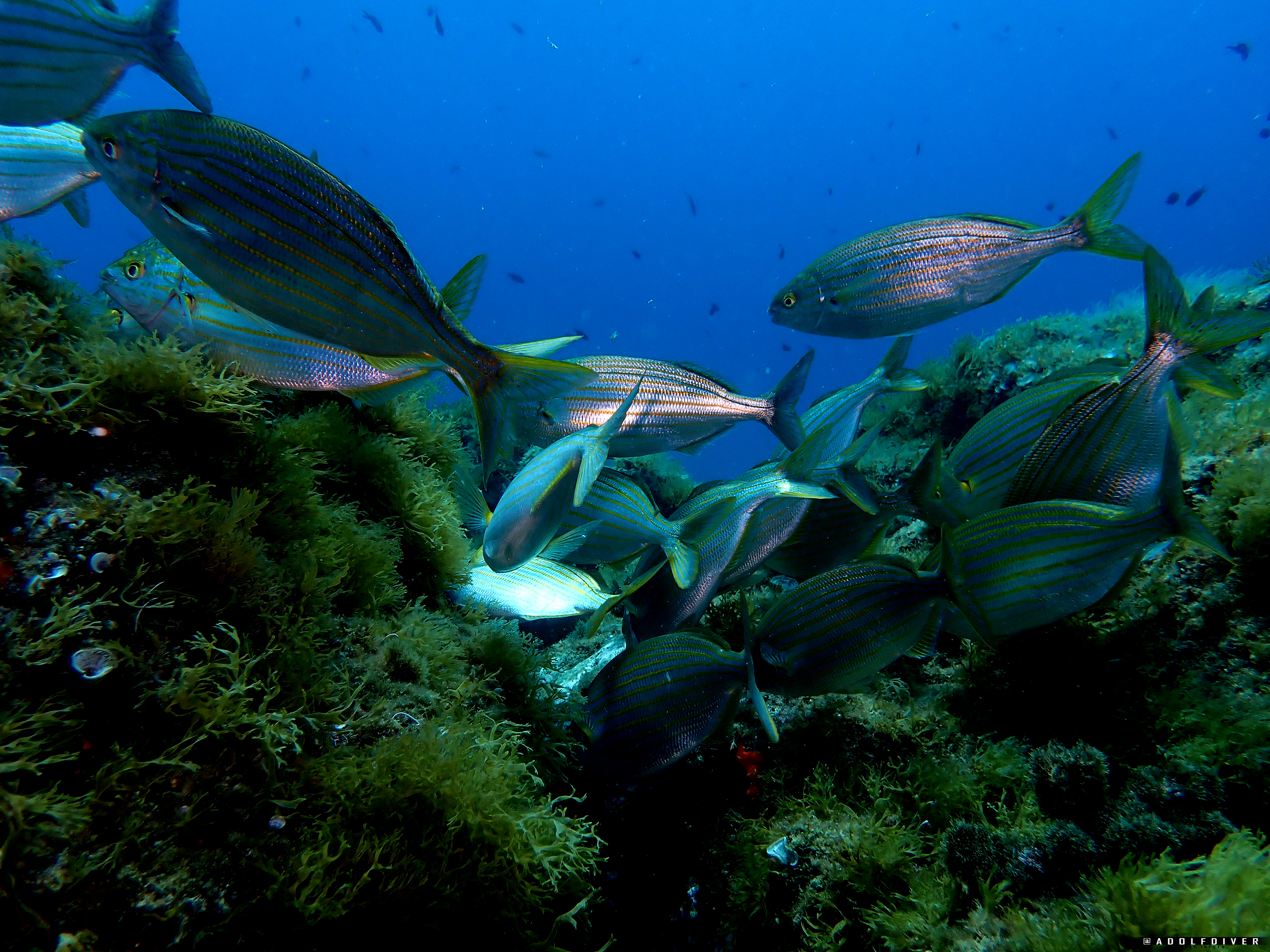
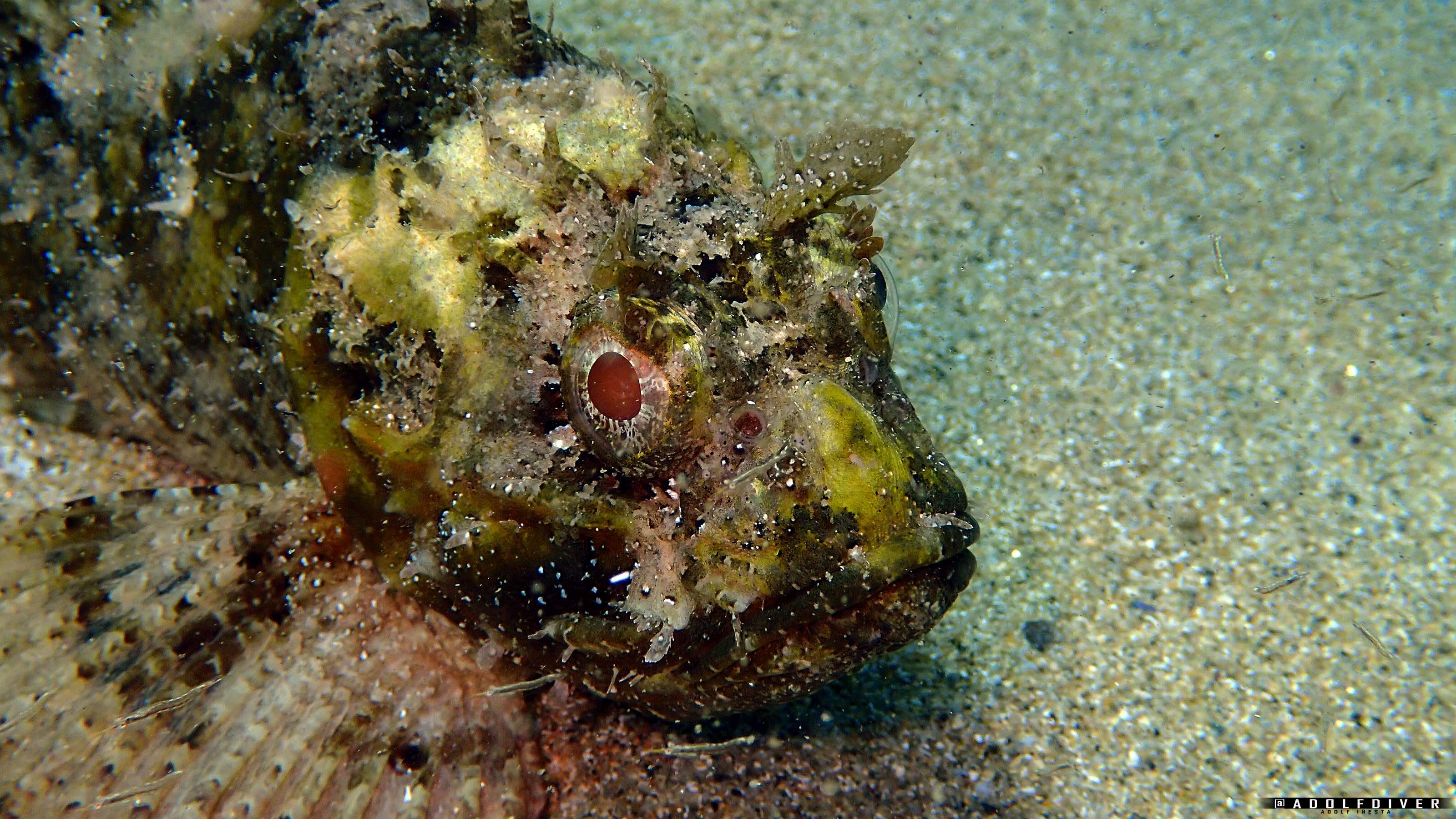
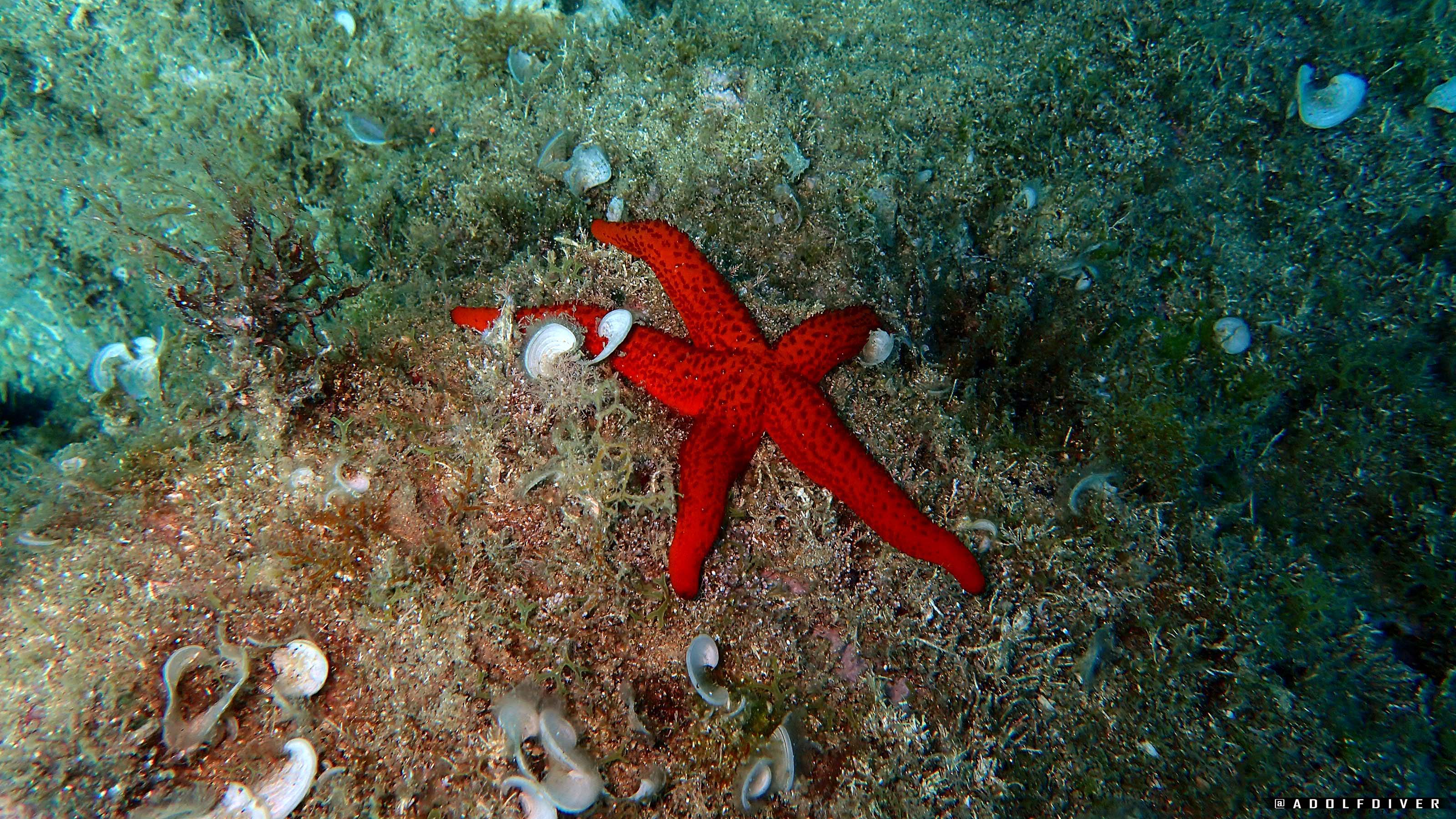
The coast of Cap de Creus continues underwater with rock walls, drop-offs, channels, cracks, caves and beds of sand and gravel. This variety of environments, together with the sea currents and the action of the tramuntana wind on the water, favours a great diversity of habitats and species.
A landscape that continues beneath the sea
One of the peculiarities of Cap de Creus is that its rugged relief does not end at the shoreline. The cliffs, narrow coves and rock formations carry on underwater, where they create a mosaic of very different environments.
At shallow depths, light still reaches strongly and allows the growth of algae and marine plants. As the depth increases, the light diminishes and the landscape gradually transforms, giving way to communities adapted to darker, deeper areas.
The Posidonia meadows
On some sandy bottoms appear meadows of Posidonia oceanica, traditionally known as seagrass meadows.
Despite its appearance, Posidonia is not an alga but a marine plant with roots, stems, leaves, flowers and fruit. Its meadows form one of the most important ecosystems in the Mediterranean.
Among the leaves of Posidonia, numerous species of fish, molluscs and small crustaceans find shelter and food. They are also breeding areas for many species and help to retain sediment and protect the coast.
These meadows grow very slowly and are especially sensitive to environmental changes and to disturbances caused by human activity.
The world of the rocky bottoms
The rocky bottoms are one of the great features of the underwater landscape of Cap de Creus and much of the Costa Brava.
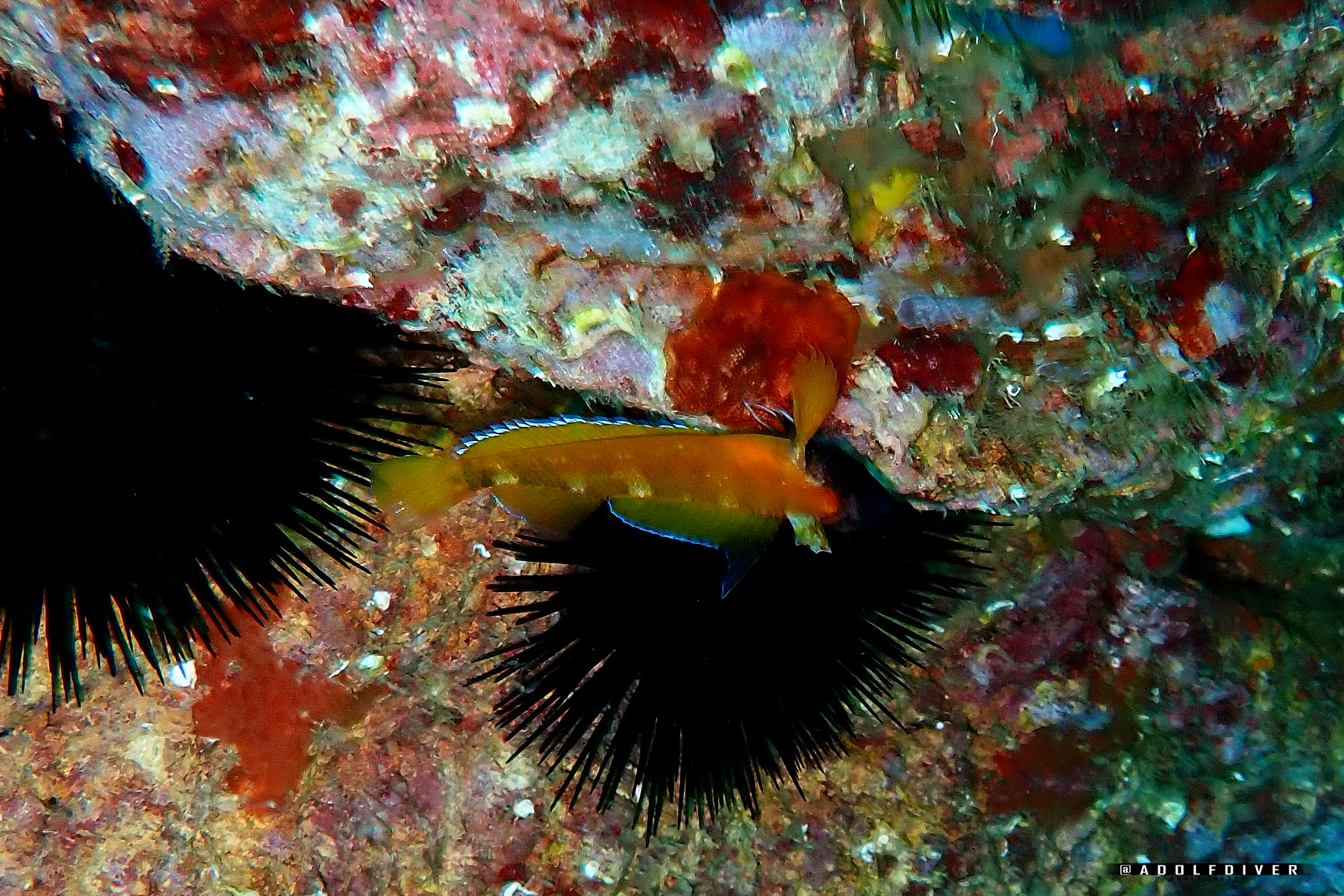
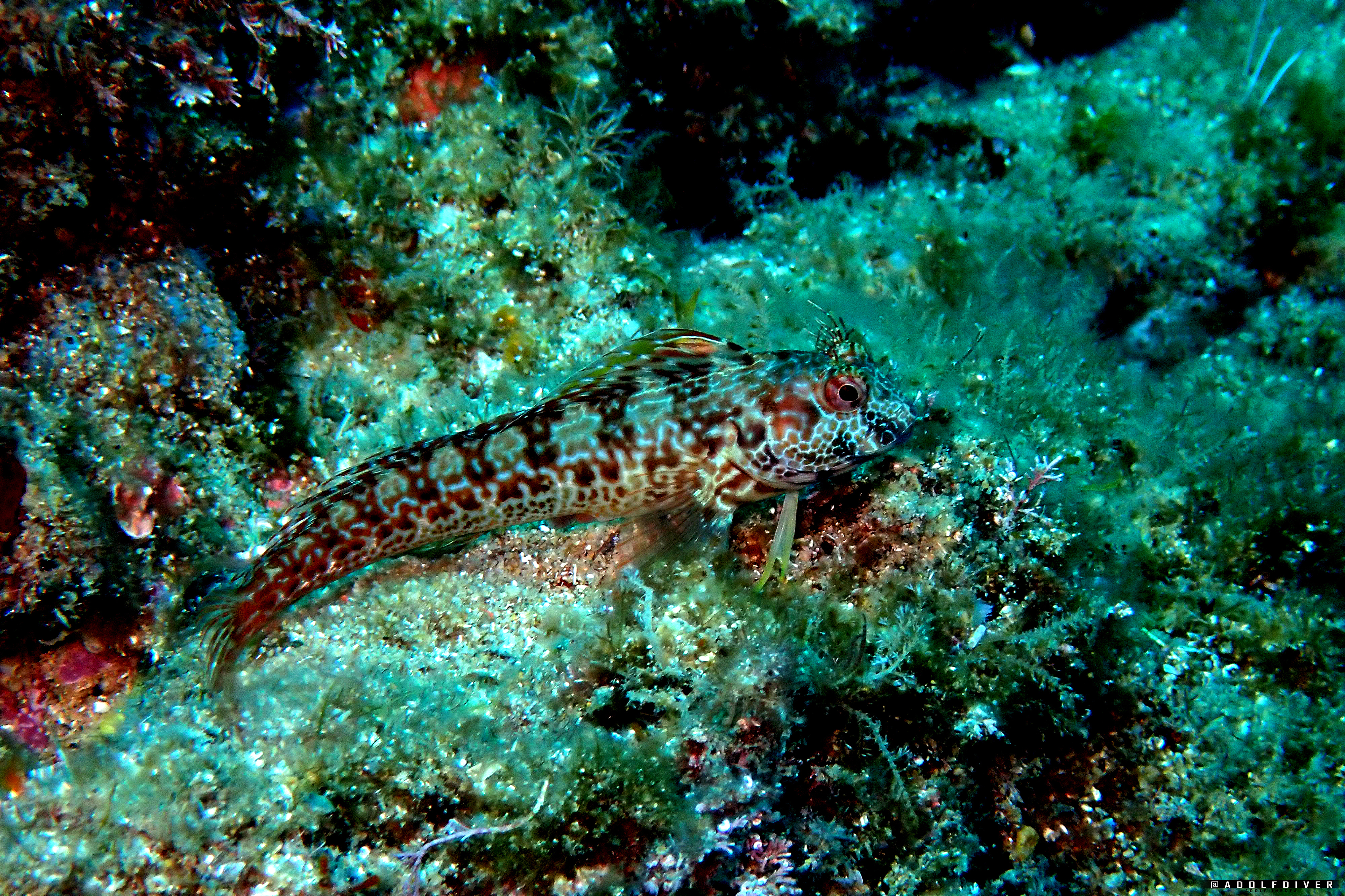
In the shallower areas, the rocks may be covered with algae and small marine communities. Among them live sea urchins, starfish, molluscs, crustaceans and numerous fish.
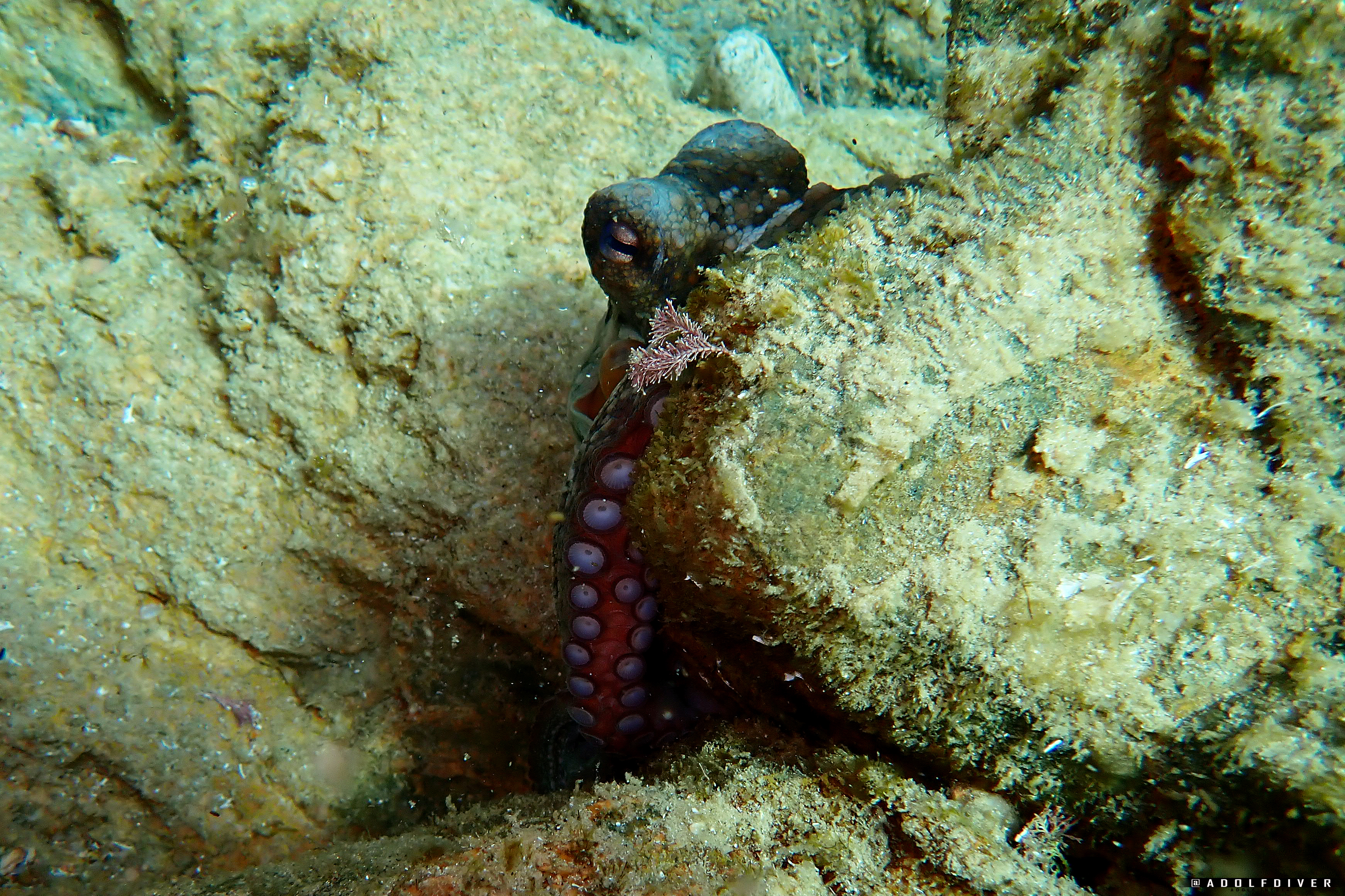
The cracks and cavities offer shelter to octopuses, conger eels, moray eels and other species that spend much of the day hidden among the rocks.
The great variety of relief forms creates countless small habitats, and every change in depth, light or orientation can give rise to different communities.
The coralligenous, an underwater garden
At greater depth appears one of the most spectacular ecosystems in the Mediterranean: the coralligenous.
It forms very slowly thanks to the build-up of calcareous algae and other organisms that create complex structures on the rock.
Here gorgonians, sponges, bryozoans and other filter-feeding organisms can grow. In some sectors, the underwater walls can take on the appearance of true hanging gardens.
Gorgonians, especially those in red and purple hues, are one of the most characteristic images of these bottoms. Although they may look like plants, they are colonies of animals that feed on tiny particles carried by the currents.
Their growth is slow, which makes them especially fragile in the face of any alteration of the environment.
Caves, cracks and shaded areas
Underwater caves and large cracks create an environment very different from areas directly exposed to sunlight.
As the light decreases, algae lose prominence and sponges, gorgonians, bryozoans and other filter feeders appear.
These areas are also a refuge for numerous animal species. Octopuses, moray eels and conger eels use the natural cavities in the rock to protect themselves during the day.
The combination of light, shade, currents and relief turns each underwater wall into a small ecosystem of its own.
The inhabitants of the Mediterranean
The diversity of habitats favours an equally varied fauna.
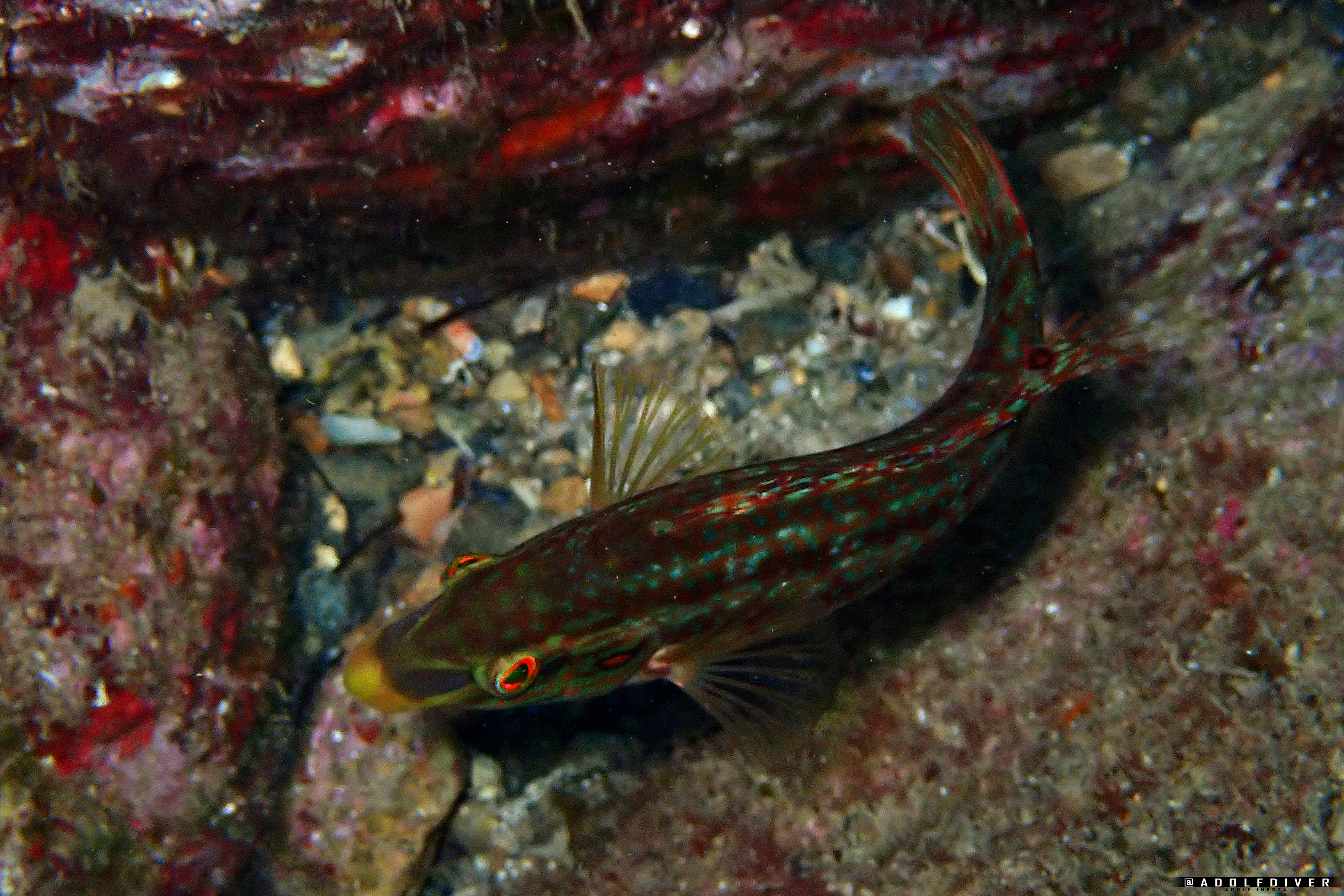
On the bottoms of Cadaqués and Cap de Creus we can find sea breams, salema, saddled sea bream, gilthead bream, scorpionfish and groupers, among many other fish species.
Octopuses, cuttlefish, starfish, sea urchins, nudibranchs and numerous crustaceans also live here.
Some animals spend most of their time associated with the seabed, while others move freely through the water column.
The open sea
Beyond the seabed there is another great ecosystem: the open sea.
Shoals of sardines and anchovies move through these waters and serve as food for many other species.
Different cetaceans may also cross the waters of Cap de Creus, such as the bottlenose dolphin, the striped dolphin or the fin whale, as well as marine turtles.
This pelagic world connects the coast with much wider expanses of the Mediterranean.
The underwater canyon of Cap de Creus
One of the least visible features of the area is the great underwater canyon located off Cap de Creus.
The depth increases rapidly and gives way to a landscape completely different from what we can observe near the coast.
In these deep environments, the light almost completely disappears and organisms adapted to very specific conditions live there.
Deep-water corals, sponges, crustaceans and deep-sea fish are part of an ecosystem that remains the subject of scientific study.
It is a dimension of Cap de Creus that we almost never see, but which is part of the same natural system we contemplate from land.
A heritage shared with the whole Costa Brava
This underwater landscape is not exclusive to Cadaqués.
Along the whole Costa Brava we find stretches of great ecological value, with Posidonia meadows, rock walls, caves, underwater channels and coralligenous communities.
The Medes Islands are probably one of the best-known underwater areas, but there are many other points of interest along the Empordà and Girona coast.
The combination of rock, depth, clear waters and biodiversity has made the Costa Brava one of the most valued areas in the Mediterranean for diving and observing marine life.
Another Cadaqués beneath the water
Perhaps one of the most fascinating features of Cadaqués is this: the landscape does not end where the sea begins.
The same rocks that the tramuntana and time have shaped over millennia continue underwater. On them grow algae, sponges, corals and gorgonians; among the cracks hide fish, octopuses and crustaceans; and a little further out opens the deep blue.
That is why looking at the sea from Cadaqués means contemplating only part of the landscape.
The other part continues beneath the surface.