The exact dating of the house is not entirely clear. The official Cadaqués guide places it in the early 19th century and describes it as a building of neoclassical-romantic character. Other heritage sources, however, have linked the building to the year 1870. It is therefore probably wiser to speak of a 19th-century house than to assign it an overly precise construction date.
The Godó Car house
Before it housed the recreational society, the house had been, according to the official Cadaqués guide, the residence of the Godó Car family. The sources consulted do not yet allow us to reconstruct exactly who commissioned the building or all the generations that lived in it, but the surname Godó appears linked to Cadaqués families connected with trade and seafaring.
This link is no surprise. During the 18th and 19th centuries, Cadaqués, despite its apparent isolation by land, maintained intense maritime activity. Sailors, traders, captains and shipowners connected the town with other Mediterranean ports and with the overseas routes. Sources from the Alt Empordà place the Godós among the Cadaqués families connected with that commercial and seafaring world, and we have documented members of the lineage engaged in trade.
The building's representative character fits that origin. It was not a simple fishermen's house, but a house of considerable size, meant to display a certain social standing. Its later conversion into a collective space would completely transform its meaning: a private residence would end up as one of the town's main meeting houses.
From La Benèfica to the Societat l'Amistat
The Casino's history is closely tied to La Benèfica, a mutual aid society that the sources place probably around 1856. The earliest known statutes date from 1870 and show that the organisation already combined two roles: helping its members and running recreational activities.
Societies of this kind were very important during the 19th century. Before a public social protection system like today's existed, their members paid money into a common fund used to help members in cases of illness, need or economic hardship. At the same time, these organisations became spaces for social life, conversation, culture and leisure.
The society did not begin its activity in the current Casino. Municipal records indicate that the first premises were on Plaça de les Herbes. It would later move to the house on Plaça del Doctor Trèmols.
Here a small discrepancy appears between the sources. The Town Council's planning records and the official Cadaqués guide place the purchase or incorporation of the current building in 1896. The Ruta dels Indians of Cadaqués, however, states that the property, owned by the Godós, was transferred to La Benèfica in 1867. Without consulting the original title deed it is hard to determine the exact reason for that difference, so it is best to keep both dates with caution. In any case, by the end of the 19th century the house had become permanently tied to the society that would come to be known as Societat Recreativa l'Amistat.
Architecture meant to look and be looked at
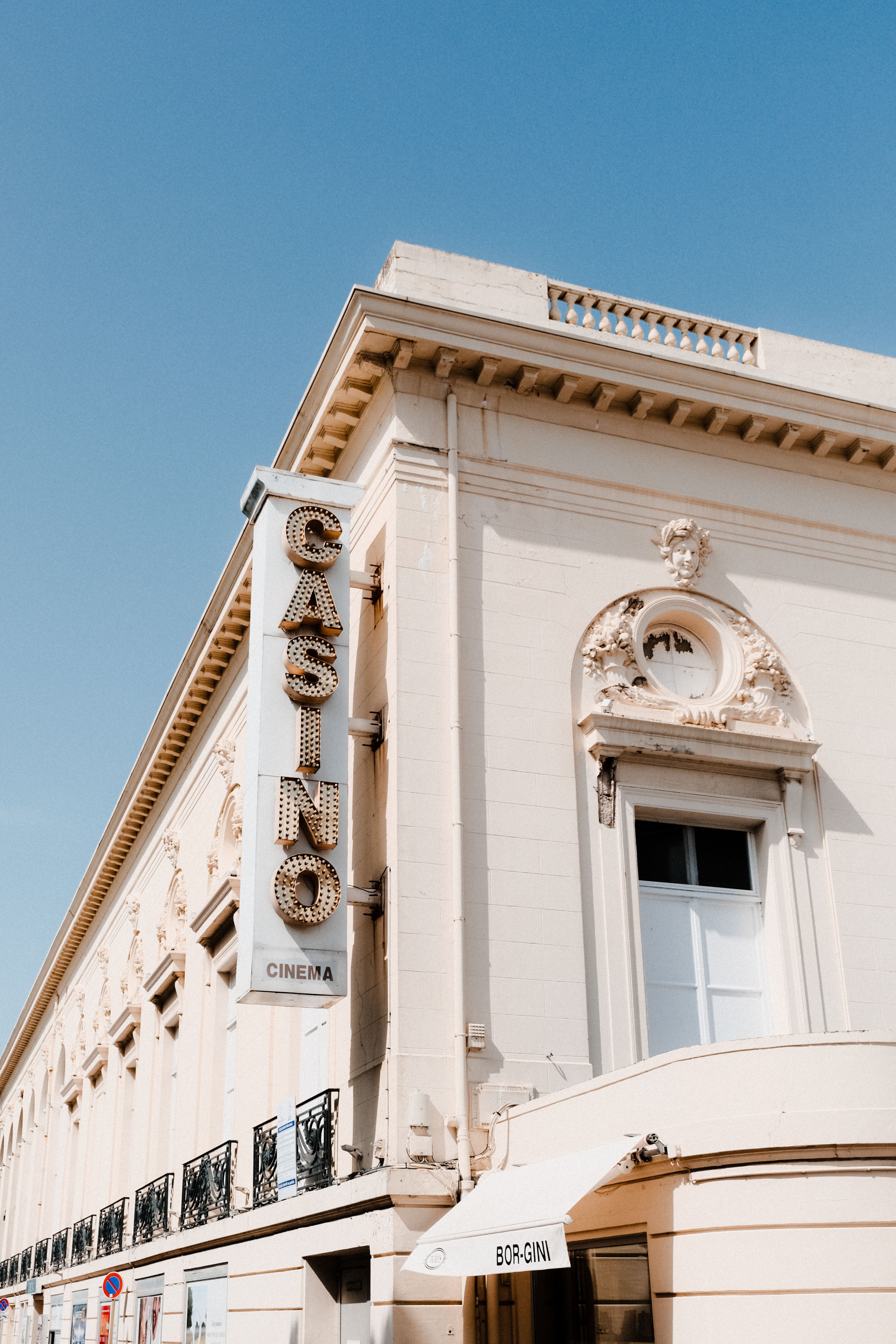
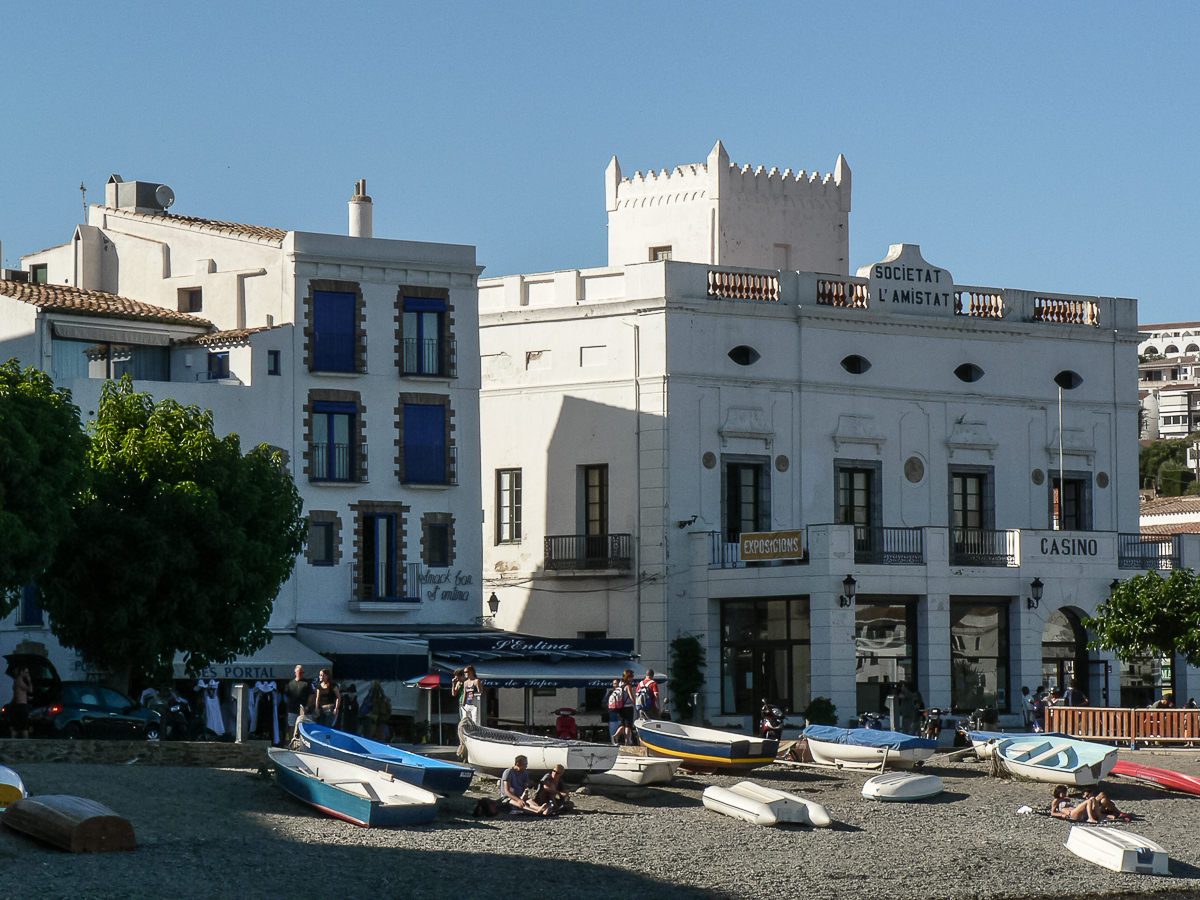
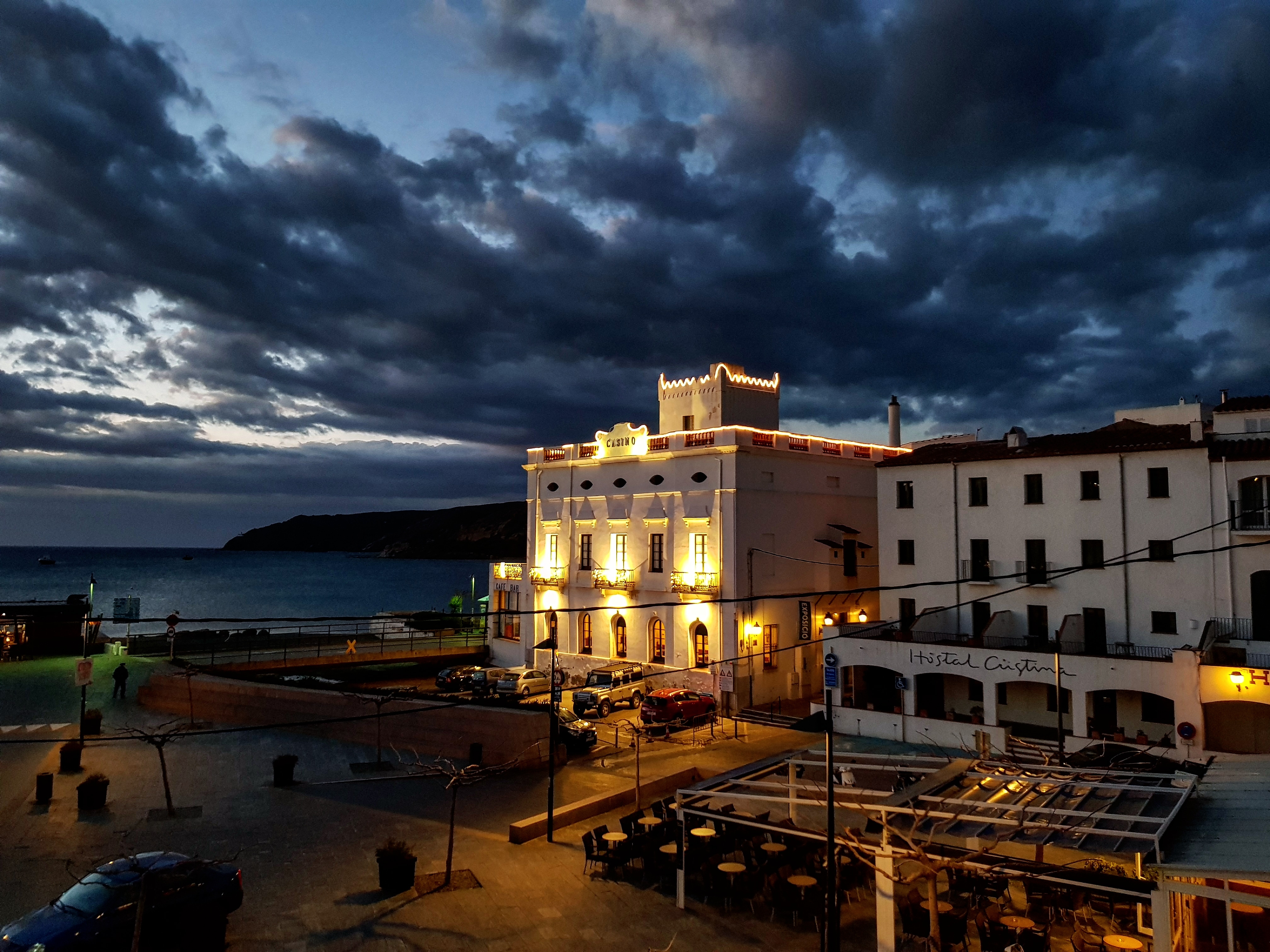
The building has a rectangular structure made up of a ground floor, first floor and attic. Its architecture follows an orderly, representative language with a clear taste for symmetry.
On the ground floor stands out a projecting body like a porch, with a large round-arched doorway and wide windows. On the first floor, the balconies with iron railings and the openings decorated with mouldings reinforce the façade's stately character. At the top, the small oval attic windows help give it a very distinctive look.
One of the most curious features are the five terracotta bas-relief medallions on the façade. On them appear figures linked to the great voyages and maritime conquests, among them Christopher Columbus, Magellan, Hernán Cortés and Francisco Pizarro. Their presence is especially telling in a town that for centuries had lived facing the sea and that in the 19th century kept strong commercial and family ties with the overseas routes.
We cannot claim that these medallions directly explain the former owners' business, but they are part of an imagery very typical of the 19th century: that of the sea, voyages, commercial expansion and the American world.
The Casino, the parlour of Cadaqués
With the society's arrival, the former private residence took on a completely new role. The Casino became a space of sociability: a place to meet, talk, read, play cards or billiards, have a drink and take part in the organisation's activities.
The term casino should not be understood here in today's sense of a gambling establishment. In Catalonia, as in many other Mediterranean places, the casinos, athenaeums and recreational societies of the 19th and early 20th centuries were above all centres of social relations. In relatively small towns they could work almost as an extension of the public square or of the family living room.
Over the years, the initial charitable role gradually gave way to social and cultural activities. Meetings, dances, exhibitions, music, gatherings and celebrations turned the building into one of the main meeting points of Cadaqués.
Eliseu Meifrèn and a table turned into a work of art
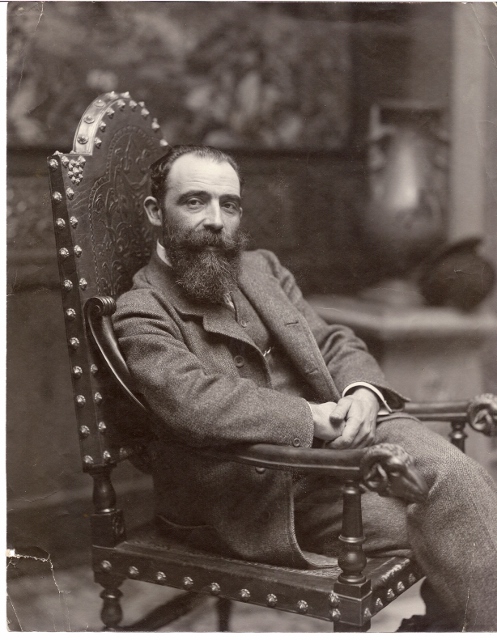
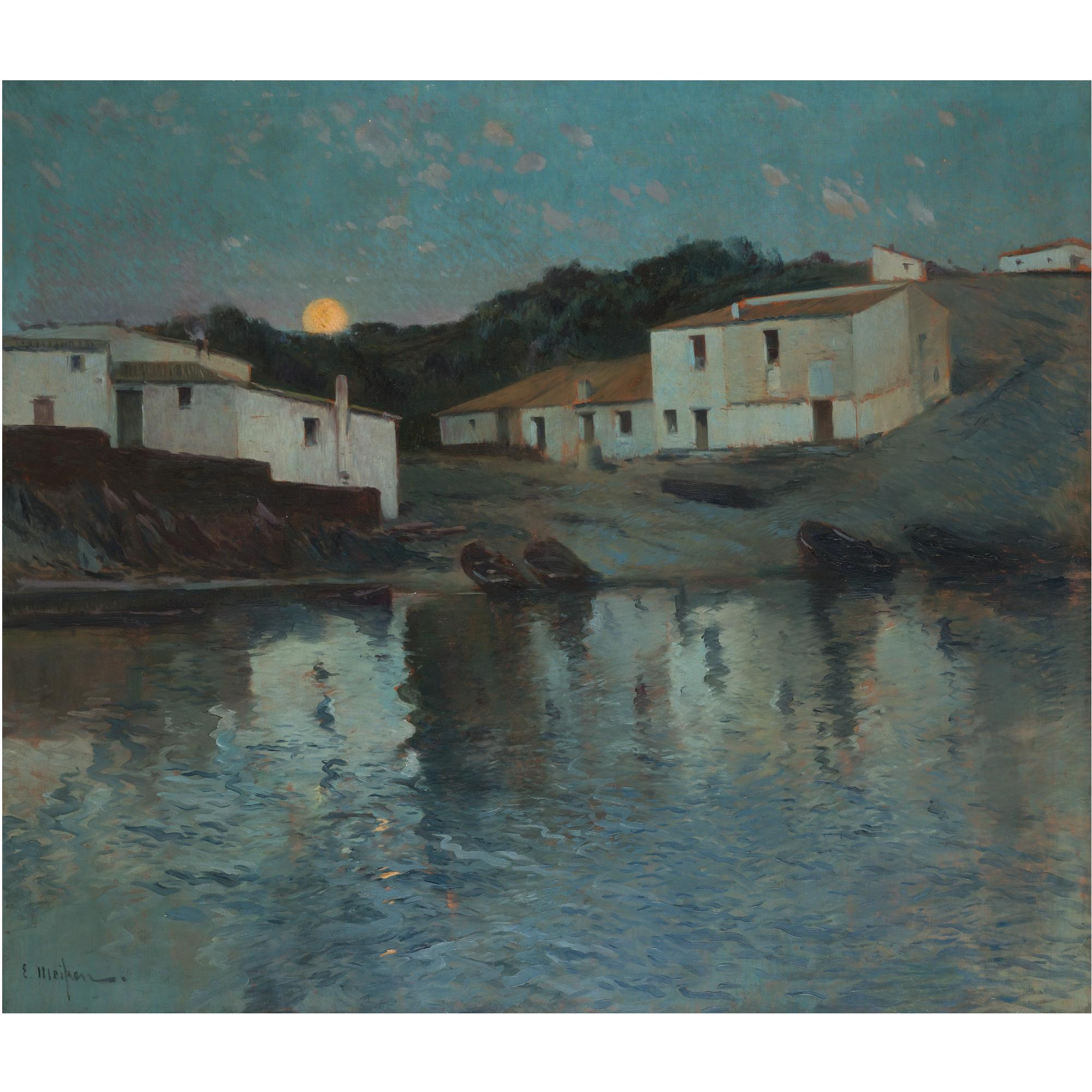
One of the Casino's most appealing stories is its connection with the painter Eliseu Meifrèn (1859-1940). Meifrèn came to Cadaqués in 1886 and kept a very close relationship with it for decades. In 1911 he was named an adopted son of the town.
As a token of that bond, the painter gave the Casino six large charcoal drawings devoted to the Cadaqués landscape. The works depict spots such as es Baluard, Punta Prima, es Pianc and the island of Messina, and they are still part of the organisation's heritage. The room where they are kept is named, precisely, the Sala Meifrèn.
But probably the most endearing anecdote is another one. In the Casino's café there was a marble table on which Meifrèn had drawn dozens of figures. Art and everyday life literally mixed on a café table.
In 2003, both the six drawings and that table were restored after decades of damage from damp, dust, mould and smoke. Meifrèn had also made a stage curtain for the Cadaqués theatre, now kept at the Dalí Theatre-Museum in Figueres.
A place for art
The Casino's relationship with artists did not end with Meifrèn. During the 20th century, and especially as Cadaqués became a meeting point for painters, writers and creators from all over the world, the halls of l'Amistat established themselves as an exhibition space.
In 1978, the society itself promoted a series of artists' gatherings with the aim of collecting works to create a future museum. The following year it hosted the so-called Exhibition number zero. In the end, some seventy works brought together in that initiative were donated to the Fundació Museu Municipal d'Art de Cadaqués. In this way, the Casino also played a significant part in building the town's artistic heritage.
A building still alive
One of the Casino's virtues is that it has never become a monument cut off from everyday life. The Societat l'Amistat kept expanding its activities and in 1969 built an assembly hall in another building, in the new development area towards Portlligat, designed especially for theatrical performances and other events.
The historic house, however, has kept its social role. Today, the ground floor holds the Casino's bar, which the Town Council describes as one of the main meeting points for locals and visitors. On the first floor there are three exhibition rooms, the secretary's office, the Sala Meifrèn and a terrace. On the second floor there are two more exhibition rooms and a small library that also serves as a meeting space for various associations.
Perhaps that continuity is what best explains the value of the Casino of Cadaqués. It is not just a historic building: it is a lived-in building.
It began as the home of a well-to-do family of 19th-century Cadaqués and became a mutual aid society, café, meeting place, exhibition hall and cultural centre. Its walls have seen sailors and traders, fishermen, artists, summer visitors and whole generations of Cadaqués people pass by.
The Godó Car family's private house ended up, over time, becoming something quite different: a house shared by the whole town.