
The landscape of Cap de Creus can look austere: bare mountains, low scrub, cliffs and plants that emerge from the cracks in the rock. But that apparent harshness is precisely what makes it exceptional.
To understand the flora of Cadaqués you first have to look at what lies beneath its roots: an extraordinary geology, transformed over hundreds of millions of years and later sculpted by the sea and the tramuntana wind.
A history written in the rock
Cap de Creus is part of the axial zone of the Pyrenees and preserves very ancient rocks, formed from Palaeozoic materials.
During the great geological processes that transformed this region, ancient sediments were subjected to intense pressure and heat and turned into metamorphic rock, mainly schist and gneiss, but also marble in certain areas.
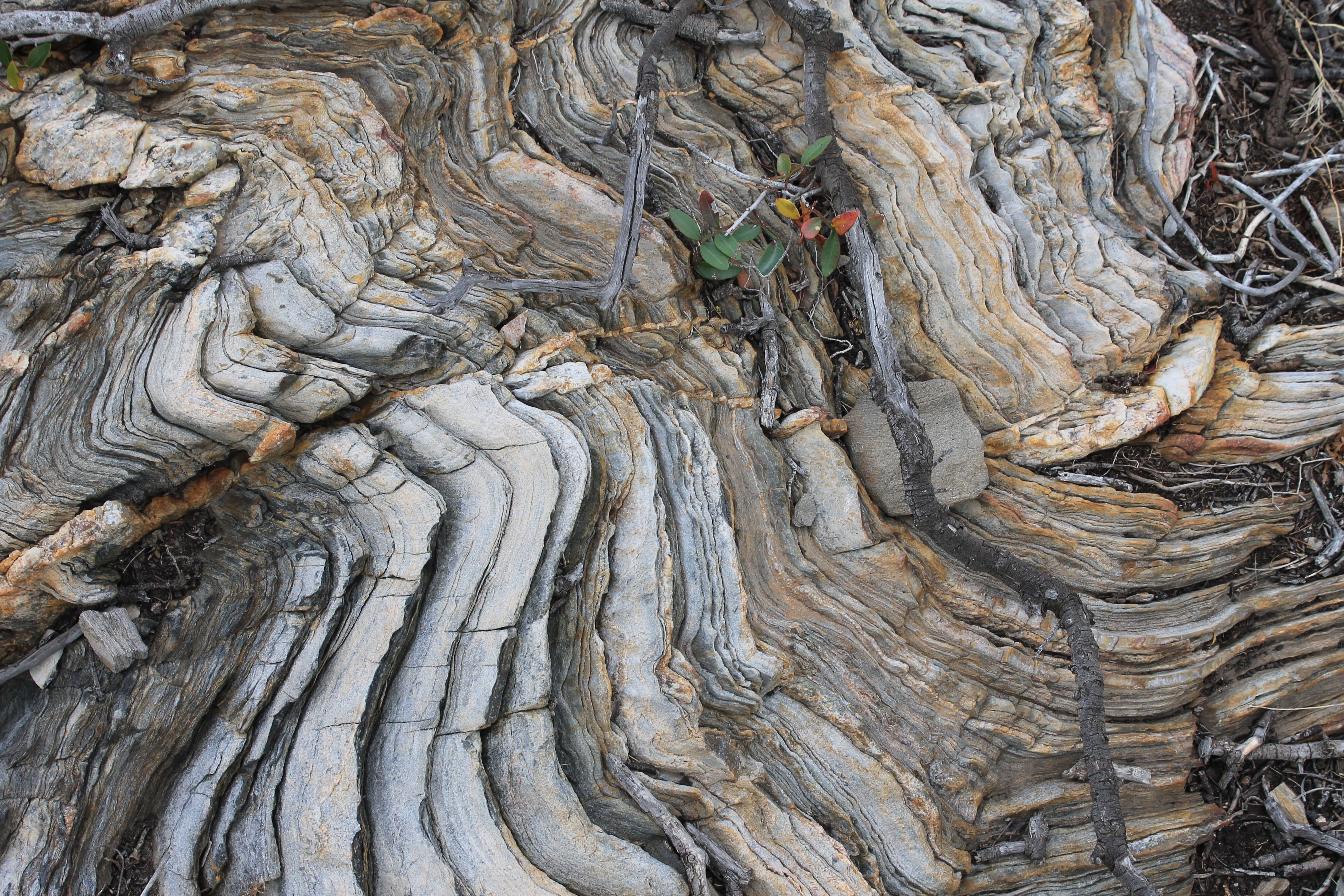
One of the most spectacular features of Cap de Creus is precisely the deformation of these rocks. In some places the strata appear folded, undulating and twisted, as if the stone had been shaped while it was still flexible.
Among the dark schists there are also veins of pegmatite, generally lighter in colour, that cut through the rock and visually accentuate these forms.
The result is a landscape where, within a few metres, we can contemplate geological processes that took millions of years to occur.
When erosion turns rock into sculpture
Then other sculptors arrived: water, salt and wind.
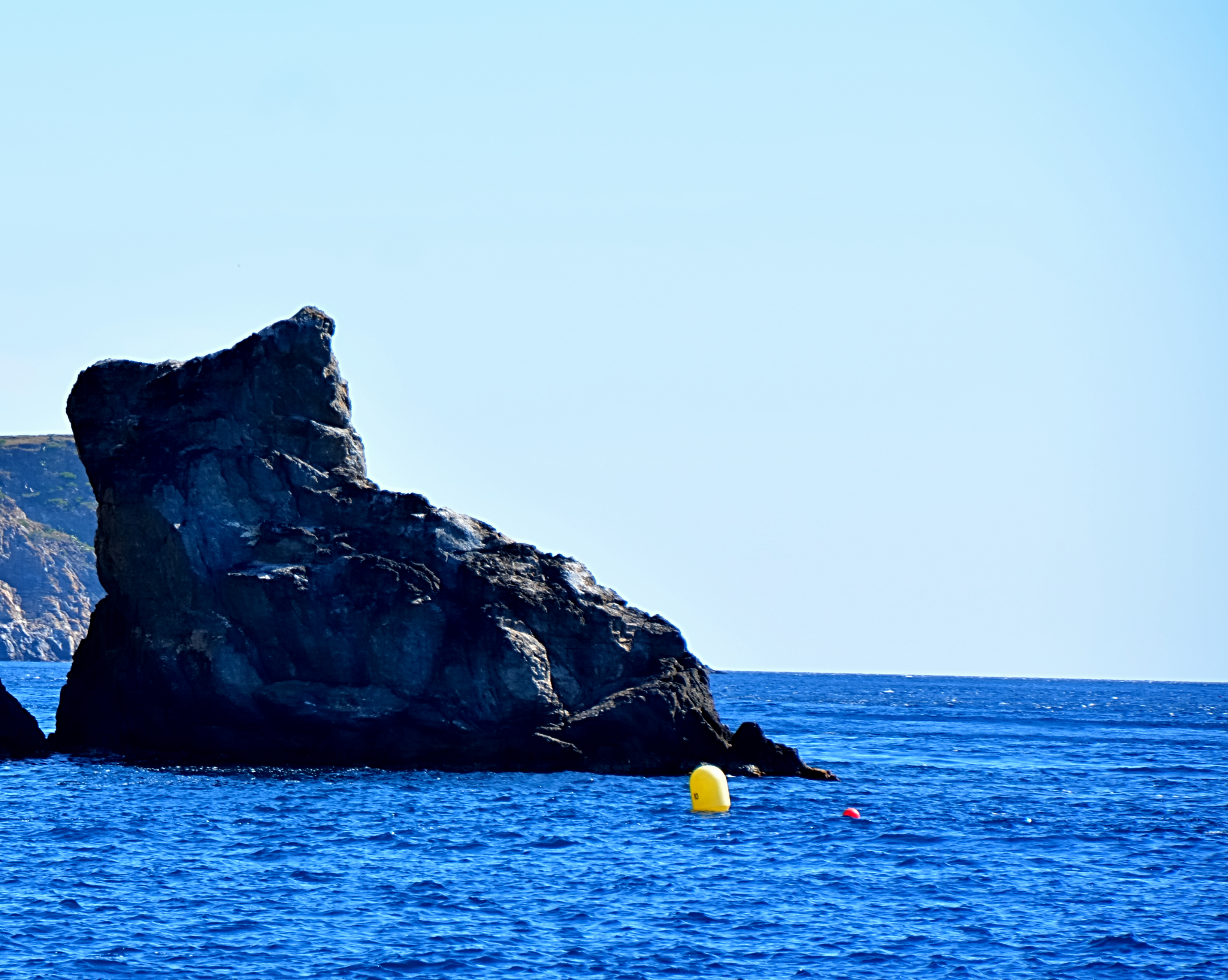
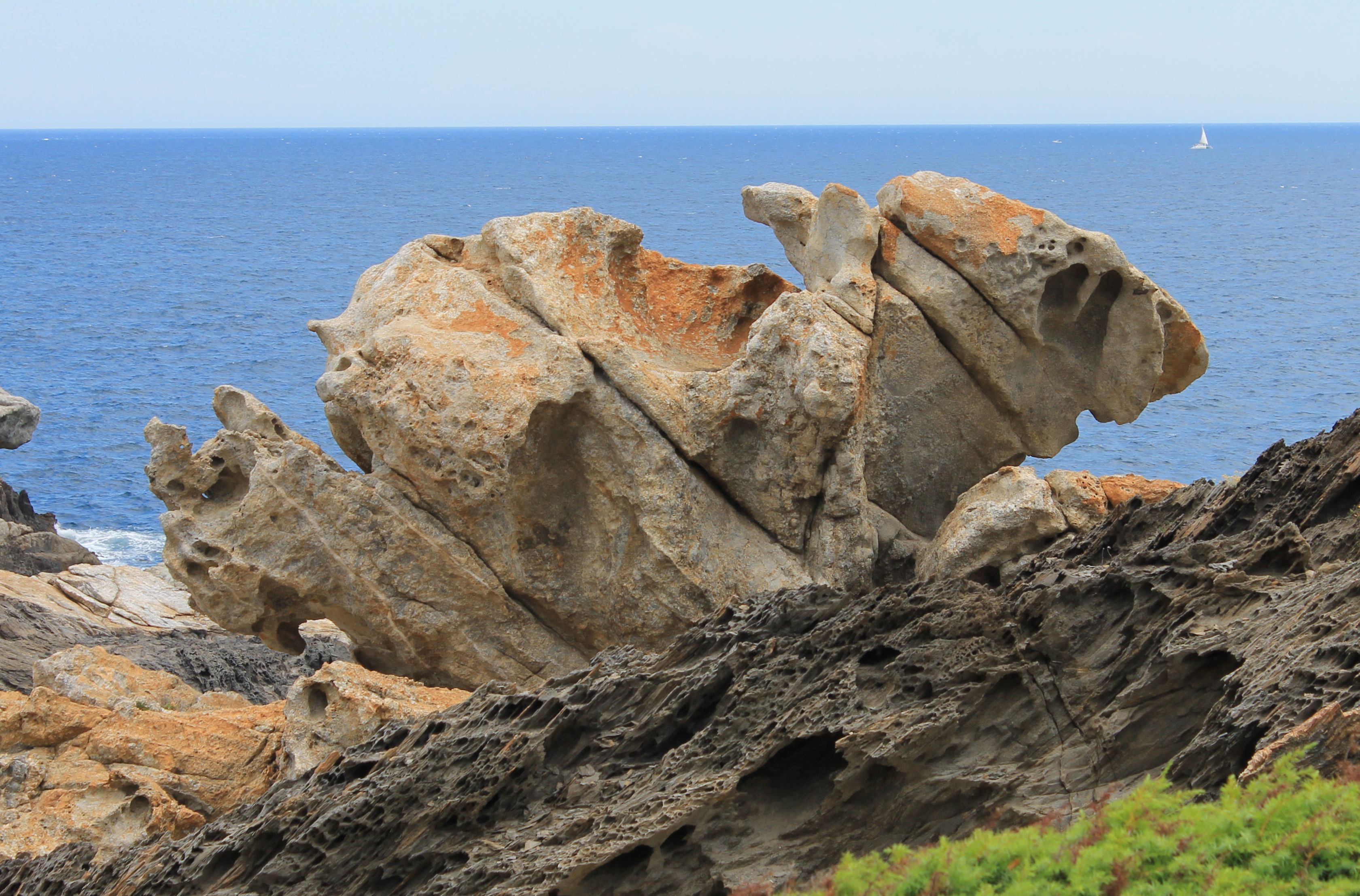
The differing resistance of the materials to erosion has gradually created cavities, uneven surfaces and extraordinary forms. In the schists, the small cavities that can resemble a honeycomb are characteristic, while in other rocks larger cavities known as tafoni may develop.
It is especially evident at the Tudela site, where erosion has produced shapes that the human imagination has ended up identifying with animals and other figures.
Some of these natural sculptures have even acquired names of their own.
And this geology is not simply the backdrop against which the plants grow. It directly determines the vegetation that can live there.
Growing against the tramuntana
If the rock explains part of the shapes of Cadaqués, the tramuntana explains many others.
The plants that live in the most exposed parts of Cap de Creus must withstand episodes of very intense wind, summer drought, thin and poor soils and, near the sea, a high concentration of salt carried by marine aerosols.
In these conditions, growing tall can become a disadvantage.
That is why we find low vegetation, compact plants, small or tough leaves and rounded forms able to offer less surface to the wind and reduce water loss.
One of the most striking examples is the nun's cushion (Astragalus massiliensis), which takes on a low, dense and rounded form.
The same force that for millennia has helped to erode the rocks has also ended up shaping the plants that grow among them.
The realm of the scrubland
Although there are trees, large forests are not the characteristic plant landscape of the surroundings of Cadaqués.
Much of the territory is covered by Mediterranean maquis, garrigue and scrub, with species extraordinarily well adapted to drought and wind.
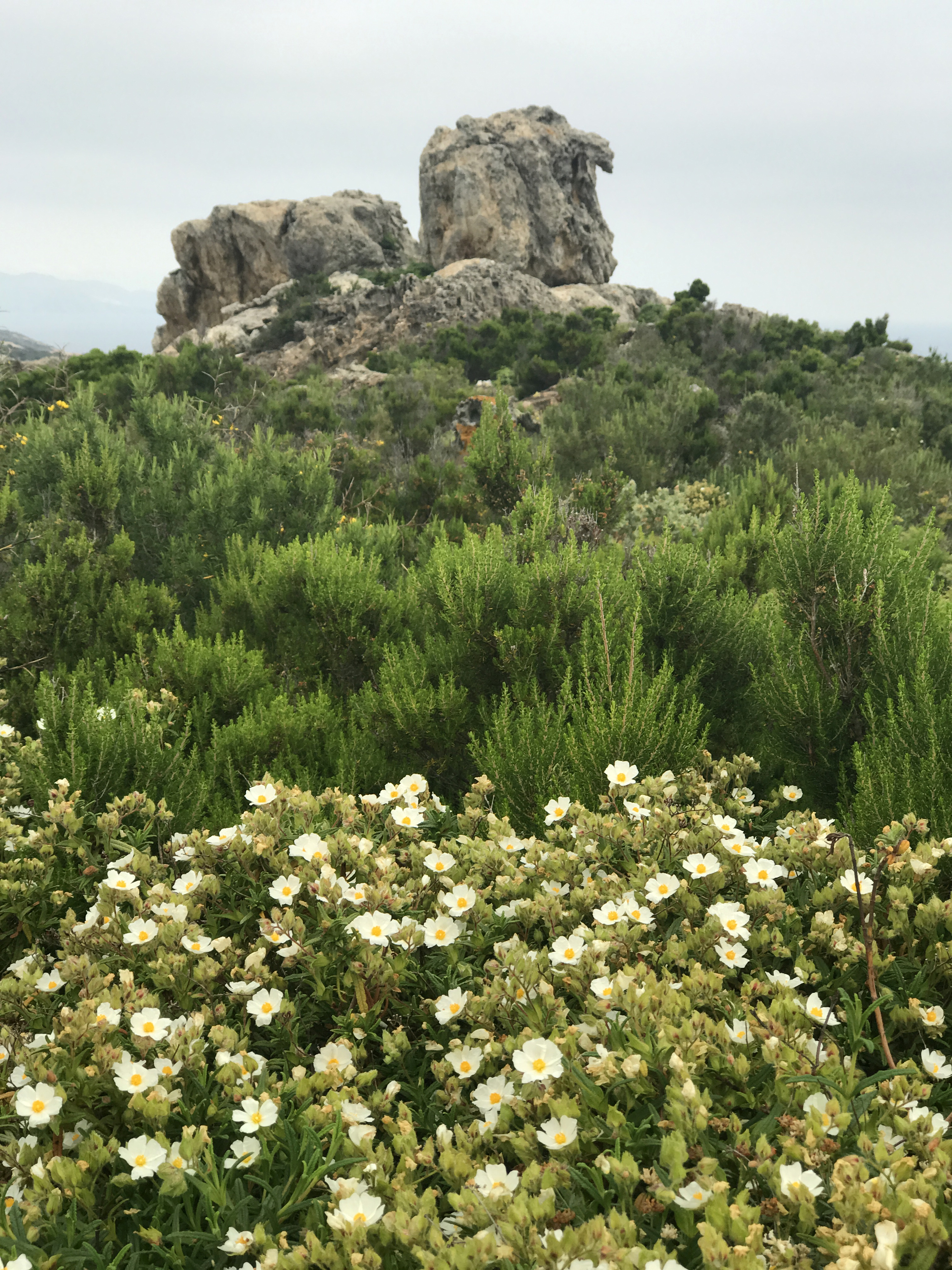
Here we find the mastic tree (Pistacia lentiscus), the prickly juniper or cade (Juniperus oxycedrus), different species of heather, rockroses and thorny broom, among many others.
The cade also has a curious connection with the name of Cadaqués. One etymological hypothesis proposes that the place name could be related to the abundance of this plant and to the words cadaquer or cadaquers. It is not, however, a proven etymology: the origin of the name Cadaqués is still debated and other interpretations exist.
Small flowers in a difficult land
When we come closer to this apparently austere vegetation we discover a diversity that often goes unnoticed from a distance.
Among rocks and scrub appear white, yellow, pink and violet flowers, many of modest size and perfectly adapted to the Mediterranean climate.
One of them is Daucus carota subsp. hispanicus, a plant of the carrot family that forms large umbels of small white flowers. It is precisely one of the species we can observe at Cap de Creus.
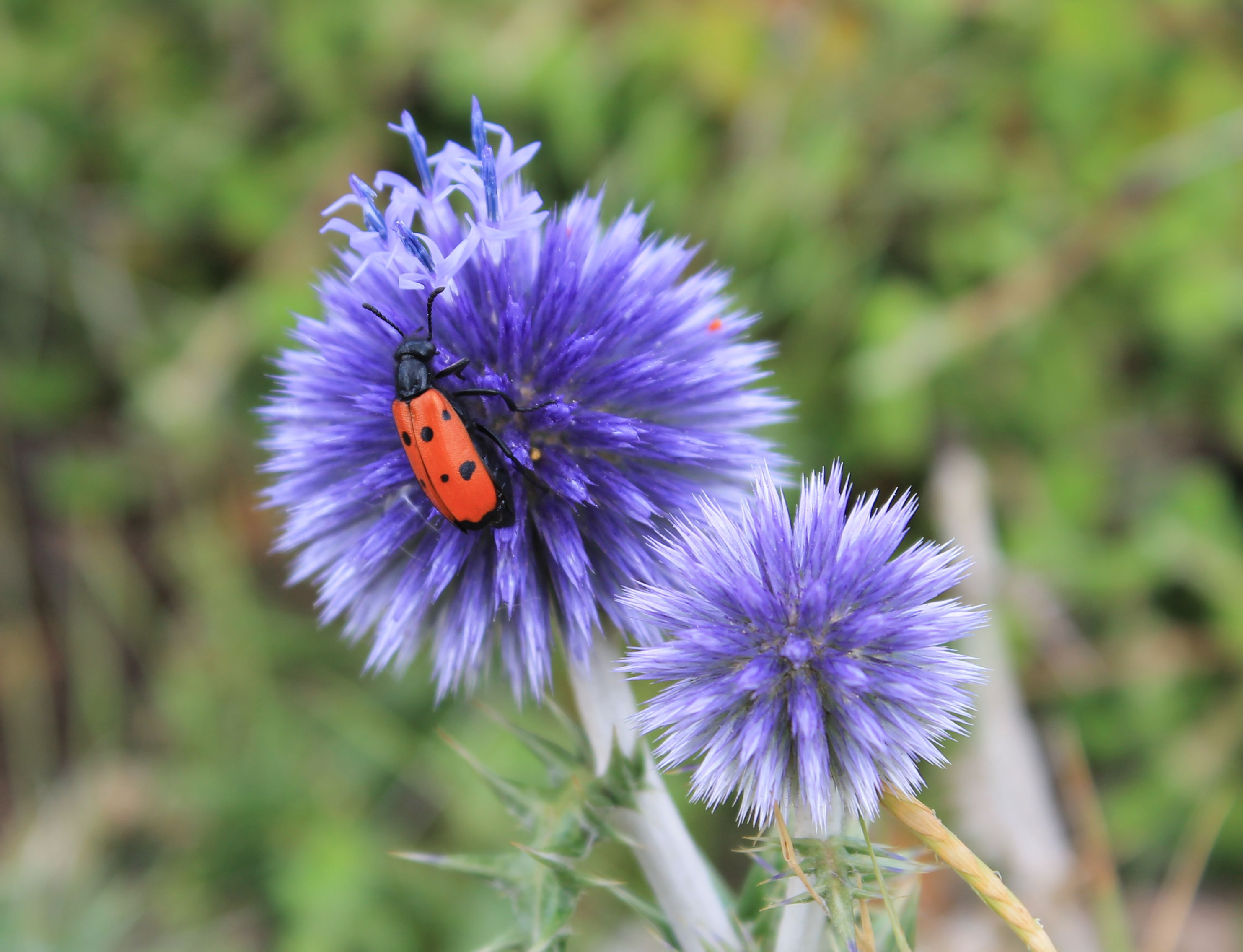
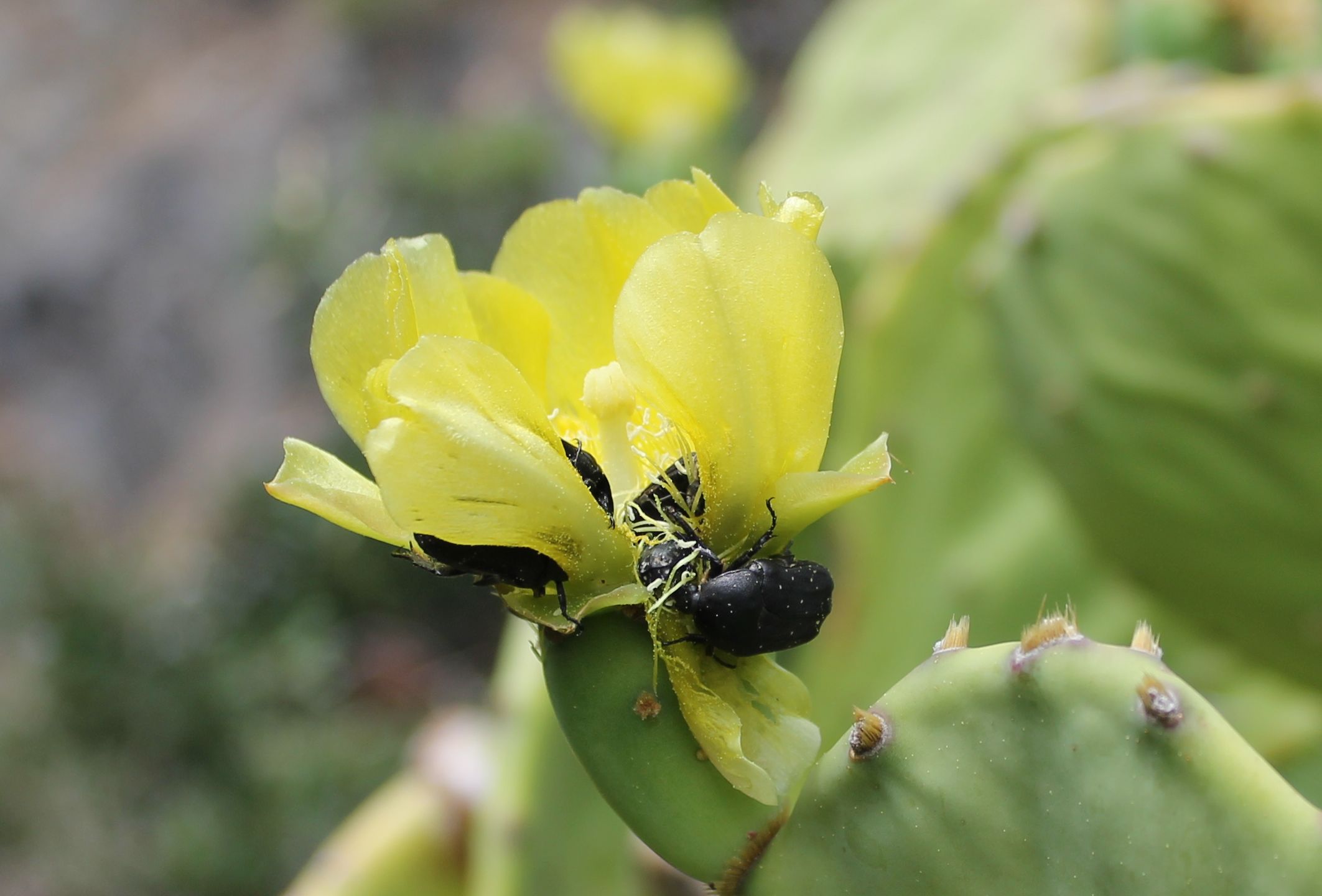
Other plants fill the landscape with occasional colour and attract numerous insects. The flowers and the beetles we find on them remind us that this vegetation, despite its tough and rugged appearance, is part of an enormously active ecosystem.
A flora that exists nowhere else
The greatest botanical uniqueness appears in the areas closest to the coast.
Here, the combination of tramuntana, salinity, rock and extreme climatic conditions has favoured highly specialised plant communities. The Catalan government considers the coastal vegetation of Cap de Creus especially valuable and points out that some of these communities have no equivalent elsewhere on the Catalan coast.
Among the characteristic species we find the Roussillon thrift (Armeria ruscinonensis) and the sea-lavender Limonium tremolsii.
But probably the most exceptional plant is Seseli farrenyi.
It is an endemic species of Cap de Creus: its worldwide distribution is restricted to an extraordinarily small area of this territory. It is a protected species and a magnificent example of how very particular environmental conditions can give rise to equally particular forms of life.
What is most extraordinary is not always the most visible.
A landscape shaped over centuries
It would be a mistake, however, to imagine the mountains surrounding Cadaqués as a land that has always looked the way it does today.
For centuries, people also profoundly transformed this landscape.
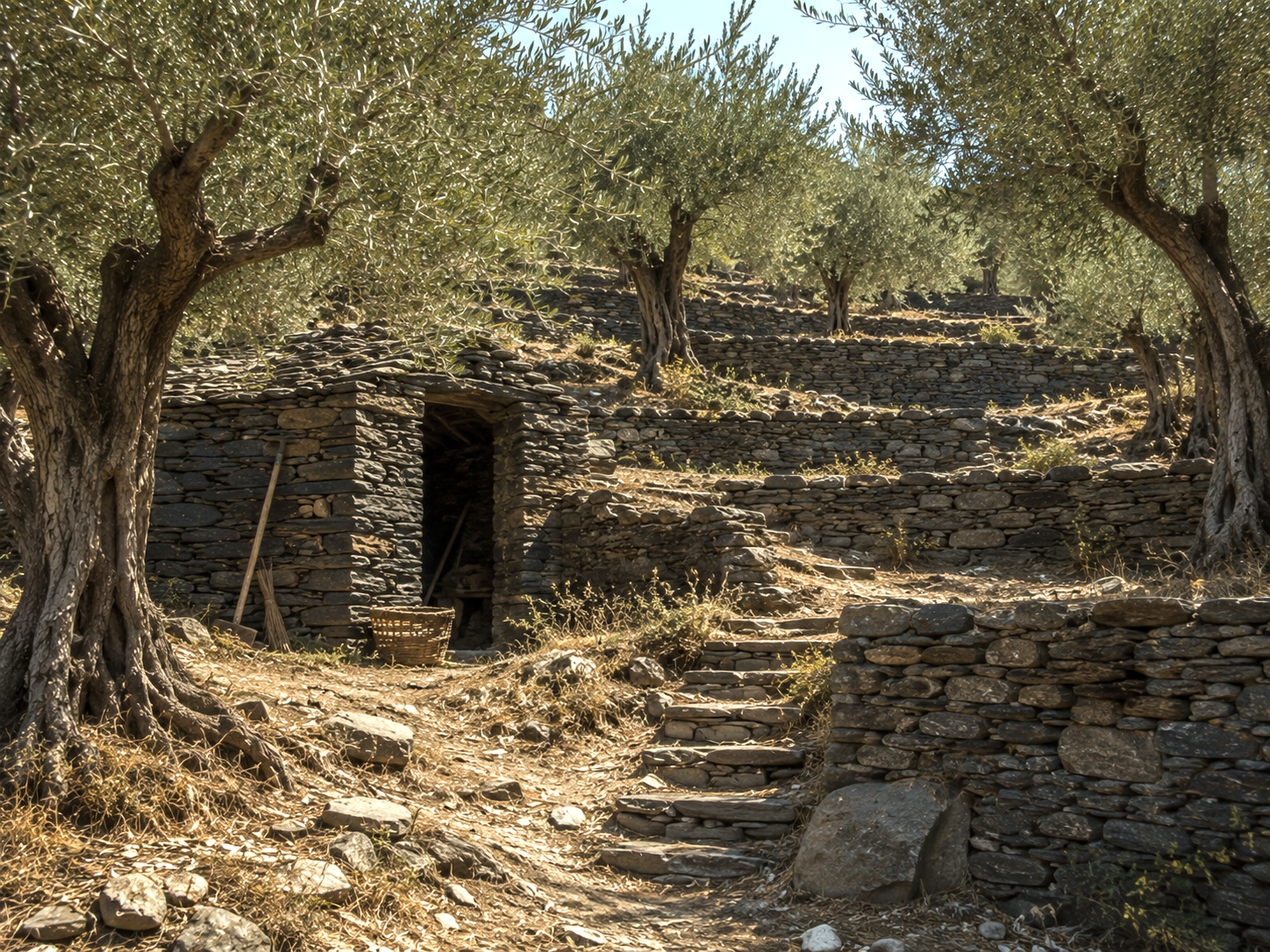
The need to obtain arable land led to the building of terraces held up by dry-stone walls, mainly for vines and olive trees. Even today, these walls run across the mountains and are one of the most visible traces of the relationship between people and a land that is hard to cultivate.
The gradual abandonment of many farmed plots allowed spontaneous vegetation to reclaim them. Fires, grazing and other human activities have also helped to create the plant mosaic we see today.
The present landscape is therefore the result of geology, climate and human activity layered over centuries.
Plants that came from far away
And there is still another layer to this story.
Some plants that we now immediately associate with the Mediterranean landscape are not native to the Mediterranean.
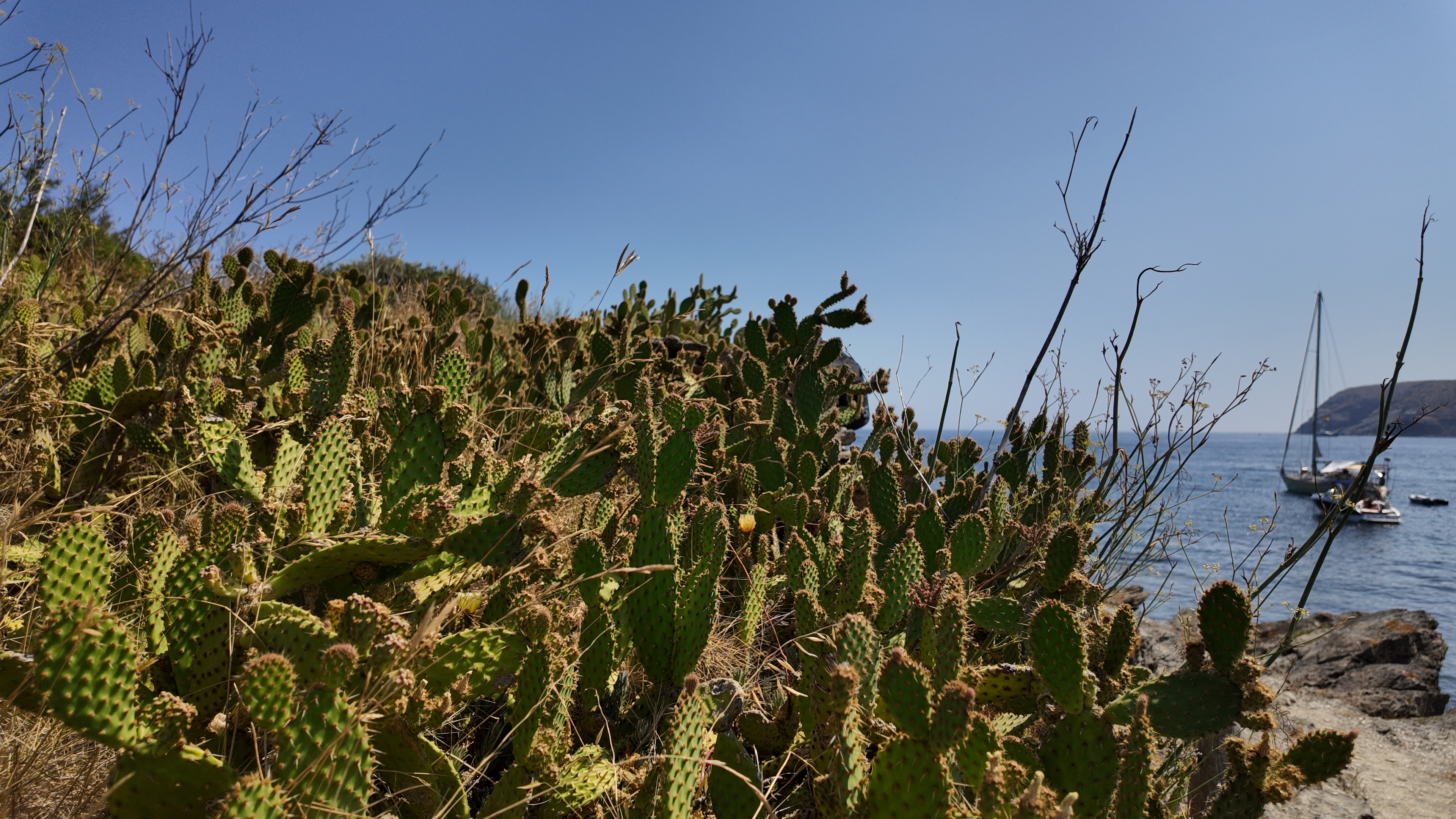
Such is the case of the prickly pear (Opuntia), native to America and introduced into Europe after contact with the American continent.
Today we can find it growing right by the sea, among rocks, field edges and dry ground, to the point that its silhouette has become visually part of many coastal landscapes.
Its presence reminds us that a landscape is not a still photograph of nature: it also changes with people, crops, exchanges and the passing of time.
A beauty made of resilience
Perhaps the best way to understand the flora of Cadaqués is to stop looking for exuberance in it.
Its beauty is of another kind.
It is that of a plant that manages to take root in a crack. That of a shrub growing close to the ground to withstand the tramuntana. That of a small species that exists only in this corner of the world.
And it is also that of ancient rocks, folded and deformed, that the wind, the salt and the sea have kept transforming for millions of years.
At Cap de Creus, rock and vegetation are not two different landscapes. They are part of one and the same story.