
A church born after destruction
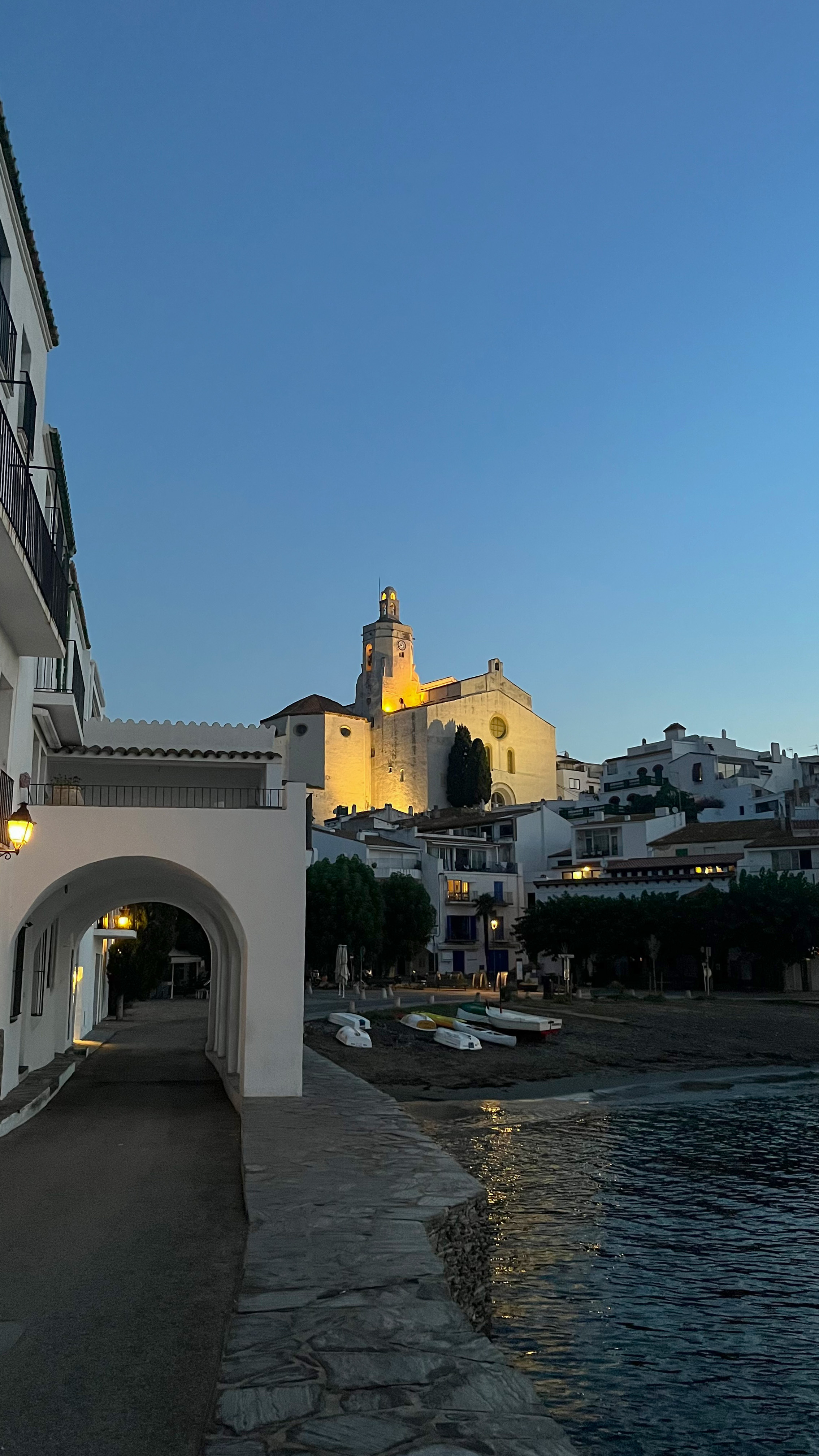
The current church began to be built in the mid-16th century, after the old temple was destroyed during the attack by the Ottoman pirate Barba-rossa in 1543. The new building was constructed mainly in late Gothic style, with a single nave, side chapels and a polygonal apse. The part closest to the façade dates from 1634-1640, while other areas, such as the capella Fonda, were extended between the 17th and 19th centuries.
One of the anecdotes most cherished by the people of Cadaqués tells that much of the work was funded by the village's fishermen. To raise the necessary money, they went out fishing on holidays or days on which, traditionally, no one was supposed to work. This popular memory was recorded in some verses by Frederic Rahola i Trèmols:
The church of my village
was built by the fishermen,
working on the feast days
for the good of our Lord.
This story makes Santa Maria much more than a religious building: it is also the result of the collective effort of a community deeply bound to the sea.
The great Baroque treasure
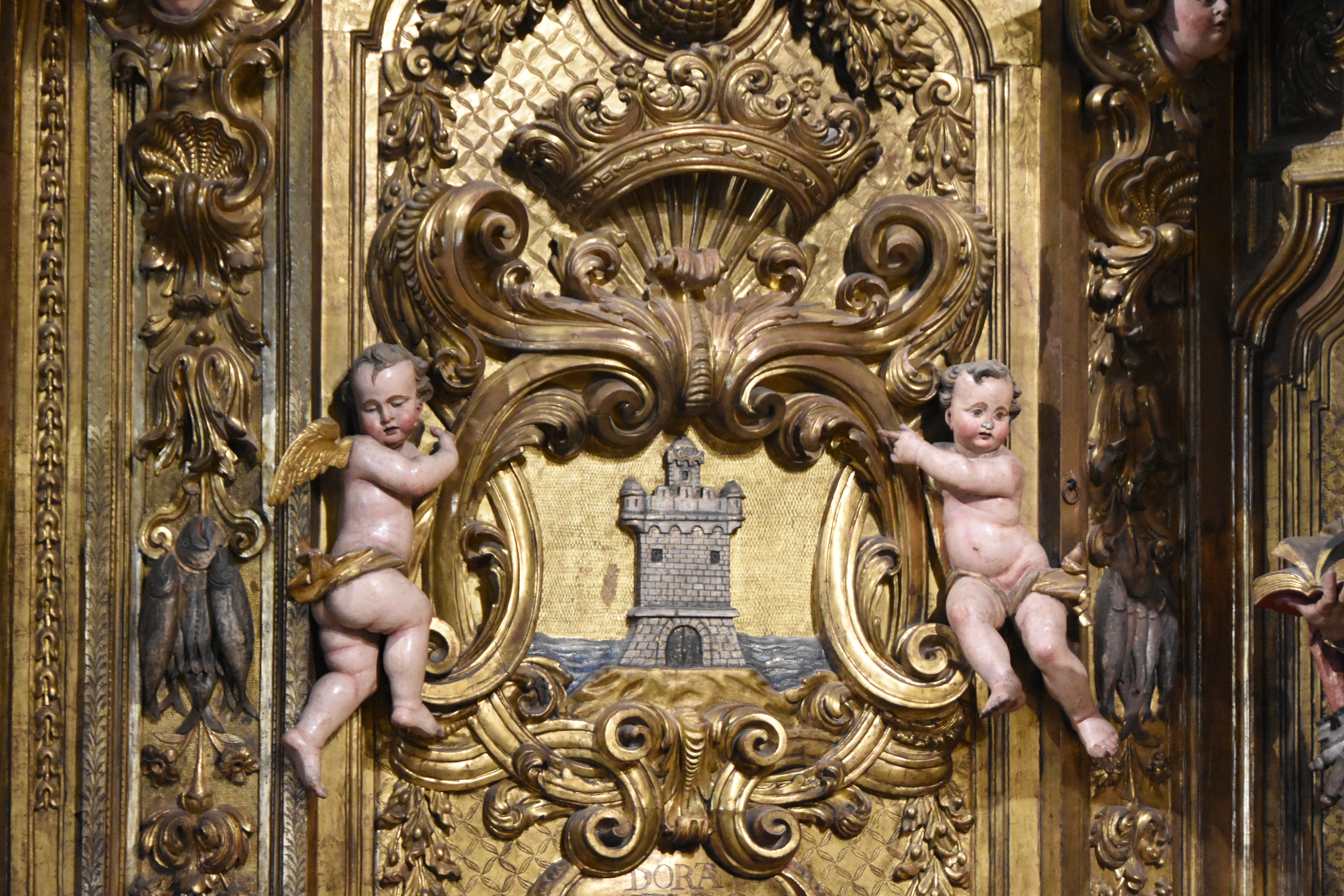
The white austerity of the exterior contrasts with the artistic richness discovered on entering the temple. Its most impressive feature is the monumental main altarpiece, dedicated to the Mare de Déu de l'Esperança (Our Lady of Hope) and considered one of the most outstanding works of Catalan Baroque.
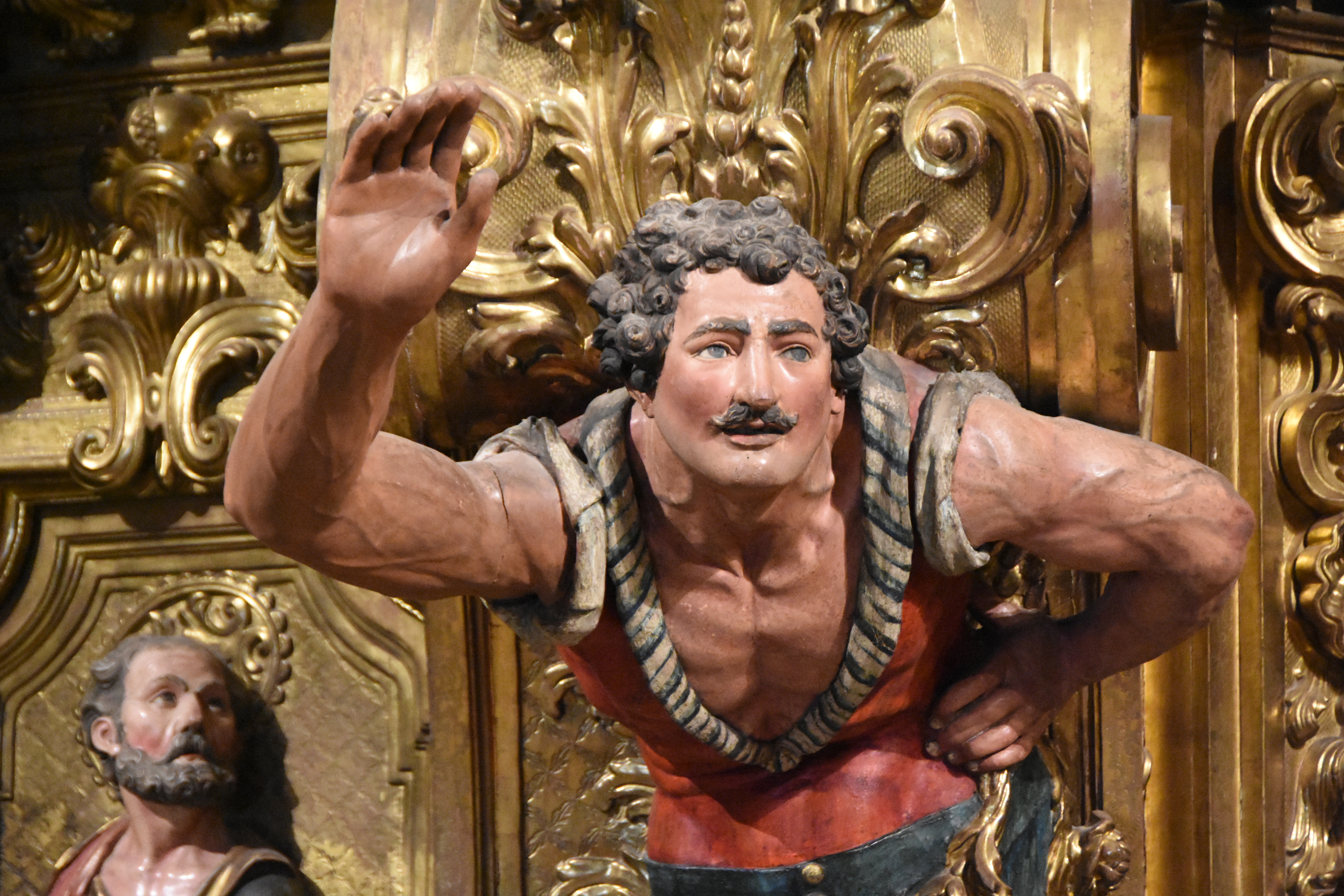
Standing roughly twenty-three metres high, the altarpiece occupies the entire apse of the church. It was designed by Jacint Moretó and executed during the 18th century by the sculptors Joan Torras and Pau Costa. Its structure, filled with columns, angels, saints and Marian scenes, was later gilded, which gives it the brightness and monumentality that still amaze visitors today.
Around the main altarpiece, the chapels hold several smaller Baroque altarpieces. Also noteworthy are the stone pulpit, the old wooden pews of the town's councillors and a small holy water font dated 1705. All these elements make the interior of Santa Maria an extraordinary collection of religious, artistic and popular heritage.
An altarpiece saved during the Civil War
Another singular episode in its history took place during the Civil War. In 1938, to protect the great altarpiece from possible destruction, a partition wall was built to hide it completely. Meanwhile, other parts of the church were used to house prisoners of war.
This precautionary measure allowed the altarpiece to survive to this day, unlike many other Catalan religious works that were lost during the conflict.
One of Catalonia's historic organs
Santa Maria also holds an organ built by the master organ builder Josep Boscà between 1689 and 1691. Considered one of the oldest historic organs in Catalonia, its presence reinforces the close relationship that has always existed between the temple and music.
The sound of the organ, amplified by the vaults and stone walls, creates a particularly intense atmosphere. For this reason, the church has become a privileged setting for sacred music concerts, organ recitals, choral performances and interpretations of classical and contemporary music.
A meeting place for the arts
Santa Maria still plays today a cultural role that goes beyond its religious activity. It is one of the main venues of the Festival Internacional de Música de Cadaqués, an initiative with more than half a century of history that brings together performers, musical ensembles and audiences from different places.
During the concerts, the Gothic nave, the gilded altarpiece and the acoustics of the temple create an exceptional dialogue between architecture, music and landscape. Artists and audiences share a space steeped in memory, where classical compositions coexist with contemporary works and new musical interpretations.
Thus, the church of Santa Maria perfectly embodies the spirit of Cadaqués: a place where seafaring tradition, history, spirituality and artistic creation come together naturally. From its privileged position over the bay, it continues to watch over the village and stand as one of its great cultural symbols.