
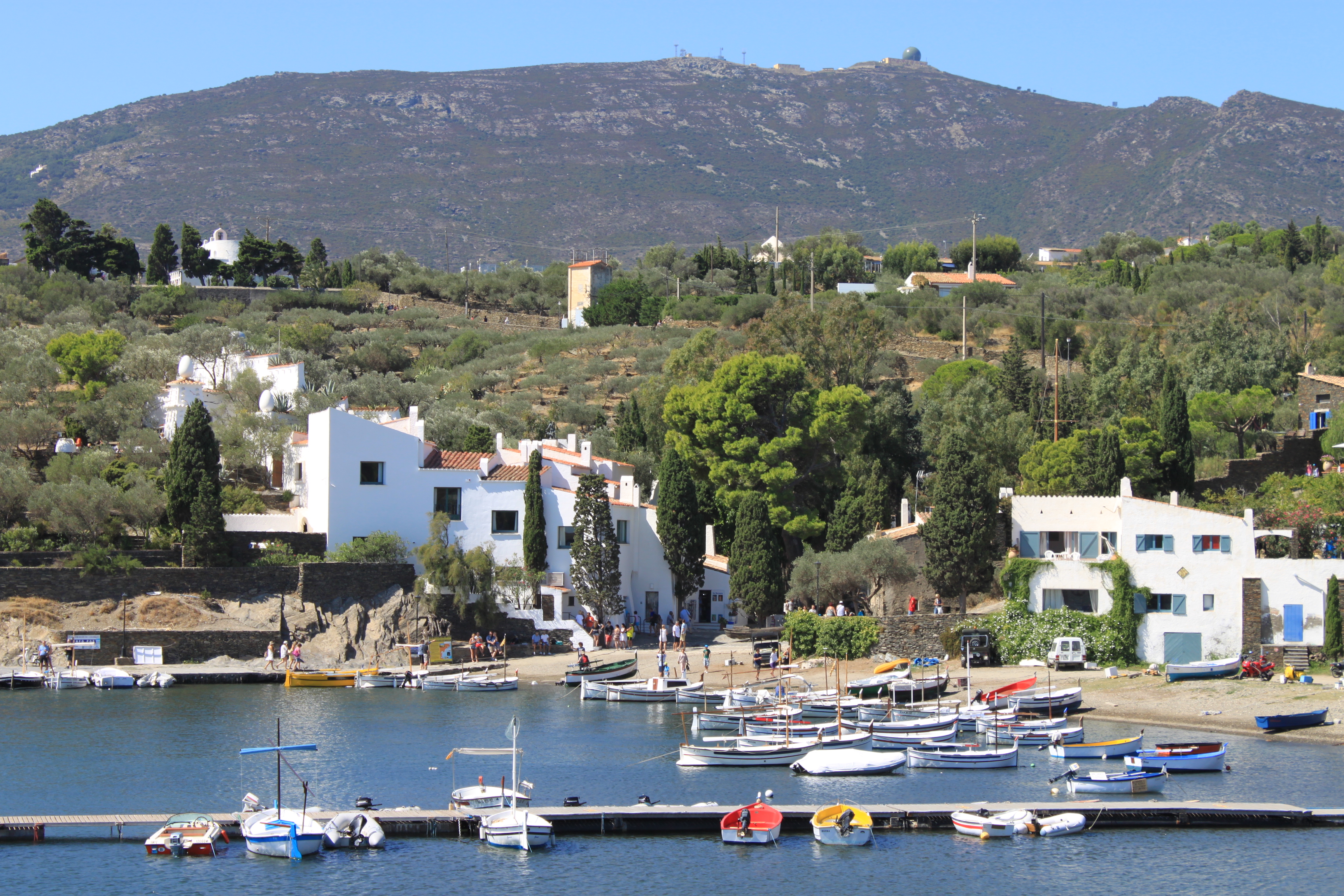
To understand Dalí it is not enough to contemplate his soft watches, his impossible figures or that moustache he himself turned into yet another work of art. You have to know the light of the Empordà, walk among the rocks of Cap de Creus, watch the sea of Portlligat when the wind leaves the bay still, and lose yourself in the white streets of Cadaqués.
Because long before becoming one of the most acclaimed artists of the 20th century, Dalí was a child who spent his summers here.
The summers that started it all
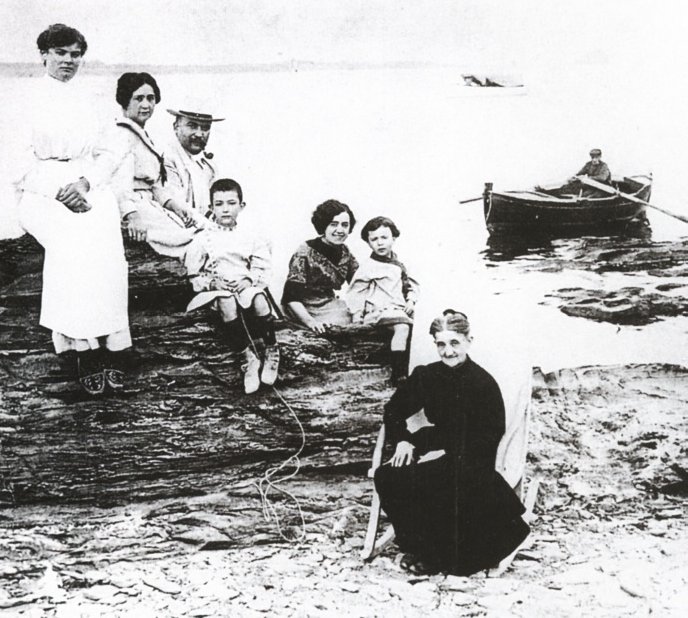
Salvador Dalí was born in Figueres in 1904, but Cadaqués entered his life very early. The Dalí family began spending their summers there when Salvador was still a child, settling in Es Llaner.
Those summers were extraordinarily important in his formation. Cadaqués was then very different from the town we know today: a relatively isolated place of fishermen, olive trees, dry-stone walls, small coves and paths winding along a coast shaped by the tramuntana.
There, the young Dalí drew and painted the landscape before him.
The Pichot family, closely tied to the artistic and cultural world, was also decisive in those early years. Ramon Pichot, a painter who had lived in Paris and mixed with artists such as Picasso, would become one of the first artistic influences on the young Salvador.
Dalí was beginning to discover that the landscape he had known since childhood could become painting.
And he would never leave it again.
Cadaqués before Dalí
It is easy to think that Dalí brought art to Cadaqués, but the story is more interesting.
By the early 20th century, the town already attracted artists and intellectuals. Its geographical isolation, the Mediterranean light and an extraordinarily mineral landscape had turned this corner of Cap de Creus into a small land of artistic discovery.
Dalí grew up in this atmosphere.
Over the years, however, it would be he who ultimately projected Cadaqués and Portlligat to the world.
Portlligat: home, studio and universe
In 1929 Dalí's life changed with the arrival in Cadaqués of Gala, who would become his companion, muse and a figure inseparable from his personal and artistic path.
After the conflict with his father, Dalí looked for a place of his own.
He found it very close by.
In 1930 he acquired a small fisherman's hut in Portlligat, then a solitary and austere spot, with practically no comforts.
That tiny building would be only the beginning.
For more than forty years, Dalí and Gala kept buying and adding new huts. One room led to another; there appeared level changes, corridors, windows, courtyards and unexpected spaces.
The house grew almost like a living organism.
And today it is still like that.
Visiting the Salvador Dalí House in Portlligat is probably one of the best ways to approach the most intimate Dalí. His studio, personal objects, furniture and many of the spaces conceived by him and Gala are preserved there.
But there is something no museum could move into a gallery: the landscape seen from the windows.
It is the same landscape Dalí watched while he worked.
When Cap de Creus enters the paintings
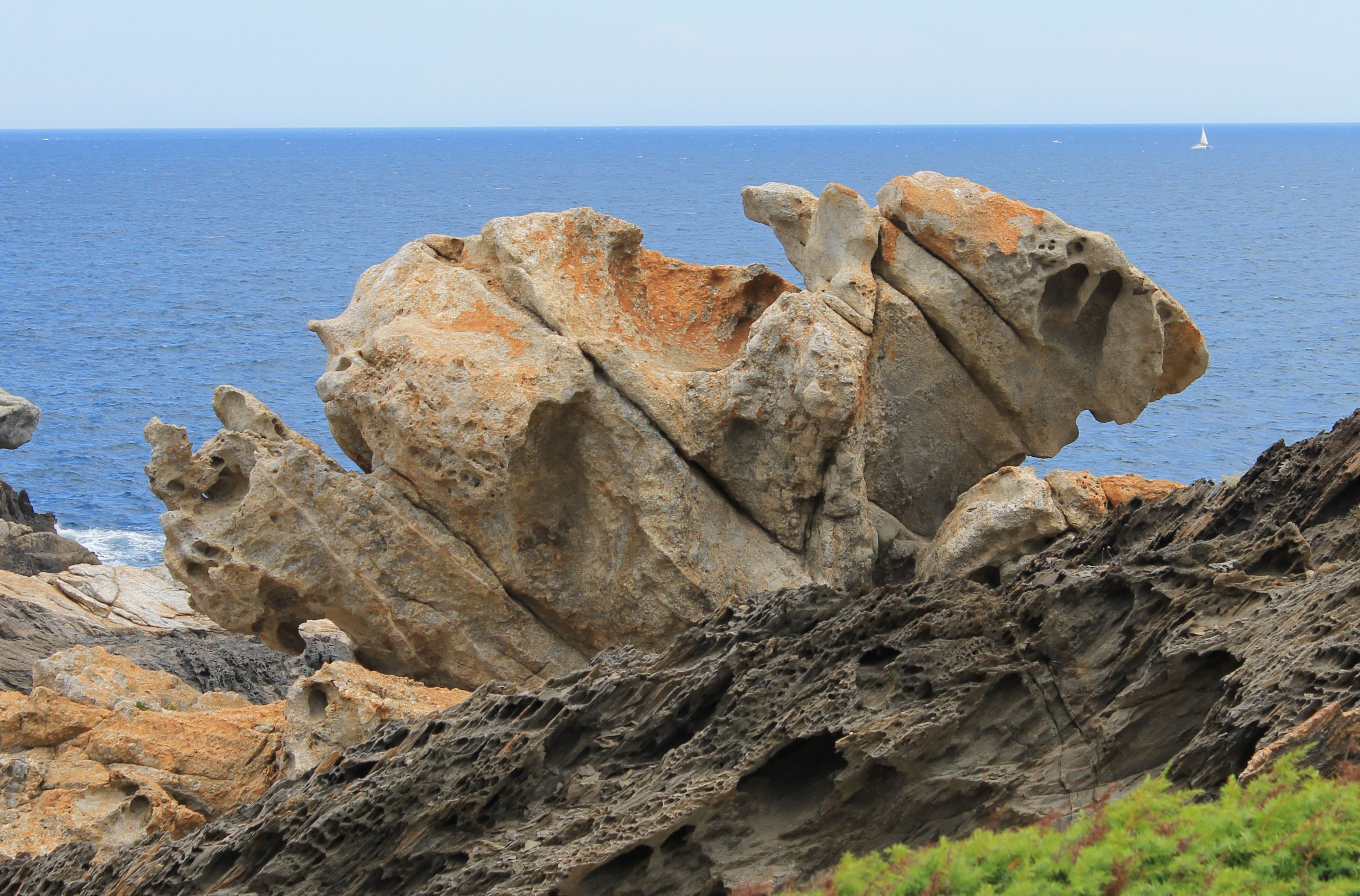
The shapes of the rocks at Cap de Creus seem to have been created expressly to feed a surrealist's imagination.
The tramuntana, the sea and erosion have shaped over millennia a land full of capricious forms. In them Dalí saw animals, faces and figures that he would then transform through his imagination.
That is why, when you walk the paths of Portlligat, Tudela or Cap de Creus, surprisingly familiar shapes begin to appear.
It is not simply that Dalí painted this landscape.
The landscape ended up becoming part of his visual vocabulary.
Dalí through the streets of Cadaqués
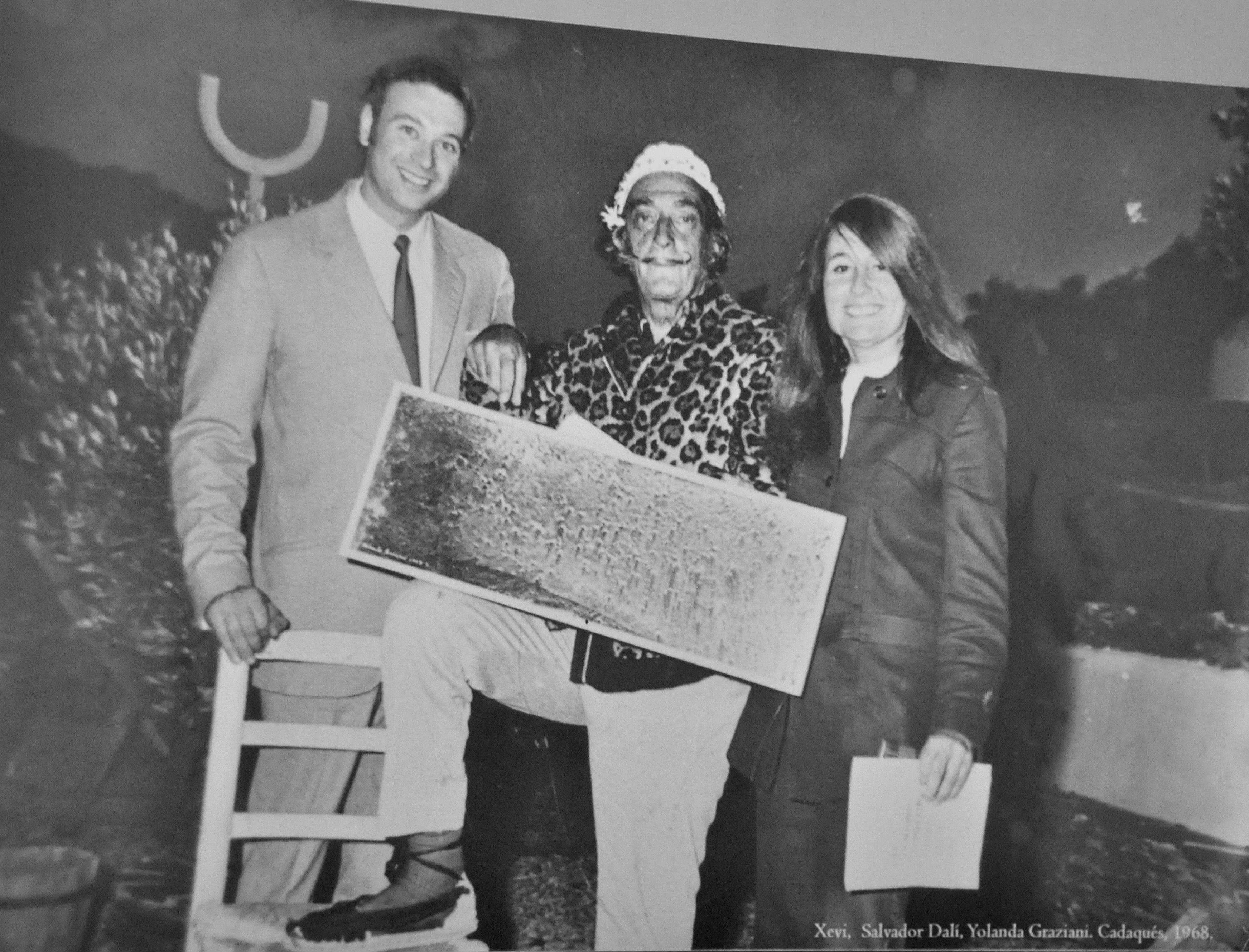
Dalí did not live cut off from the town. For decades, his presence was part of the everyday life of Cadaqués.
He strolled through its streets, frequented its establishments and received artists, writers, filmmakers and personalities who came here drawn by him, by Cadaqués or by both at once.
Even today it is possible to follow some of his traces.
Es Llaner, where the family spent its summers; Port Alguer, one of the landscapes he painted in his youth; the old town, the beaches, Portlligat and the paths leading towards Cap de Creus are all part of a Dalinian territory that goes far beyond a museum.
In Cadaqués, very often, the museum is the landscape itself.
Dalí after Dalí
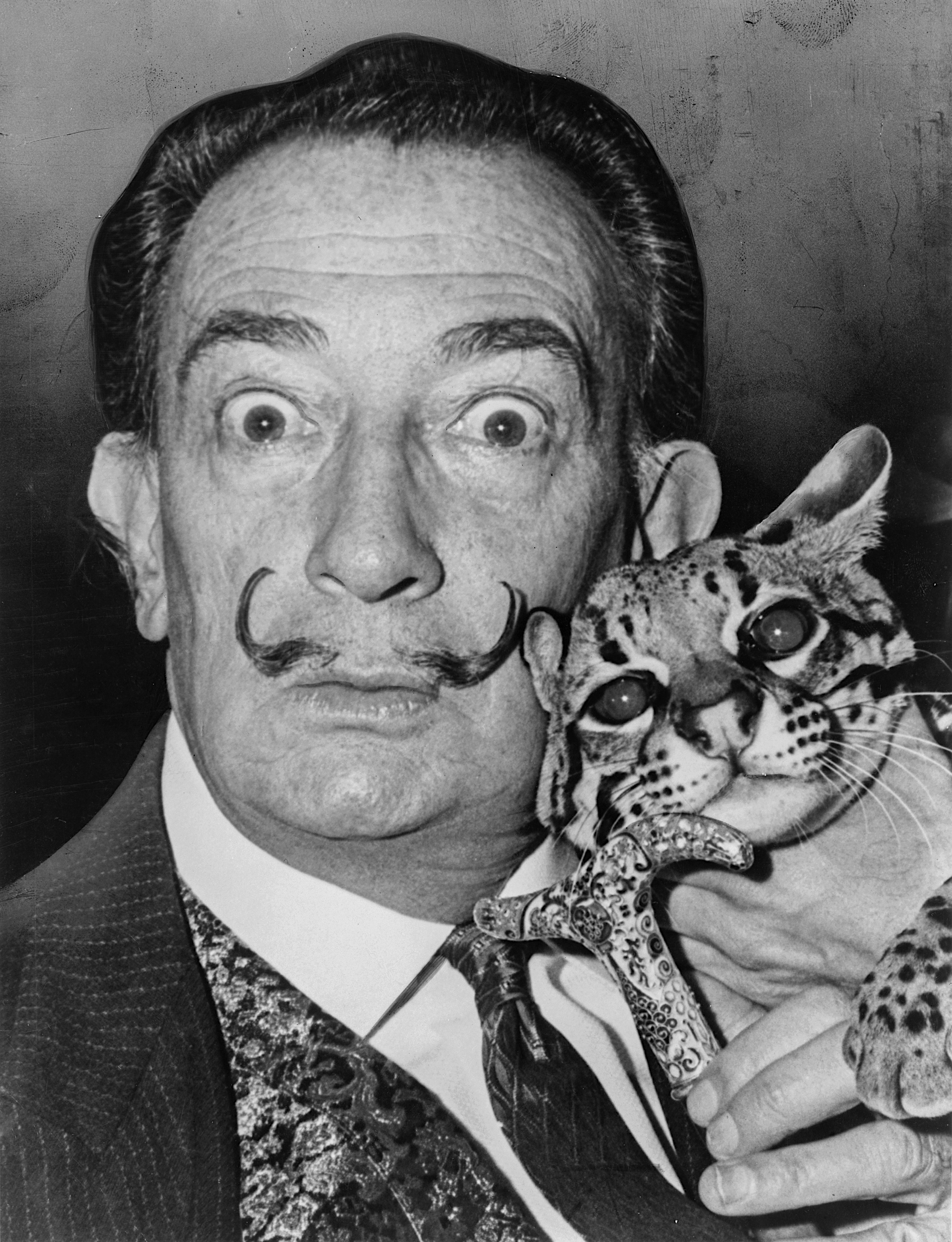
Salvador Dalí's influence did not end with his death in 1989. His work continues to be studied, but his own image has also become an icon recognised all over the world.
The face, the gaze, the moustache and that very particular way of building his character have been reinterpreted by artists of later generations, through very different techniques and languages.
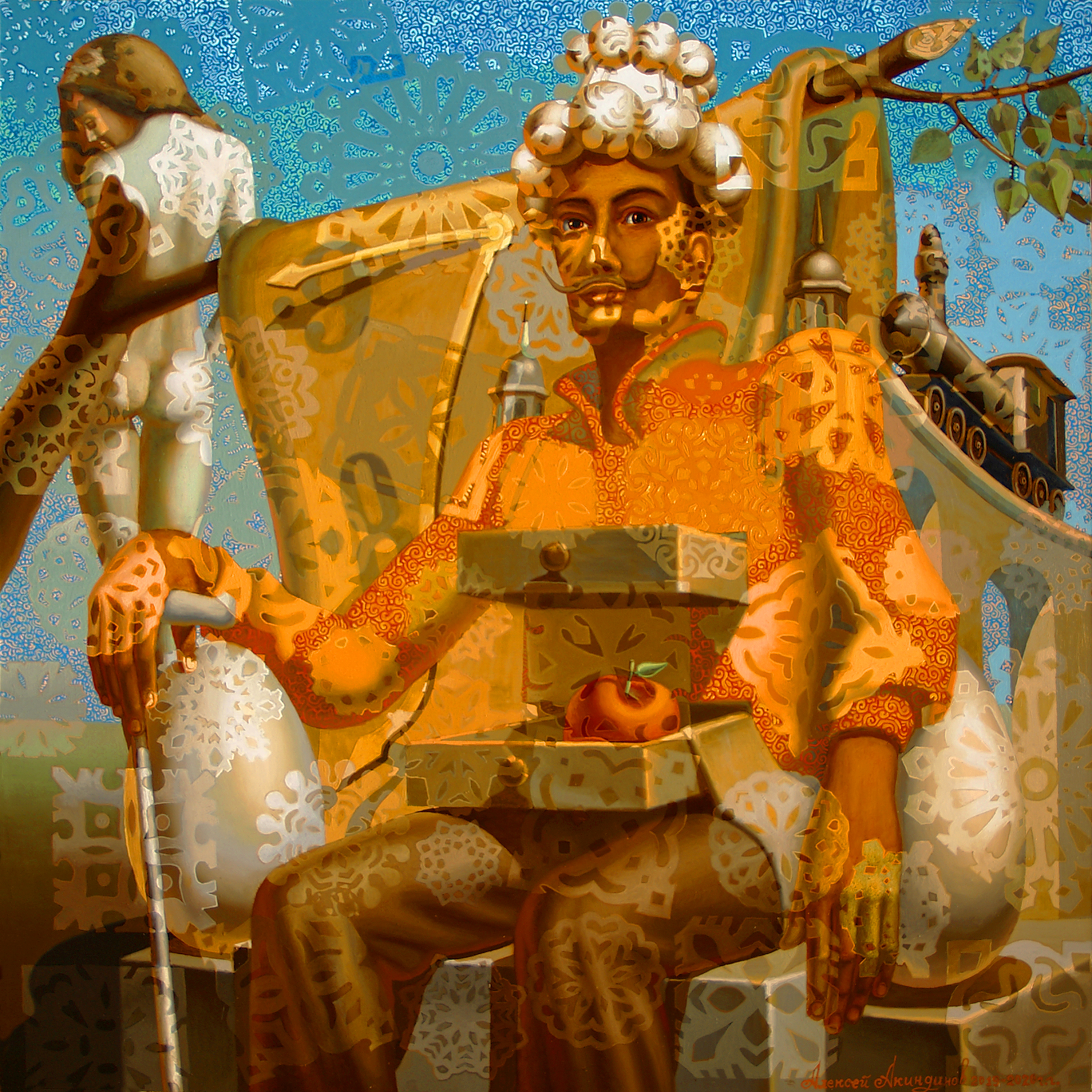
One example is the Russian painter Alexey Akindinov, creator of a language of his own based on ornamentalism and influenced during his training by Dalí's work and writings.
Between 2019 and 2020 he created The Throne of Dalí. Portrait of Salvador Dalí, a contemporary reinterpretation of the artist that would become the central piece of a triptych devoted to his figure.
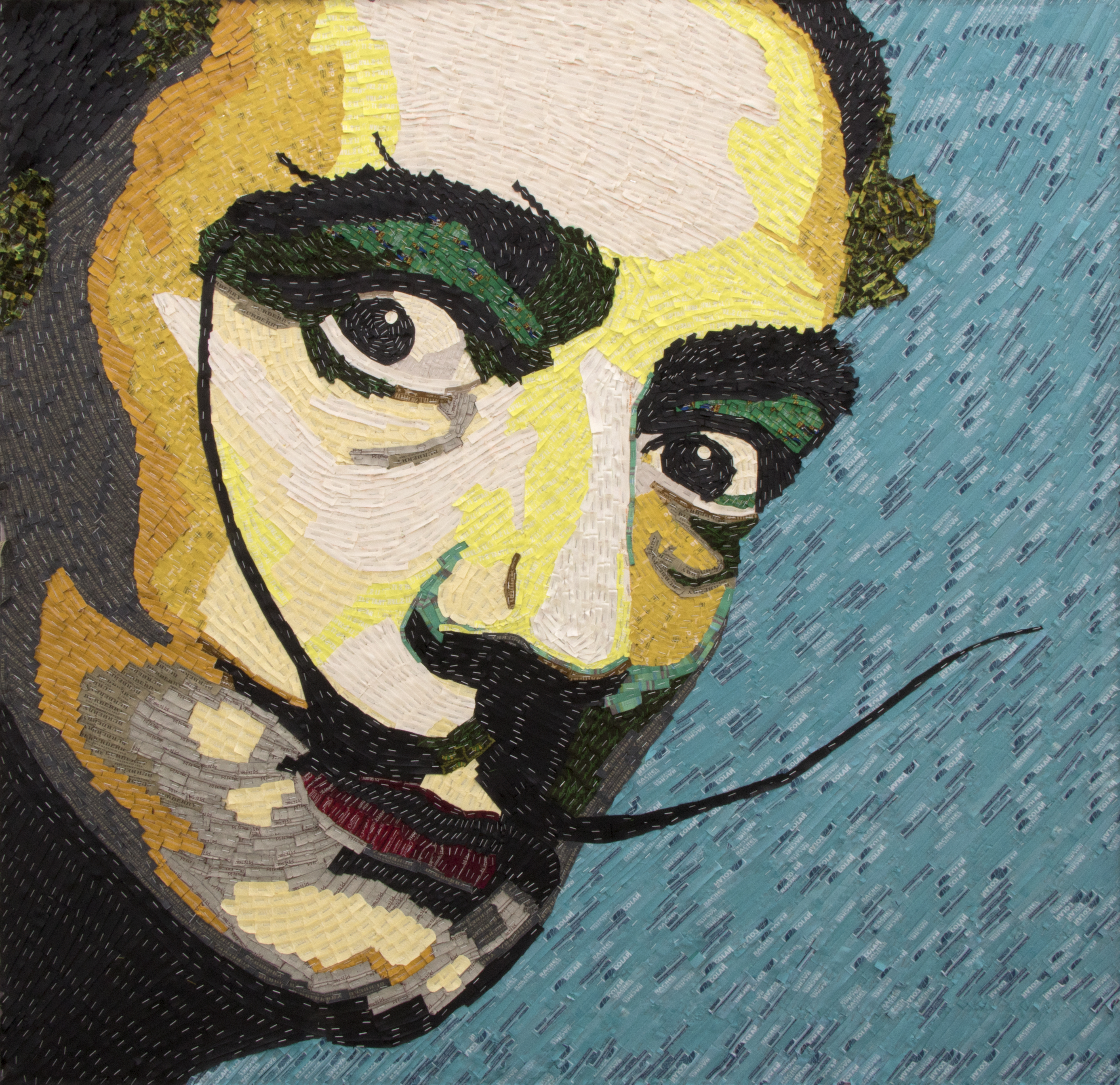
We also find contemporary approaches made with unexpected materials, such as the portrait of Dalí created by Rwlismo with textile labels on foam board, where the painter's image is rebuilt from hundreds of small pieces.
They are not works by Dalí, nor do they belong to his time. And that is precisely where their interest lies.
They show the extent to which, decades after his death, Dalí still generates new ways of looking at Dalí.
His work is part of the history of art, but his figure has crossed that boundary to become a cultural symbol as well.
The Dalí Triangle: a journey through the Empordà
Cadaqués is also a magnificent starting point for discovering what is known as the Dalí Triangle, formed by three places closely linked to different moments in Salvador Dalí's life.
Salvador Dalí House — Portlligat
A stone's throw from Cadaqués.
It was his only permanent residence and the place where Dalí usually lived and worked from 1930 until Gala's death in 1982.
The visit lets you discover his studio, the private rooms, the courtyards, the gardens and that peculiar architecture built from successive fishermen's huts.
It is, probably, the most personal Dalí.
The visit requires prior booking.
Dalí Theatre-Museum — Figueres
In Figueres, the city where the artist was born, we find a completely different experience.
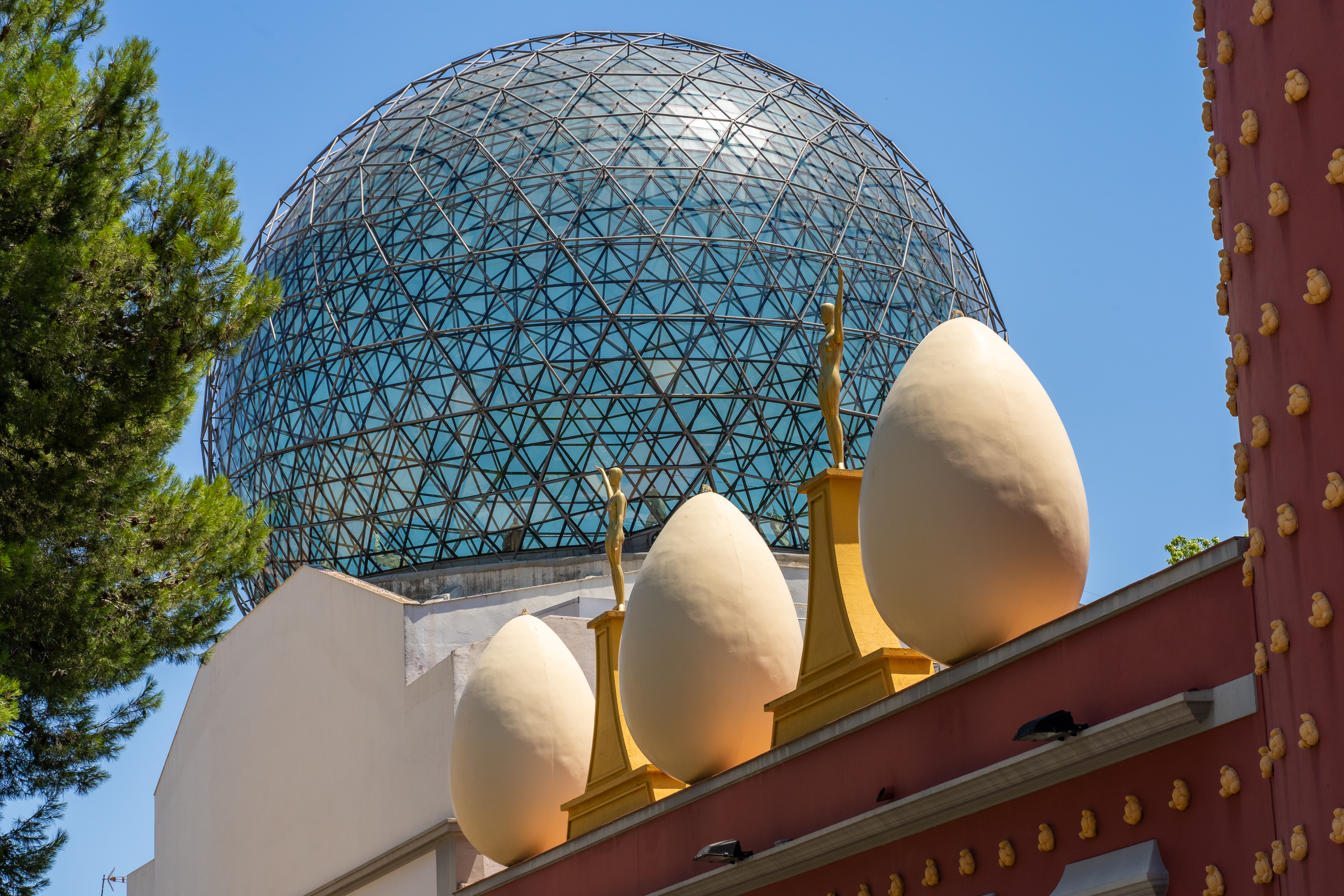
Dalí was personally involved in the conception of the museum, built on the remains of the former Municipal Theatre. Inaugurated in 1974, the building is in itself an enormous surrealist creation.
The great geodesic dome, the giant eggs, the sculptures and the installations prepare the visitor to enter a space where architecture and artwork almost merge.
Dalí is buried in the Theatre-Museum itself.
It is the spectacular, provocative and theatrical Dalí.
Gala Dalí Castle — Púbol
The third vertex takes us to the small village of Púbol.
Dalí acquired the medieval castle in 1969 and transformed it into a space dedicated to Gala.
The result is very different from Portlligat and Figueres: quieter, more intimate and mysterious.
After Gala's death in 1982, Dalí lived in the castle for a time.
It is the most intimate and twilight Dalí.
And then, back to Cadaqués
You can get to know Dalí through books. You can contemplate his works in the great museums of the world and visit the Theatre-Museum in Figueres.
But there is a part of Salvador Dalí that can only be understood here.
When you have visited Portlligat and then walk back towards Cadaqués; when the church of Santa María and the white houses over the bay appear; when the sun changes the colour of the rocks and the tramuntana draws shapes over the sea, many of Dalí's images no longer seem so impossible.
Perhaps his imagination was not so far from reality.
Perhaps Dalí simply learned to look at Cadaqués in a way that others had not yet discovered.