The cliffs, the scrub, the small wetlands, the coves, the rocky seabeds and the great depths that appear very close to the coast create an extraordinary diversity of habitats in a relatively small area.
On land, reptiles, small mammals, insects and birds have found ways to adapt to a territory dominated by rock and the tramuntana wind. In the sea, the meadows of Posidonia, the coralligenous bottoms and the underwater walls are home to very different communities.
To speak of the fauna of Cadaqués is therefore necessarily to speak of two connected worlds: the one that lives on the rock and the one that begins beneath the water.
A privileged territory for birds
Birds are probably the most visible and emblematic group of the land fauna of Cap de Creus.
The geographical position of the territory makes it especially interesting during the spring and autumn migrations, when numerous species follow the coast on their journeys between Europe and Africa.
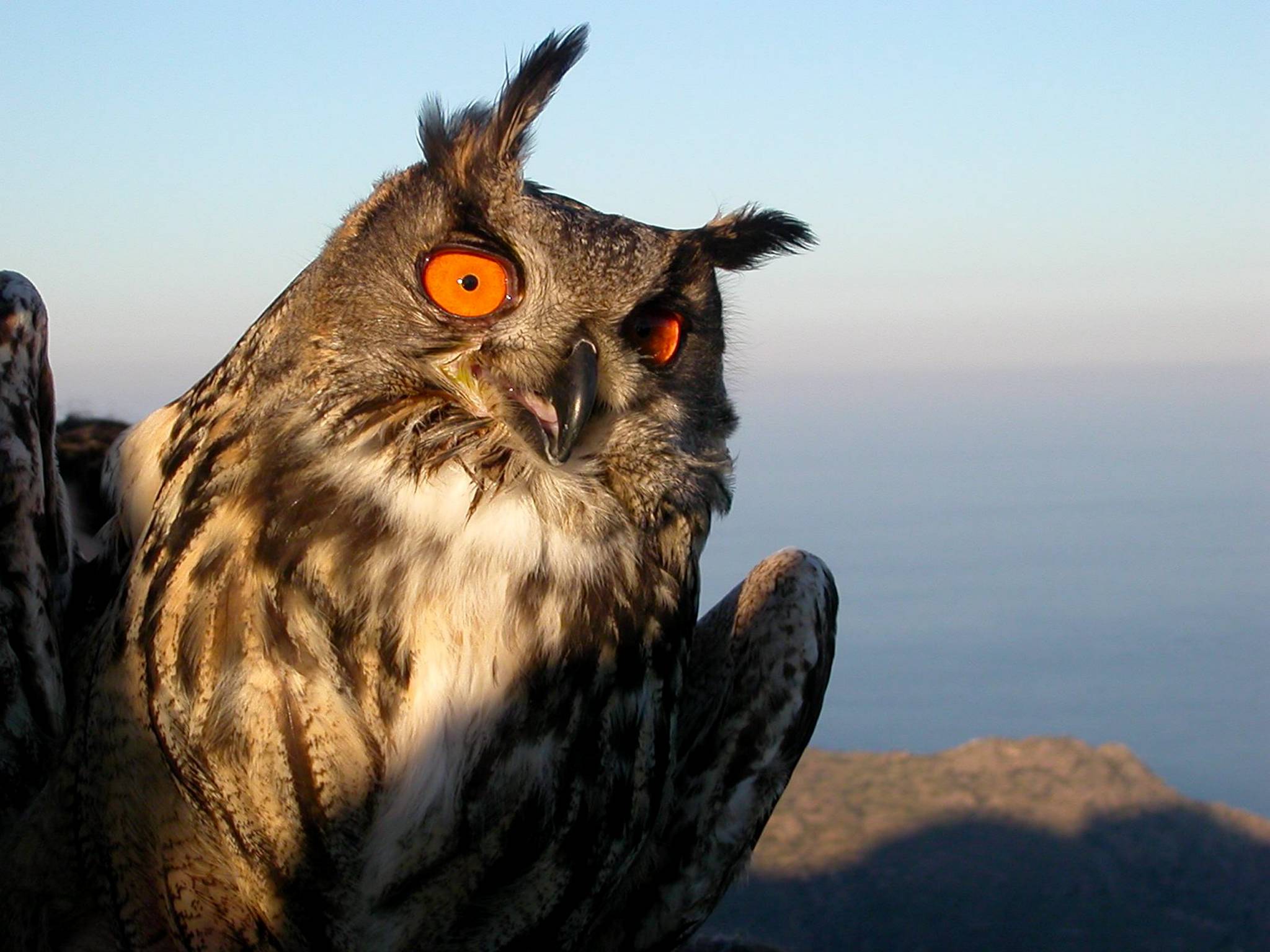
In the rocky sectors and on the cliffs we can find large raptors such as Bonelli's eagle (Aquila fasciata), as well as the peregrine falcon (Falco peregrinus) and the Eurasian eagle-owl (Bubo bubo), the largest owl in Europe.
These are animals that fit perfectly into this landscape: the rocky walls offer nesting and lookout points, while the open spaces make hunting easier.
But as we approach the sea, other protagonists appear.
The European shag, a dweller of the cliffs
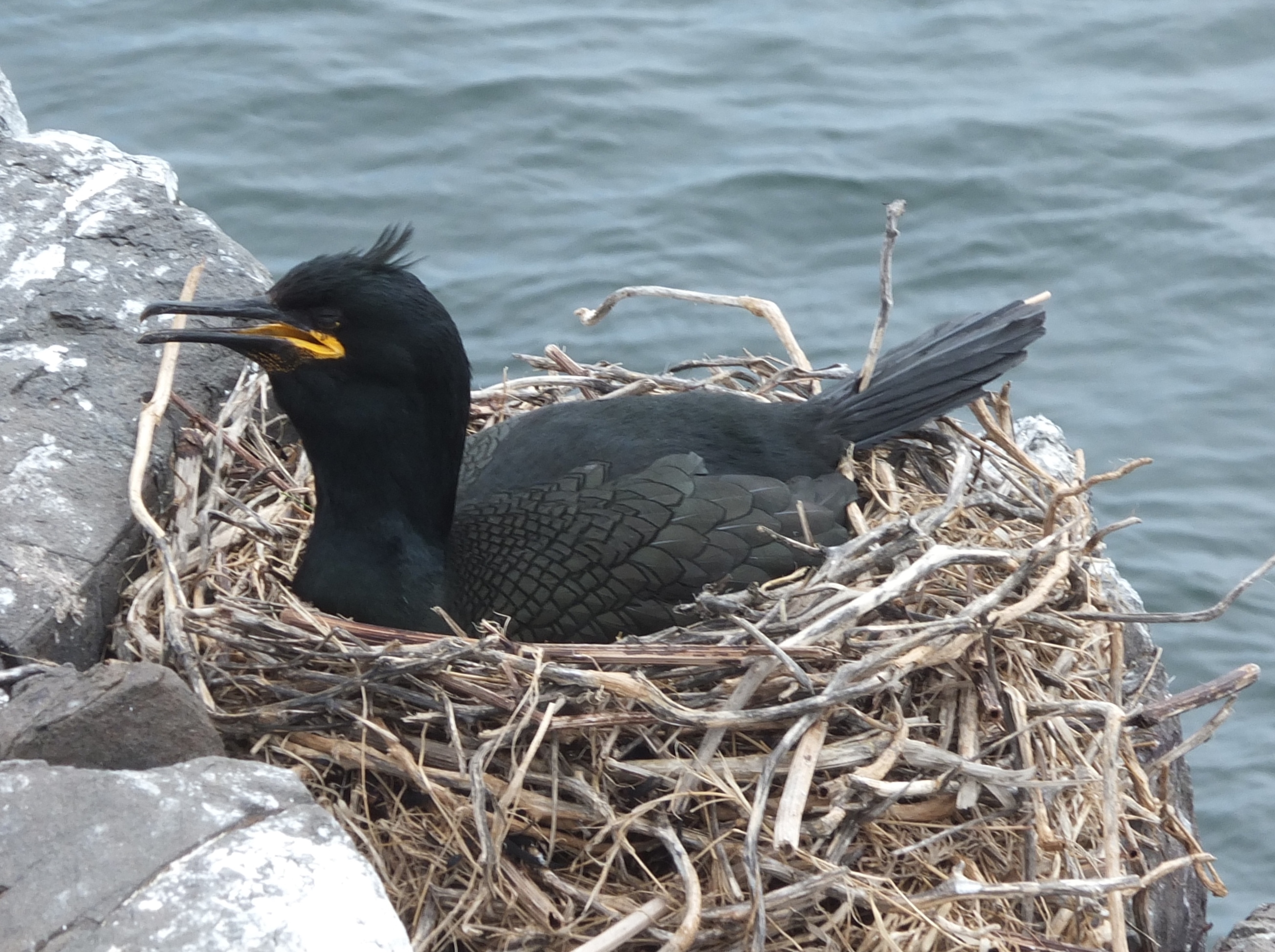
One of the most representative birds of the coast is the European shag (Gulosus aristotelis, traditionally Phalacrocorax aristotelis).
Unlike the great cormorant, it is a species closely tied to rocky coasts. We can watch it on the rocks or swimming and diving in search of fish.
The Natural Park also highlights the presence of shearwaters, terns, gulls and gannets, among other seabirds.
Cap de Creus is therefore, at the same time, a land territory, a migratory corridor and a privileged observatory over the Mediterranean.
A small fauna that often goes unnoticed
Not all the uniqueness of Cap de Creus flies over the cliffs.
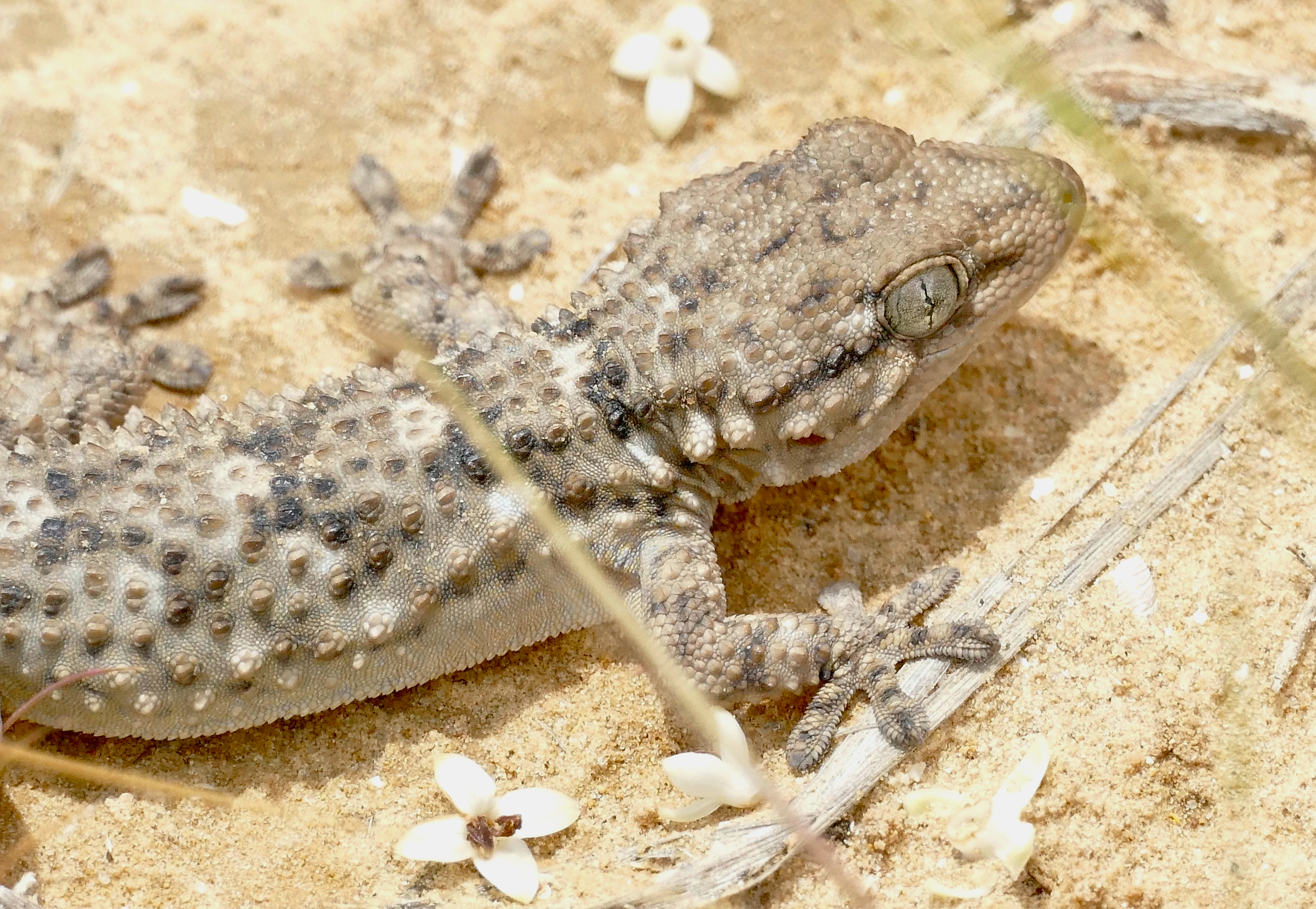
Among the stones and the scrub live reptiles perfectly adapted to the Mediterranean climate. One of the most common is the Moorish gecko (Tarentola mauritanica), also easy to find near buildings and walls.
We likewise find lizards and wall lizards, while the presence of Hermann's tortoise (Testudo hermanni) is much scarcer. The Mediterranean pond turtle (Mauremys leprosa) also exists here, linked to inland aquatic environments.
The range of amphibians is surprising too. Despite the dry image of the territory, the Park notes populations of almost all the species present in Catalonia, from the small Mediterranean tree frog (Hyla meridionalis) to the toads.
A snail that exists only here
Some of the most extraordinary animals of Cap de Creus are so small that they would probably go completely unnoticed on a hike.
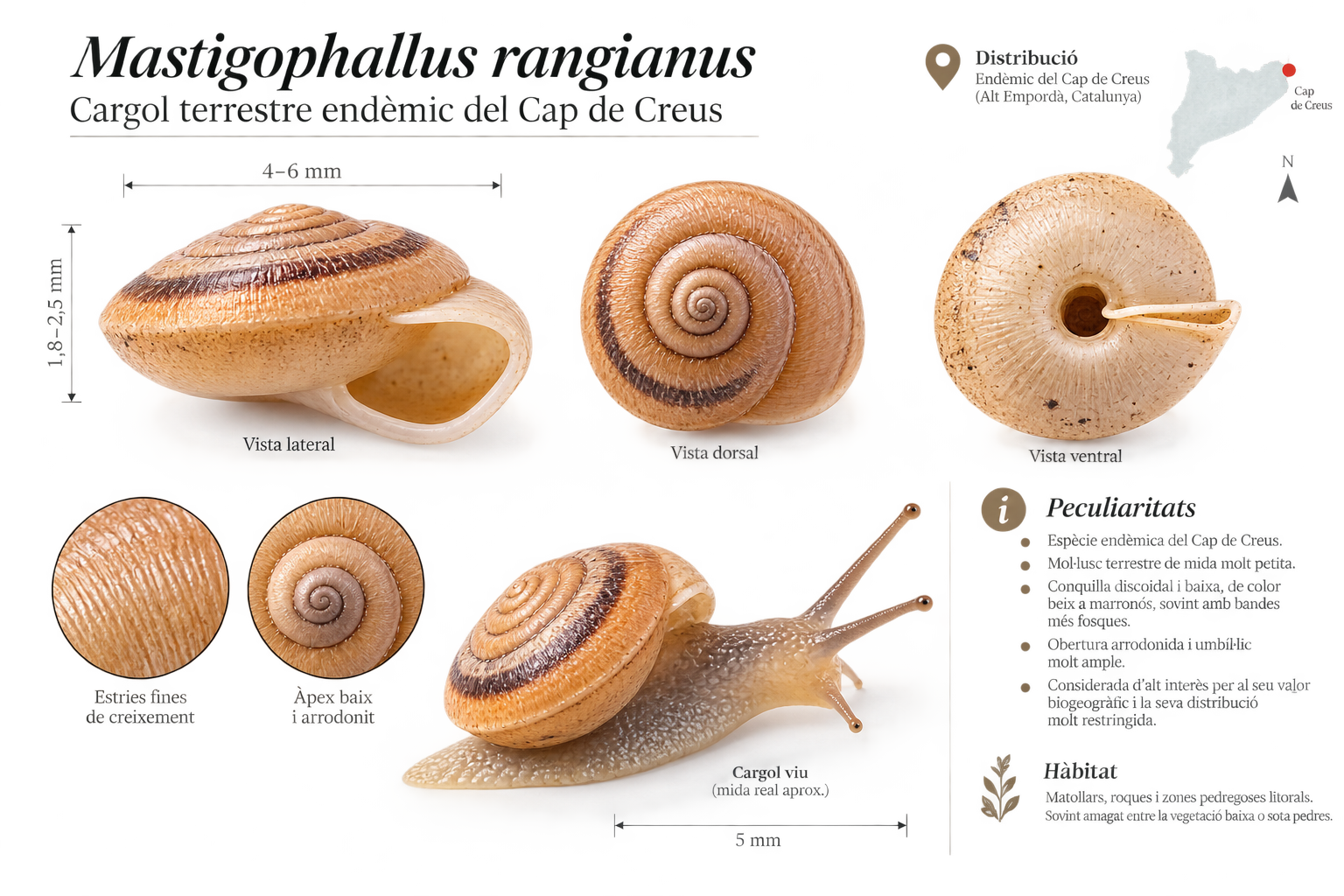
Such is the case of Mastigophallus rangianus, a small land snail endemic to Cap de Creus.
This means that its distribution is tied to this territory.
Among the land invertebrates of interest are also the beetle Pseudochlamys raholai and the true bug Campylosteia serena, species protected for their natural value.
It is a good example of a reality we often forget: the uniqueness of an ecosystem is not always represented by the largest or most spectacular animals.
Beneath the water another Cap de Creus begins
If on land the rock determines much of the landscape, beneath the sea it goes on doing exactly the same.
The seabeds of Cap de Creus feature walls, cracks, caves, sandy areas and steep drops. The depth increases rapidly in certain sectors and this combination allows very different marine communities to coexist.
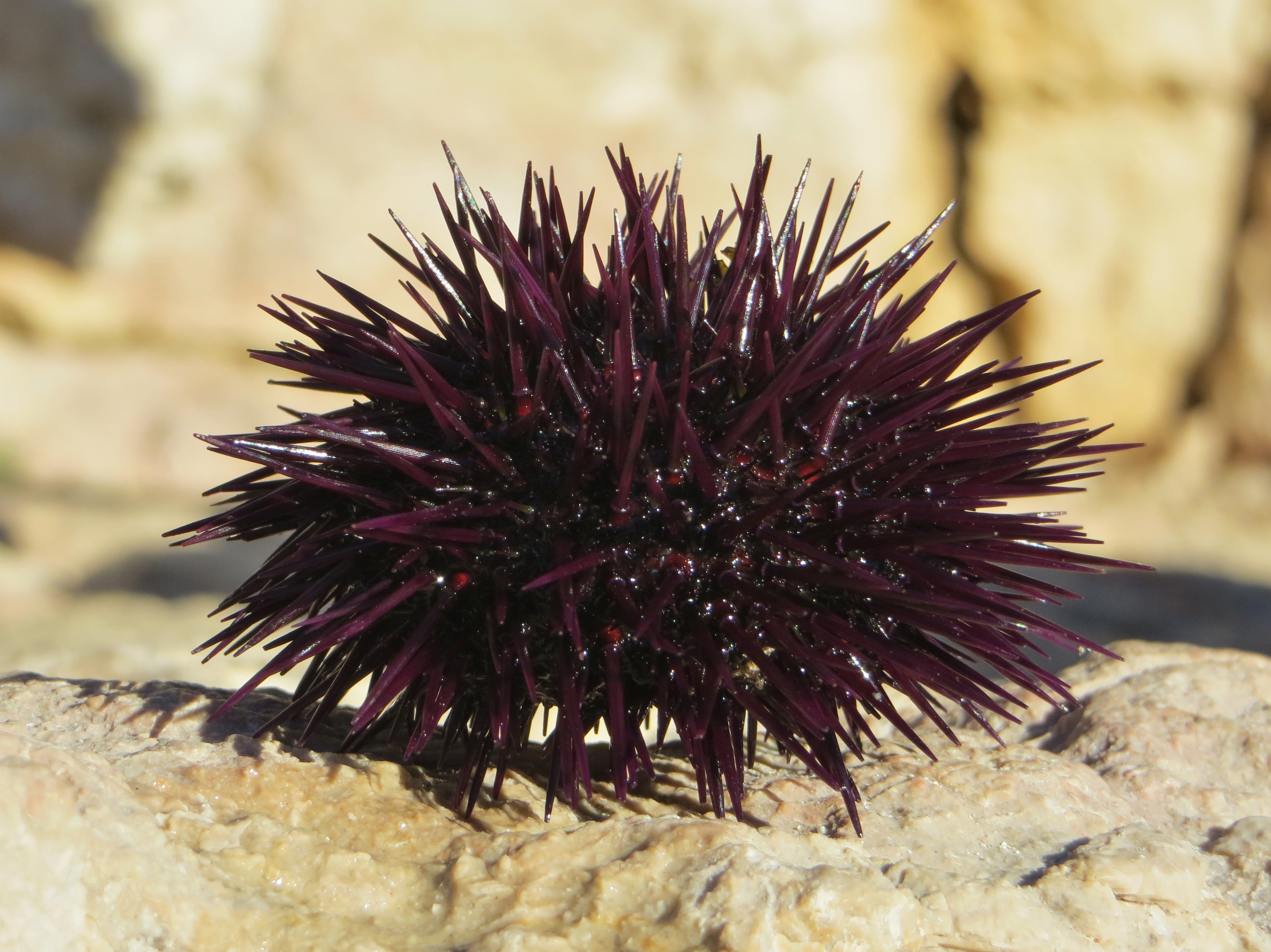
At shallow depths we find well-lit bottoms where algae, crustaceans, starfish, molluscs and sea urchins live, among them the purple sea urchin (Paracentrotus lividus).
It is also here that the meadows of Posidonia oceanica appear.
Posidonia is not an alga but a true marine plant, with roots, stems, leaves, flowers and fruit. That is why, botanically, it could have appeared in our article on flora; but ecologically it is so important for marine animals that it makes more sense to explain it here.
Its meadows provide shelter, food and breeding and nursery areas for the juveniles of numerous fish species.
They are, in a way, the underwater forests of the Mediterranean.
The world of gorgonians and red coral
When the light decreases, one of the most spectacular underwater ecosystems of the Mediterranean appears: the coralligenous.
Here we find the large gorgonians, especially the red gorgonian, together with sponges, bryozoans, molluscs, echinoderms and crustaceans.
The red coral (Corallium rubrum) also lives here, one of the most emblematic species of the Mediterranean seabed.
This underwater landscape offers shelter to numerous animals and creates a three-dimensional structure comparable, keeping the distances, to the one that tree branches provide in a land forest.
Among the cracks and cavities we can find moray eels, octopuses and spiny lobsters, while sea breams, gilthead breams, salema, scorpionfish and groupers swim nearby.
The spiny lobster and the great dwellers of the rock
The spiny lobster (Palinurus elephas) is another of the characteristic animals of the rocky seabeds.
During the day it usually shelters among cracks and cavities, often leaving its long antennae visible. It is an animal especially associated with the rocky and coralligenous Mediterranean bottoms, precisely some of the most valuable underwater habitats of Cap de Creus.
Among the fish, the dusky grouper also stands out, a large territorial predator that prefers rocky bottoms with caves and crevices.
But the sea we contemplate from Cadaqués still hides a far deeper territory.
An underwater canyon right by the coast
One of the great peculiarities of Cap de Creus lies beneath the water.
Very close to the cape begins an important underwater canyon that quickly exceeds 200 metres in depth. This abrupt change creates environments completely different from those we find in the small coastal coves.
On these deep bottoms appear white corals, crustaceans, echinoderms and fish adapted to a life with very little light.
Thus, over a surprisingly short distance, we can go from a cove with Posidonia and small juvenile fish to a deep marine ecosystem.
Dolphins, turtles and great passing animals
Beyond the seabed there is yet another ecosystem: that of the open waters.
Sardines, anchovies and bonitos are part of this pelagic world, but occasionally we can also find animals of much larger dimensions.
The Park's records note the presence, less frequent today than in the past, of the striped dolphin, the bottlenose dolphin and the fin whale, as well as marine turtles such as the loggerhead turtle and the leatherback turtle.
They are not, therefore, animals we should expect to see regularly from the coast of Cadaqués. They are part of a much wider Mediterranean through which some of them travel.
Two landscapes, one ecosystem
The fauna of Cap de Creus cannot be understood by completely separating land and sea.
The cliffs where the shags rest continue beneath the water. The insects depend on the plants that withstand the tramuntana. The juvenile fish find shelter among the Posidonia and the seabirds feed on the organisms that live in the sea.
Even the very geology that determines the shape of the land landscape creates, beneath the water, walls, caves and cracks that become a refuge for hundreds of species.
This is probably one of the great natural singularities of Cadaqués and Cap de Creus.
Where it seems there is only rock, wind and sea, there is in fact an extraordinary concentration of life.