
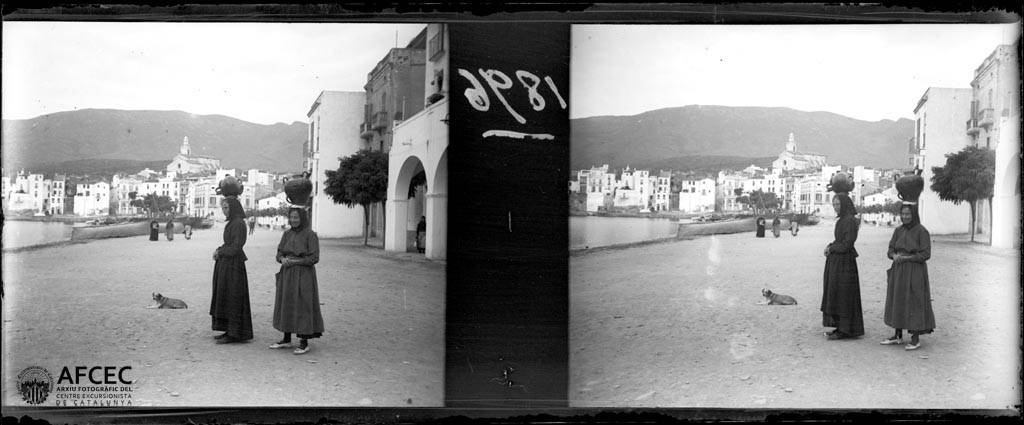
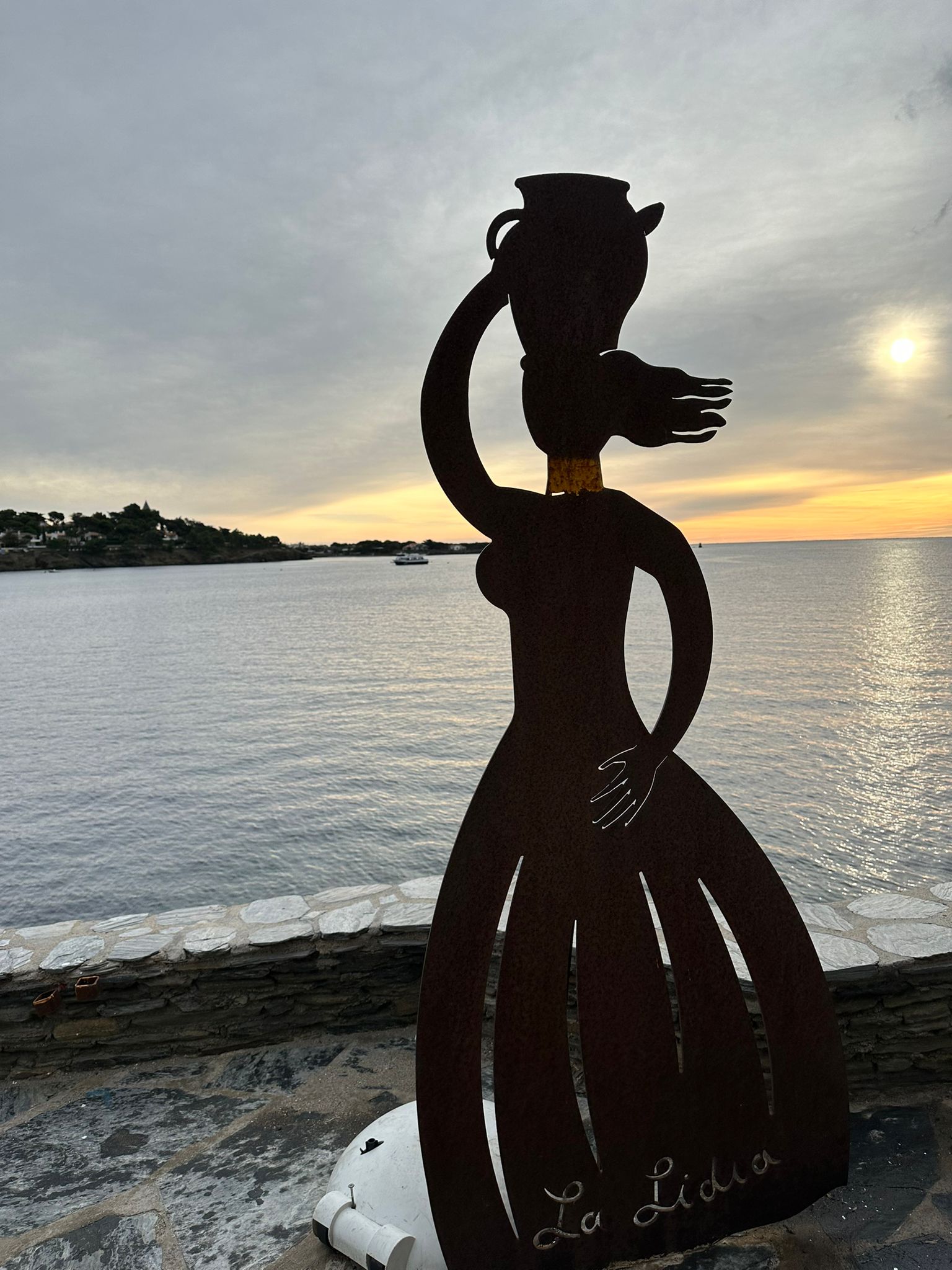
For centuries, before water reached homes on a regular basis, the women of Cadaqués had to fetch it from the village wells and fountains. They carried it in the doll, an earthenware jug balanced on the head, resting on a small round fabric cushion called a corull, traditionally pronounced carull in Cadaqués. Water was needed for drinking, cooking, washing and keeping family life going; behind this seemingly simple gesture lay effort, balance and great skill acquired over the years. A regular supply of drinking water did not reach homes until the 1950s.
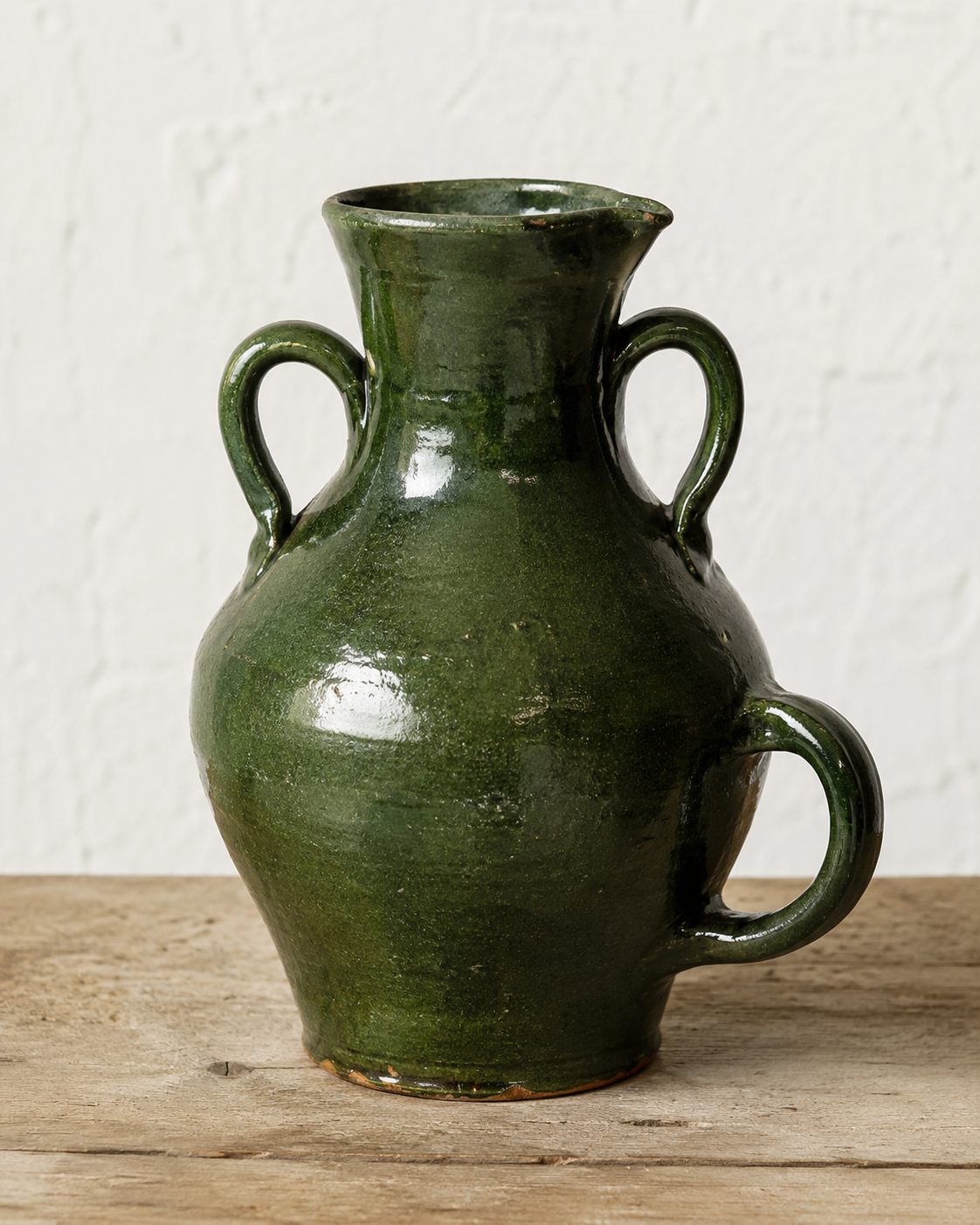
The Cadaqués doll is a particularly distinctive piece of Catalan folk pottery. It is usually bright green with a glazed finish. It has an opening at the top, a small spout for pouring and several handles, notably a lower handle that made it easier to hold and steady the jug while carrying it on the head. It was once made mainly in the workshops of Figueres and, after these closed in the early 1970s, production moved to la Bisbal d’Empordà.
With the arrival of running water and modern containers, the doll was no longer essential in daily life. Yet it never vanished from the village’s memory. Its sturdy, unmistakable green shape lived on in photographs, engravings, paintings and family memories until it became one of the most representative symbols of Cadaqués.
This memory comes alive during the summer Festa Major, held around 8 September in honour of the Mare de Déu de l’Esperança, patron saint of Cadaqués and traditional protector of seafarers. The festival has a long history, documented since 1629. Over time it has added religious, maritime and popular activities, such as llagut boat regattas, lateen-sail gatherings, greasy-pole contests, havanera singing, dances and concerts.
Within this programme, Sa Cursa de Dolls is one of the most eagerly awaited moments. The current race was revived in 1984, although it is thought to echo earlier festive practices. Originally only women took part, in memory of the Cadaqués women who went to fetch water. Today men, children and people from elsewhere also join in.
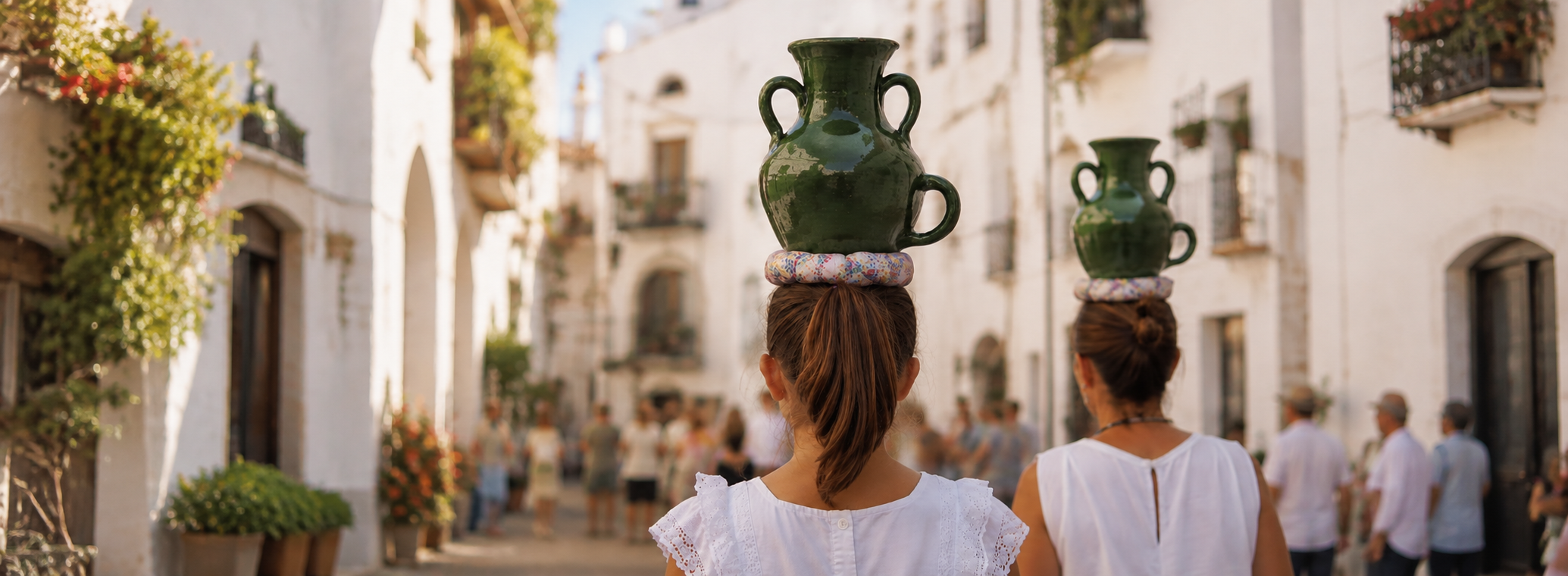
During the race, participants complete a circuit along the Passeig with a doll full of water on their heads. They cannot hold it with their hands: they must walk or run, keeping their balance with only the help of the carull. Before the races there is an exhibition lap, accompanied by the giants of Cadaqués, followed by the different children’s and adult categories. The women’s race remains the most symbolic, as it pays direct tribute to the women who, generation after generation, carried water through the village streets.
Sa Cursa de Dolls is much more than a competition. It is a way of remembering what life was like before today’s comforts, of recognising an everyday task carried out mainly by women and of turning an old household object into shared heritage.
Every time a green doll moves along the Passeig, balanced on someone’s head, Cadaqués recovers part of its history. Water no longer has to be fetched from the fountain, but the gesture lives on. And it is precisely this ability to turn necessity into celebration, and memory into festivity, that makes Sa Cursa de Dolls one of the village’s most endearing and unique traditions.
If you’d like to take part in the next Cursa de Dolls, you’ll find more information on the Cadaqués Tourism website.