
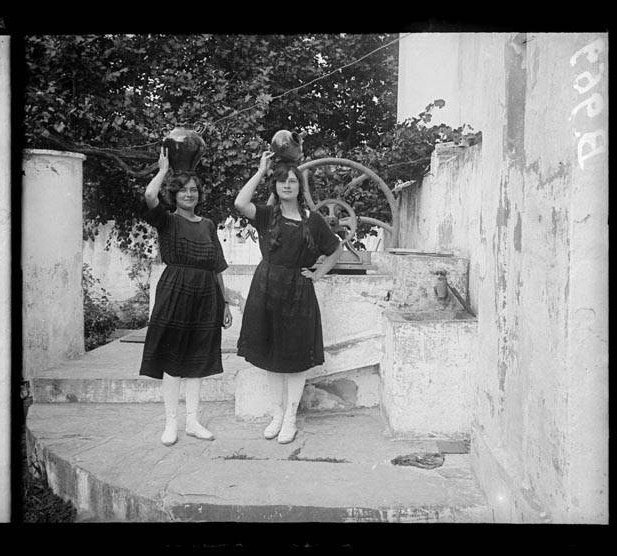
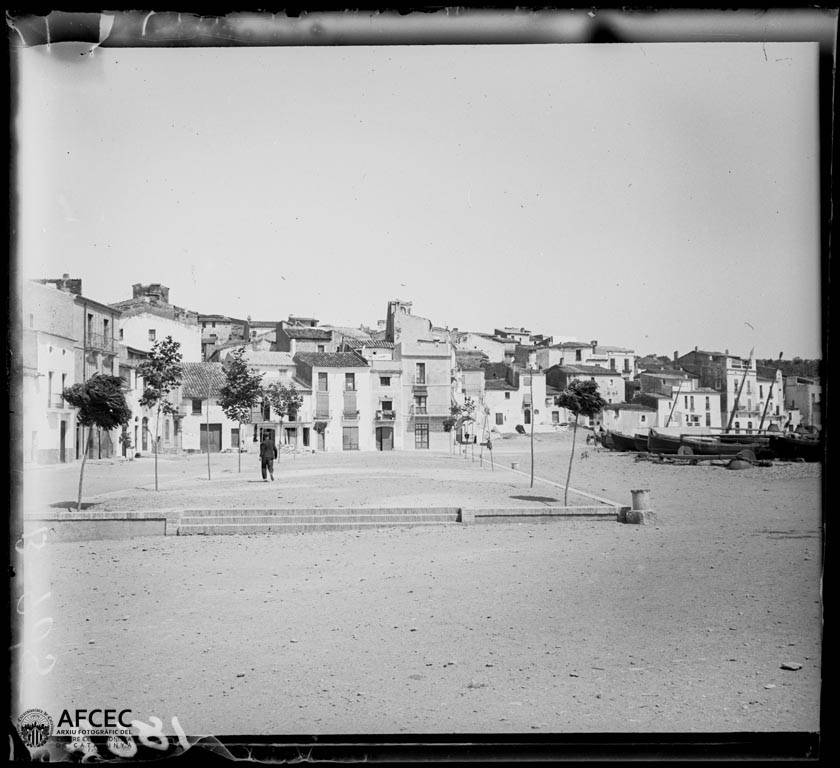
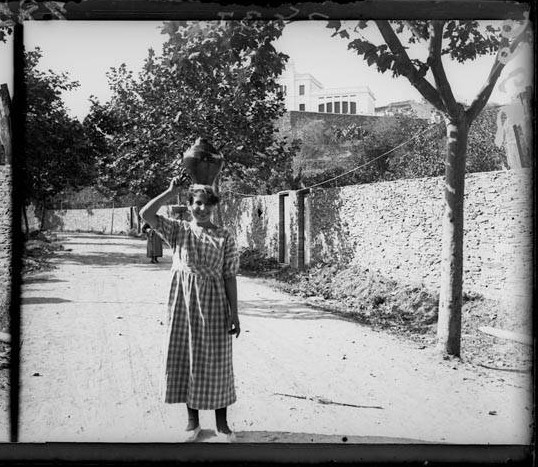
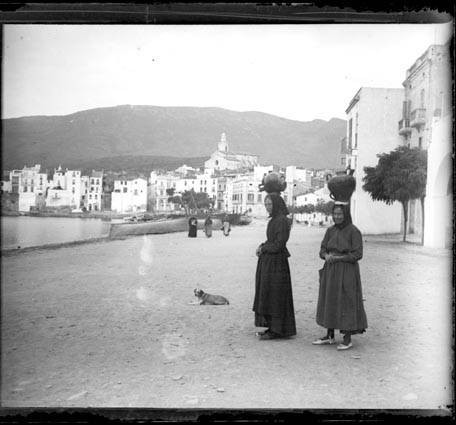
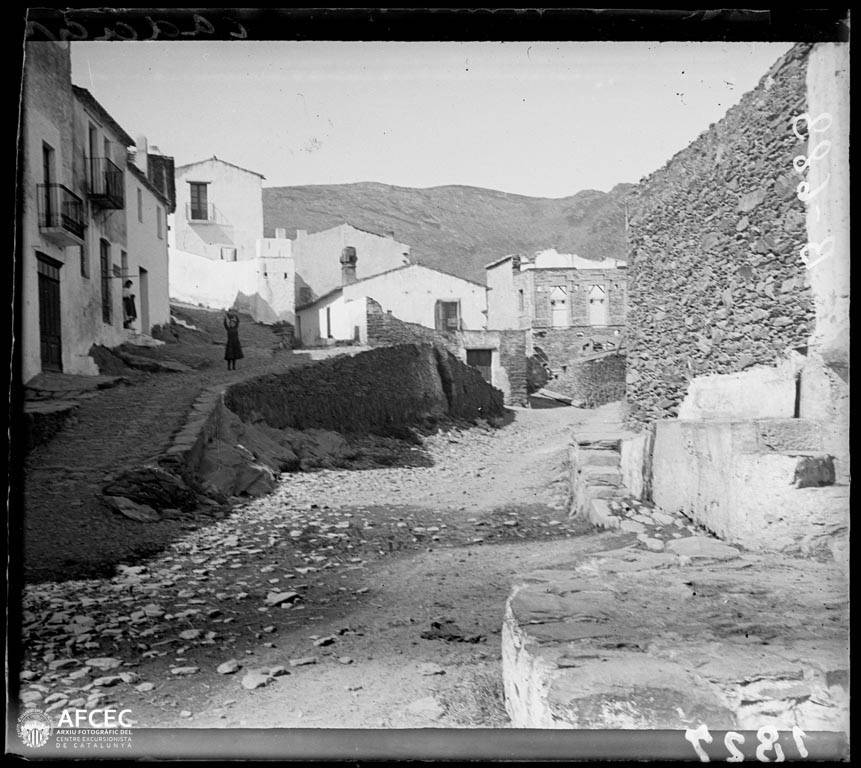
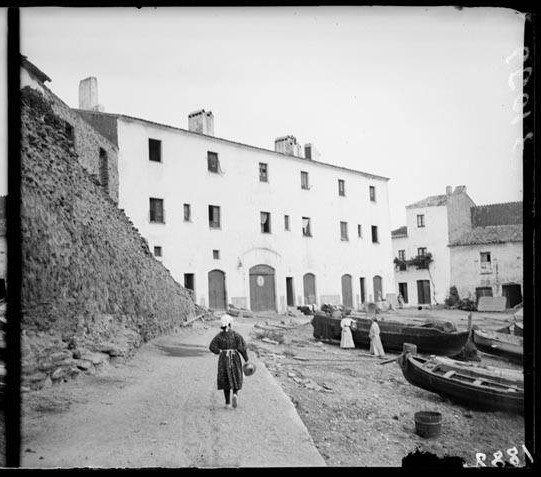
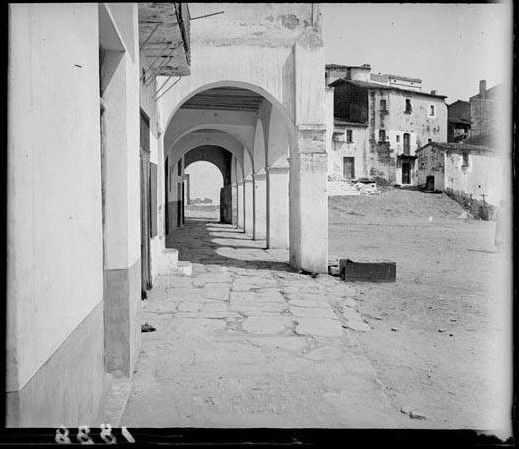
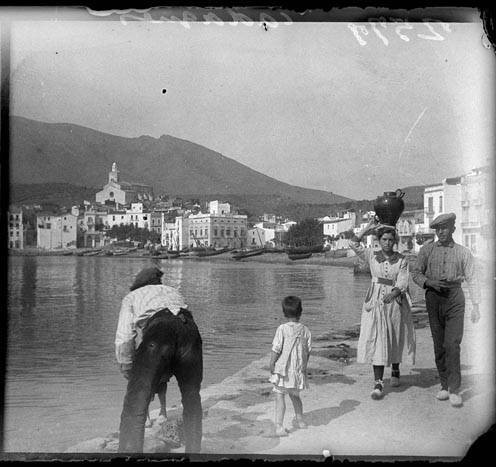
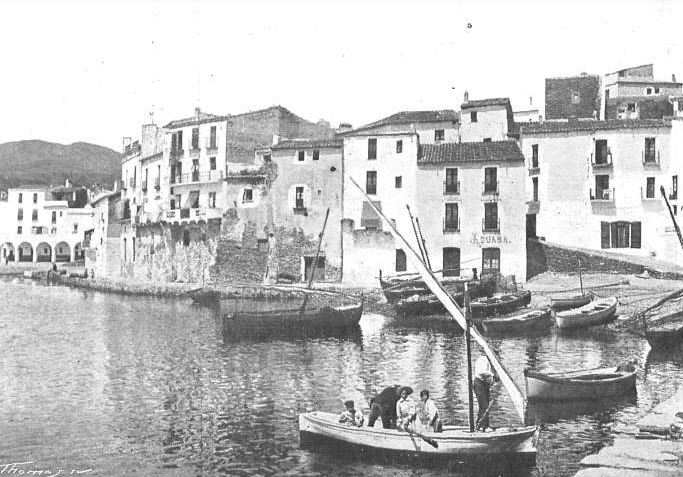
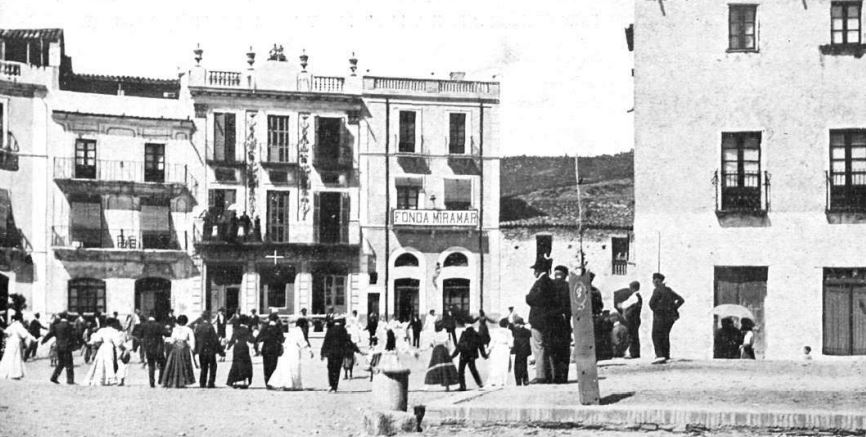
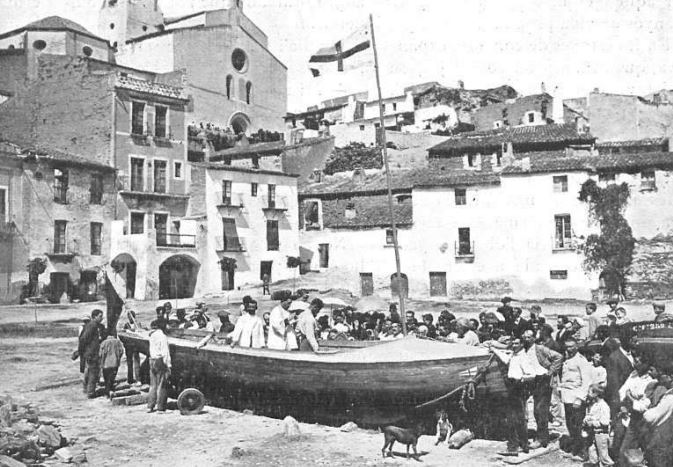
Old photographs let us return for a few moments to a Cadaqués that came before the cars filling the streets in summer, before quick trips and photos taken on a phone. A Cadaqués of boats on the beach, nets spread out in the sun, stone streets and white façades open to the Mediterranean.
This collection of old images of Cadaqués is, above all, a way of looking at the village with different eyes.
When the sea was part of everyday life
For generations, the sea was not simply the backdrop of Cadaqués. It was work, communication, food and an inseparable part of daily life.
The old photographs of the bay show a coast very different from the one we know today. The boats took up much of the beaches and the line between village and sea was even narrower.
Fishermen, families sitting in front of their houses, children playing near the water, women working or chatting in the streets... The photographs document apparently simple scenes that, over the years, have become records of a vanished way of life.
And perhaps it is precisely this closeness to the sea that still appeals today to anyone looking to spend a few days in Cadaqués.
The streets before tourism
Looking at old photographs of the streets of Cadaqués brings on a curious feeling.
Many corners are easily recognisable.
The whitewashed houses, the steps, the dry-stone walls, the doors, the windows and the irregular streets are still part of today's landscape. But in the old images we find a much slower life, almost without vehicles and with the public space turned into a natural extension of the houses.
It is a quieter Cadaqués.
A village that did not yet know that, decades later, people from all over the world would look for apartments in Cadaqués, small houses and hotels in order to wake up in front of this very landscape.
The bay that still captivates
If there is one thing that links the old photographs with today's Cadaqués, it is the silhouette of the bay.
The boats change. The clothes change. The businesses, the terraces and the way of travelling change.
But the geometry of the coast is still there.
It is easy to look at a photograph taken many decades ago and immediately recognise the outline of the village, the church dominating the white houses and the mountains closing the bay.
That is probably why many people who today are looking for where to stay in Cadaqués especially value sea-view apartments. Contemplating the bay from a window or a terrace helps you understand a little better this very old relationship between the village and the Mediterranean.
A Cadaqués lived in, not just visited
Old photographs also remind us of something we often forget when we travel: before becoming destinations, places are someone's home.
Cadaqués has been and still is an inhabited village.
Behind the façades we photograph today there were kitchens, families, workshops, shops, everyday stories and generations who grew up in front of the same sea we now contemplate on holiday.
Perhaps this is also a good way to discover Cadaqués: not just to visit it for a few hours, but to stay.
To stroll when the day's activity fades. To go out in the morning when the streets are still quiet. To watch the light change over the bay.
That is why, when planning a holiday in Cadaqués, choosing accommodation in the centre or by the sea can completely transform the experience.
Sleeping in Cadaqués lets you discover that other village that often does not appear during a quick visit.
Photographs that keep the memory
An old photograph does not tell a whole story.
But it leaves many open.
Who was that person sitting in front of the door? Where was that boat going? Who lived behind that window? What must a winter's day have been like on that same street a hundred years ago?
This selection of images does not aim to fully reconstruct the past of Cadaqués, but to preserve small fragments.
Moments.
Landscapes.
Gestures.
A way of living by the sea
And perhaps, after looking at these photographs, when we walk again through the streets of Cadaqués, something will have changed.
Because behind the village we see today, we will keep imagining that Cadaqués in black and white.