
When the day begins on the bay
Cadaqués wakes up slowly.
Early in the morning, the light begins to trace the white houses, the boats rock gently on the water and the village still holds a calm that will change as the day goes on.
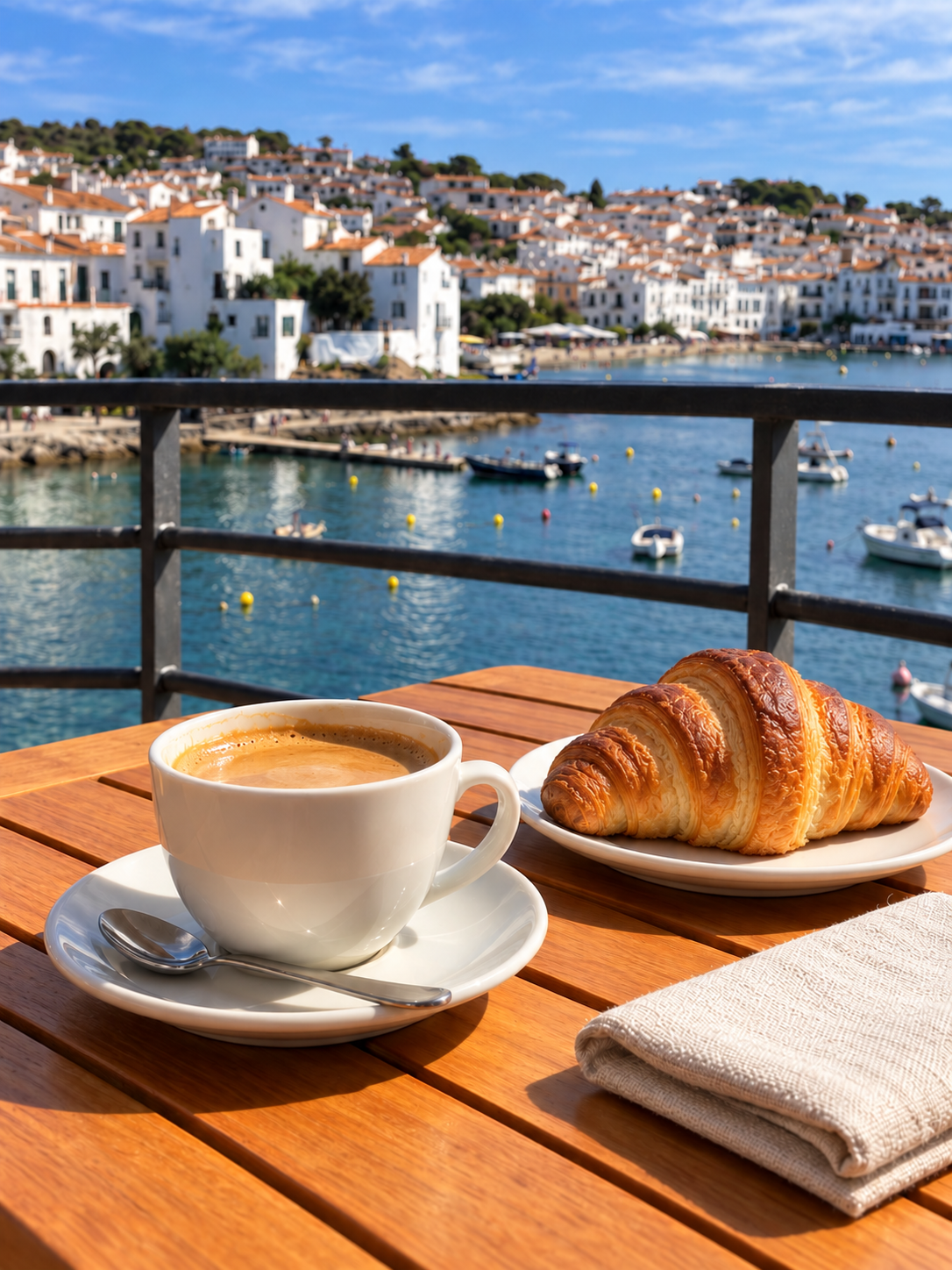
From the Riba Pitxot apartments, this awakening is part of breakfast. The balcony opens onto the bay, letting you watch the sea, the sky and the light change without leaving home.
There’s no need to prepare anything special. Just open the doors, make the coffee and sit facing the Mediterranean.
An easy, light breakfast, just the way we like it
One of the freedoms of staying in an apartment is being able to have breakfast however and whenever you like.
All three Riba Pitxot apartments have a fully equipped kitchen. That means you can make a coffee or herbal tea, toast some bread and put fruit, yoghurt, cheese, cured meats or a sweet pastry bought in the village on the table.
Breakfast can be as simple as pa amb tomàquet (bread rubbed with tomato) with olive oil, some fruit and a coffee. There’s no need to fill the table or spend long in the kitchen. The idea is to start the day easily, with no schedules and no rush.
You can have breakfast early, while Cadaqués is still quiet, or let the morning drift on and linger over conversation on the balcony. There’s no dining room about to close and no set itinerary.
Everyone brings their own tastes. The landscape provides the rest.
The luxury of not being in a hurry
During the year, we often eat breakfast thinking about everything we have to do next. We check the time, run through the day in our heads or eat almost without noticing.
Holidays give us the chance to reclaim this moment.
A relaxed breakfast lets you listen to the sound of the water, watch the first boats and plan the day without urgency. Afterwards there might be a walk to Portlligat, an excursion around Cap de Creus, a swim in a cove or a stroll through the streets of the old town.
But for a while, there’s nowhere you need to be.
The first plan of the day can simply be to stay on the balcony a little longer.
Another Catalan way to have breakfast
In Catalonia, though, breakfast doesn’t always mean just a coffee, a slice of toast or something sweet.
A very different tradition lives on: the esmorzar de forquilla, or “fork breakfast”.
The name gives us a clue. It’s a breakfast you don’t eat in a hurry or standing at the bar. It calls for a plate, cutlery and time to sit at the table. It is usually eaten mid-morning and can include dishes we would more readily associate with lunch today.
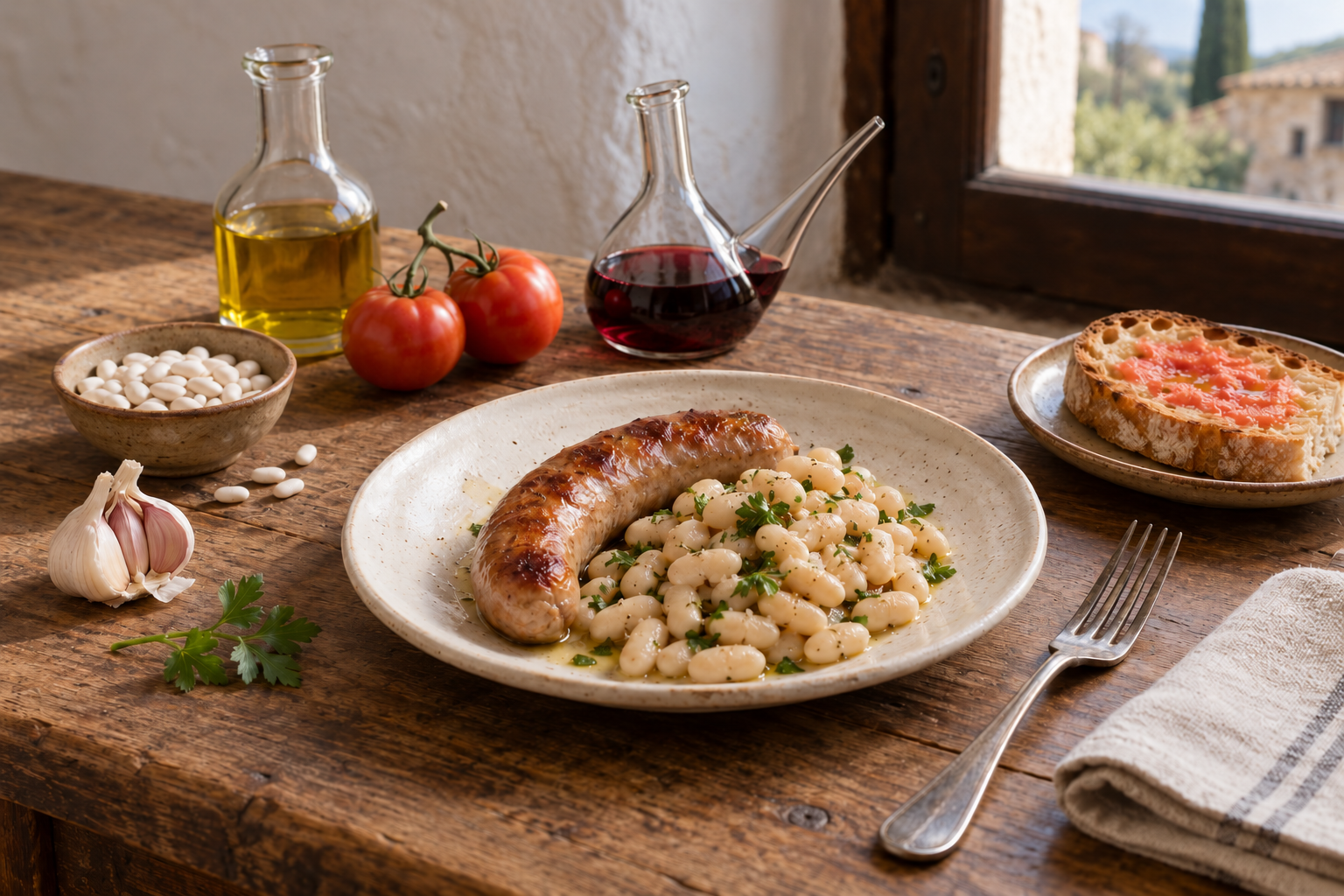
Botifarra sausage with white beans, omelettes, fried eggs, pork belly, grilled meat, salt cod, cap i pota (a traditional stew), tripe, pig’s trotters, pork cheeks or other slow-cooked casseroles can all be part of these breakfasts. What’s on the table varies by area, season and the kitchen of each establishment.
Pa amb tomàquet usually plays an important role and, traditionally, the meal could be washed down with wine, gasosa (a sweet soda), water or a coffee to finish.
There is, however, no single menu. The essence of the fork breakfast is not a particular recipe but a way of understanding the morning and the table.
From the fields to the fondas
The fork breakfast is linked to rural life and to trades that began the working day as soon as the sun came up.
Farmers, fishermen, carters, merchants and labourers would have a first bite very early and, after a few hours’ work, sit down to a more substantial meal. They needed to regain their strength before carrying on with the day.
Market days also encouraged this kind of breakfast. Fondas (traditional inns) and cafés became meeting points for people arriving from farmhouses, villages and different trades. Over the hot dishes, news, deals, stories and conversations were exchanged.
Over time, working habits have changed, but the fork breakfast has not disappeared. Today it is also a way of championing home cooking, traditional stews and those dishes that need time and are made less and less at home.
A table that is also a meeting place
An important part of this tradition is not on the plate but around the table.
In bars and fondas in small villages, especially where customers know each other, breakfast can become a spontaneous get-together. Someone arrives, says hello, sits down and joins the conversation. Then someone else arrives and the gathering grows.
Sometimes these are large shared tables; at other times, conversations drift from one table to the next or begin at the bar. It’s not a rule and it doesn’t happen everywhere, but it is part of that way of experiencing village cafés as a shared space.
People talk about work, the weather, the land, the sea, politics, football or whatever has happened in the village. The food nourishes, but so does the conversation.
That’s why a fork breakfast can last longer than the dishes would suggest. There’s the after-meal chat, people coming and going, and that feeling that nobody is in too much of a hurry to get up.
A living tradition in Catalonia and the Empordà
Fork breakfasts are still found in many towns and villages across Catalonia, especially in long-standing bars, fondas, roadside restaurants and places linked to markets or work areas.
You can also find them in various parts of the Empordà. In Figueres and other towns in the area, some establishments keep this speciality alive, with Catalan dishes, local produce, grilled meats and traditional recipes.
What’s on offer and opening times may change depending on the day or the season. It’s often worth checking beforehand, as some places only serve these breakfasts on certain days, during a set time slot or by reservation.
Discovering one on an excursion through the Alt Empordà can be a different way of getting to know the area: not only through its landscape, but also through its cooking and the people who keep this tradition alive.
Two breakfasts, two experiences
A light breakfast on the balcony at Riba Pitxot and a fork breakfast in a Catalan fonda seem almost opposites.
One has fruit, bread, coffee and the light of the bay. The other, hot dishes, casseroles, grilled meats and a lively table.
But both share the same idea: breakfast can be much more than eating something before starting the day. It can be a pause, a conversation, a way of taking in the landscape or a gateway to the culture of a place.
Some mornings call for lightness, silence and the sea.
Others invite you to find a fonda, pick up a fork and let the conversation run on.
At Riba Pitxot, the day can begin facing the Mediterranean. After that, the Empordà is yours to discover.